
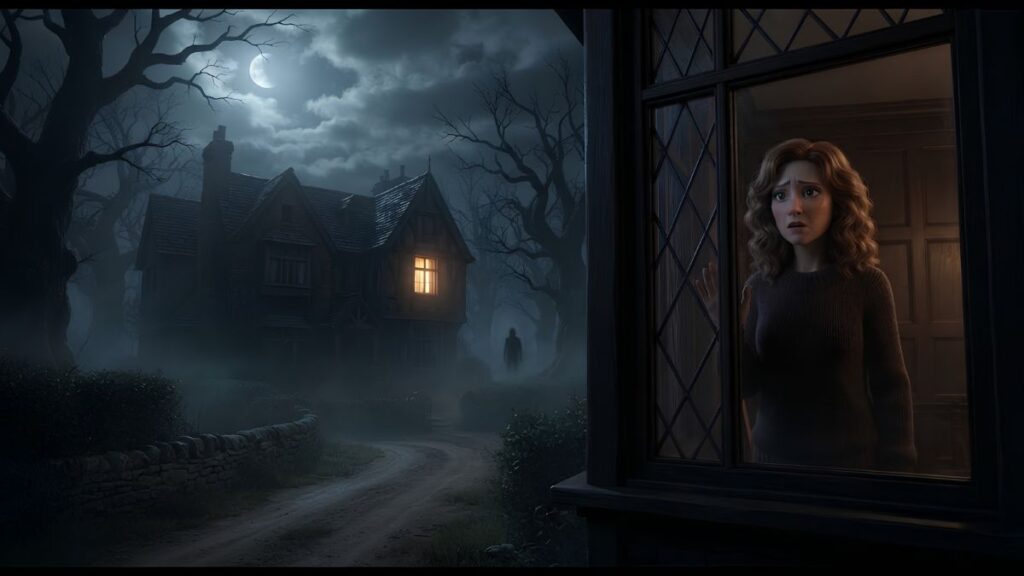
Not every bedtime story is meant to make you feel completely comfortable.
Sometimes, when the day is finally quiet, the imagination becomes more active. The house seems a little darker. Ordinary sounds become more noticeable. A creaking floorboard, distant footsteps, rain against the window, or a shadow moving outside can suddenly feel more mysterious than it did during the day.
This is part of what makes scary bedtime stories for adults so appealing.
Adult horror does not always need monsters, blood, or extreme violence. Some of the most memorable scary stories are built around uncertainty, strange coincidences, unexplained sounds, abandoned places, old memories, and the uncomfortable feeling that something is not quite right.
A good scary bedtime story creates tension while giving the imagination room to participate.
It lets the reader wonder what might be hiding around the next corner without necessarily revealing everything.
What Are Scary Bedtime Stories for Adults?
Scary bedtime stories for adults are short or long horror and suspense stories designed to be read or listened to during the evening or before sleep.
Unlike stories written specifically for children, adult scary stories can explore more mature themes such as isolation, relationships, regret, memory, loneliness, psychological fear, unexplained events, and the uncertainty of not knowing what is real.
The horror can be supernatural, psychological, mysterious, or even surprisingly ordinary.
A person staying alone in an old house may hear footsteps upstairs.
A traveler may discover that the hotel room they booked has a strange history.
Someone may receive a message from a person who disappeared years ago.
A familiar neighborhood may contain a house nobody remembers seeing before.
The strongest stories often begin with something ordinary and gradually introduce something unsettling.
That slow change from normal to strange is what keeps readers engaged.
Scary Bedtime Stories for Adults
1. The Elevator That Stopped at 13
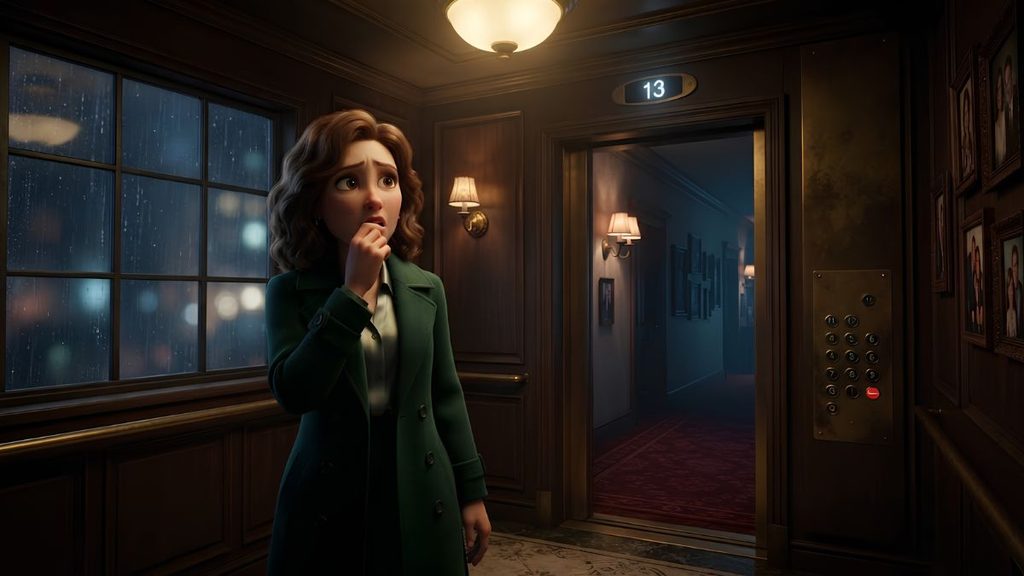
Characters: Claire and Daniel
Claire had lived in the Bellweather Apartments for almost three years before she noticed something strange about the elevator.
There were twelve floors.
Everyone knew that.
The building had twelve floors, numbered from one to twelve, and Claire had taken the elevator hundreds of times without thinking about it.
She knew which button was slow to respond.
She knew that the light above the seventh-floor button sometimes flickered.
She knew that the elevator made a soft metallic groan whenever it stopped on the tenth floor.
She even knew that if she stood near the back wall and watched the numbers above the door, she could tell which floor she was approaching without hearing the bell.
It was an ordinary old apartment building.
The kind that had survived several decades without ever becoming particularly beautiful.
The carpets were dark.
The walls were painted a tired cream color.
The hallway lights buzzed softly.
There was a brass plaque beside the entrance that said:
BELLWEATHER APARTMENTS
ESTABLISHED 1958
Claire liked the place.
It was quiet.
It was safe.
And, most importantly, it was affordable.
She worked late several nights a week at a small architectural firm downtown, which meant she often came home after ten.
On the night it happened, she arrived at 11:48 p.m.
Rain tapped against the glass doors of the lobby.
Claire shook water from her umbrella and walked toward the elevator.
The lobby was empty.
She pressed the button.
The elevator arrived with a soft chime.
Claire stepped inside.
She pressed twelve.
The doors closed.
The elevator began climbing.
One.
Two.
Three.
Claire leaned against the wall and checked her phone.
Four.
Five.
Six.
The lights flickered.
She looked up.
Seven.
Eight.
Nine.
The elevator slowed.
Then stopped.
Claire waited for the familiar bell.
It didn’t come.
Instead, the display above the doors changed.
13
Claire stared at it.
For several seconds, she thought she had misunderstood what she was seeing.
The number remained.
She looked at the buttons.
There was no thirteen.
She pressed twelve again.
Nothing happened.
She pressed the open-door button.
Nothing.
A quiet mechanical hum came from somewhere beneath the floor.
Claire’s stomach tightened.
She pressed the emergency button.
A speaker crackled.
“Please remain calm.”
Claire froze.
The voice sounded distant.
Not automated.
Human.
“Hello?” she said.
There was no response.
Then the elevator moved.
Up.
Claire grabbed the handrail.
The display remained on 13.
The elevator stopped again.
This time, the doors opened.
Claire expected darkness.
Instead, she saw a hallway.
A beautiful hallway.
Warm golden lights glowed from small wall lamps.
The carpet was deep red.
Framed photographs hung along the walls.
The ceiling was higher than the ceilings in Bellweather.
And everything looked strangely familiar.
Claire slowly stepped out.
The elevator doors remained open behind her.
She looked to the left.
A long corridor stretched toward a set of windows.
She looked right.
More doors.
Apartment doors.
They looked almost exactly like the doors on the twelfth floor.
Except they were newer.
Cleaner.
Better maintained.
Claire turned back toward the elevator.
The display still showed 13.
She should have stepped inside.
She knew that.
Instead, she looked at the photographs.
The first showed the building from outside.
But it wasn’t Bellweather as Claire knew it.
The photograph showed the same building with freshly painted walls, bright windows, and flower boxes beneath every second-floor window.
Claire moved closer.
There was a date beneath the photograph.
October 2027.
Claire frowned.
It was currently March 2026.
She moved to the next photograph.
Another picture of the building.
Another date.
June 2029.
She felt a strange chill.
She walked farther down the hallway.
The photographs continued.
Renovation workers.
A new entrance.
A garden.
A courtyard.
Then photographs of people.
Claire stopped.
One photograph showed an elderly couple standing outside Apartment 1304.
Another showed a young man carrying boxes.
Another showed a woman holding a baby.
The photographs were strangely ordinary.
But Claire noticed something.
Some of the people looked familiar.
She recognized the elderly man from the second floor.
He was younger in the photograph.
Much younger.
Claire stared at him.
She had seen him almost every morning for the past year.
His name was Mr. Harris.
He had told her once that he had lived in Bellweather for thirty years.
Claire looked at the date beneath his photograph.
May 2034.
Her breathing became shallow.
That was impossible.
She stepped backward.
Then she saw another photograph.
A young woman stood in front of the building.
She was smiling.
Claire knew her.
It was Mrs. Lewis from apartment 8A.
But in the photograph, she looked perhaps twenty years younger.
Claire moved closer.
Beneath the picture was a date.
August 2031.
“What is this?”
Her voice sounded tiny in the hallway.
She turned.
The elevator doors were beginning to close.
Claire rushed toward them.
“Wait!”
She pressed the open button.
The doors stopped.
She stepped inside.
The elevator display changed.
12
Claire exhaled.
She pressed the button.
The doors closed.
The elevator began descending.
When it opened again, Claire was standing on the twelfth floor.
Everything was normal.
The old carpet.
The buzzing lights.
The familiar beige walls.
The framed fire-safety notice.
Claire walked quickly to her apartment.
She locked the door behind her.
Then she stood in the darkness without moving.
She listened to the silence.
Nothing happened.
Eventually, she turned on the lights.
She poured herself a glass of water.
Her hands were shaking.
She told herself there had to be an explanation.
A malfunction.
Some kind of maintenance area.
Perhaps Bellweather had once had a thirteenth floor.
Perhaps the building had been designed differently and the extra level had been removed.
The photographs could have been promotional images.
The dates could have been mistakes.
She repeated these explanations until they almost sounded reasonable.
Almost.
The next morning, Claire went downstairs.
The elevator doors opened.
She stepped inside.
There were twelve buttons.
Nothing else.
She pressed twelve.
The elevator climbed normally.
When she reached the twelfth floor, she looked at the display.
She laughed nervously.
“See?”
There was nothing wrong.
She went to work.
By lunchtime, the previous night already felt unreal.
She almost convinced herself she had dreamed it.
Then Daniel called.
Daniel was Claire’s closest friend at the architectural firm.
They had known each other for five years.
He was the sort of person who enjoyed solving strange problems.
If Claire had told him she had seen a ghost, he would probably ask for evidence before deciding whether to be frightened.
“I need to ask you something,” Claire said.
“That sounds serious.”
“Do you know anything about Bellweather Apartments?”
Daniel paused.
“The building you live in?”
“Yes.”
“What about it?”
“Was there ever a thirteenth floor?”
There was silence.
Then Daniel laughed.
“No.”
“I’m serious.”
“So am I. Why?”
“I think I saw one.”
Daniel stopped laughing.
“What do you mean?”
Claire told him everything.
She expected him to dismiss it.
Instead, he asked questions.
What did the hallway look like?
What color was the carpet?
What photographs?
What dates?
Did she touch anything?
Did she take a picture?
Claire looked down.
“No.”
Daniel sighed.
“Okay.”
“Okay?”
“That is not the response I expected.”
“I don’t know what response you want.”
“I want you to tell me I imagined it.”
“Did you?”
Claire didn’t answer.
Daniel continued.
“Let me look into the building records.”
“You think that’s a good idea?”
“No.”
He paused.
“Which is why I’m going to do it.”
That evening, Daniel came to Bellweather.
They stood in the lobby beside the old brass plaque.
Daniel examined it.
“1958.”
Claire nodded.
He looked toward the elevator.
“Let’s check the basement.”
They found an old storage room containing maintenance records.
Most of the papers were dusty and yellow.
Daniel spent nearly an hour searching.
Finally, he found an original architectural plan.
He unfolded it across a wooden table.
Claire leaned over his shoulder.
The plans showed twelve floors.
Basement.
Ground floor.
Twelve residential floors.
Nothing else.
Daniel frowned.
“There’s no thirteenth floor.”
Claire felt disappointed.
She wasn’t sure why.
Perhaps she had hoped the documents would prove she wasn’t imagining things.
Then Daniel noticed something.
“Wait.”
He pointed toward the twelfth-floor plan.
At the far end of the hallway was a narrow rectangular space.
It wasn’t labeled.
“What is that?” Claire asked.
“I don’t know.”
He searched through another folder.
Then another.
Finally, he found a handwritten note attached to an old maintenance report.
Upper access sealed after structural modification. Do not reopen without authorization.
Claire looked at him.
“Upper access?”
Daniel nodded slowly.
“Apparently there was something above the twelfth floor.”
“An attic?”
“Maybe.”
“Then why isn’t it on the plans?”
“I don’t know.”
The two of them stood silently.
Daniel folded the paper.
“We should go upstairs.”
They took the elevator.
Twelve.
The doors opened.
Claire looked at the ceiling.
Nothing appeared unusual.
They walked to the end of the hallway.
There was a plain gray door she had never noticed before.
Daniel tried the handle.
Locked.
“Of course,” he said.
Claire looked at the door.
“Do you think that’s where I went?”
“Maybe.”
Daniel found a maintenance key in the basement.
The key fit.
The door opened.
Beyond it was a narrow staircase.
They climbed.
At the top was a small service room.
Dust covered everything.
Old pipes ran along the ceiling.
There were no windows.
No hallway.
No apartments.
Just darkness.
Claire felt strangely relieved.
She had been expecting something impossible.
Instead, she had found something ordinary.
Old building infrastructure.
A sealed upper level.
Nothing more.
Daniel smiled.
“See?”
Claire nodded.
“See what?”
“You’re not losing your mind.”
She laughed.
“That’s reassuring.”
They returned to the twelfth floor.
As they stepped into the hallway, the elevator doors closed behind them.
Claire looked back.
For just a moment, the display above the doors changed.
13
She stopped.
“Daniel.”
He turned.
“What?”
The display showed 12.
Claire stared at it.
“Nothing.”
That night, Claire slept badly.
She dreamed of the red carpet.
She dreamed of photographs.
She dreamed of doors that opened onto rooms she had never entered.
At 3:17 a.m., she woke suddenly.
Her apartment was silent.
Then she heard the elevator.
A soft chime came from the hallway.
Claire sat up.
Another chime.
Then another.
The elevator was moving.
She walked toward the door.
She didn’t open it.
She listened.
The elevator stopped.
Silence.
Then came a sound.
Three soft knocks.
Claire’s heart began pounding.
The knocks came again.
Not from her apartment door.
From inside the wall beside it.
Three knocks.
Pause.
Three knocks.
Pause.
Then one.
Claire stepped backward.
The sound stopped.
She didn’t sleep again.
The following morning, she called Daniel.
“I want to leave.”
He understood immediately.
“Come stay at my place.”
Claire packed a bag.
Before leaving, she looked once more at her apartment.
Everything appeared normal.
She reached for the door.
Then noticed something on the floor.
A photograph.
She picked it up.
It was old.
The image showed the Bellweather Apartments.
The building looked exactly as it did now.
Except for one detail.
There was a woman standing in one of the upper windows.
Claire stared at the face.
It was her.
Not someone who looked like her.
Claire.
Exactly as she was now.
She turned the photograph over.
There was handwriting on the back.
March 2026.
Below it, another line.
She hasn’t moved in yet.
Claire dropped the photograph.
She left the apartment.
She never returned to Bellweather.
Daniel helped her find another place.
For several weeks, she refused to discuss the elevator.
Eventually, life became normal again.
Almost.
One evening, months later, Claire and Daniel were having dinner.
Daniel asked whether she still thought about Bellweather.
“Sometimes.”
“Do you believe it was real?”
Claire looked at him.
“I don’t know.”
Daniel nodded.
“Neither do I.”
She smiled.
“That’s probably better.”
They changed the subject.
Later that night, Claire returned home.
She entered her building.
She pressed the elevator button.
The doors opened.
She stepped inside.
There were twelve buttons.
She pressed six.
The elevator began moving.
One.
Two.
Three.
Four.
Five.
Then six.
The doors opened.
Claire stepped out.
She walked toward her apartment.
Then she stopped.
There was a photograph hanging on the wall opposite her door.
She had never seen it before.
It showed the hallway.
Her hallway.
The photograph had been taken from the far end.
Claire was standing in the center.
She was holding groceries.
She was looking toward the camera.
Claire slowly approached it.
There was a small date beneath the photograph.
October 2027.
She looked down the empty hallway.
Nothing moved.
Then she noticed something else.
At the end of the corridor, the elevator doors were open.
Above them was a glowing number.
13
Claire stepped backward.
The lights flickered.
For one brief moment, she heard the familiar mechanical hum.
Then everything returned to normal.
The elevator display showed six.
The photograph was gone.
Claire stood alone in the hallway.
She never told anyone about it.
Years passed.
She eventually stopped trying to understand what had happened.
Perhaps the elevator had malfunctioned.
Perhaps the old building had secrets that no architectural plan could explain.
Perhaps the photographs had been warnings.
Or perhaps they were simply glimpses of possible futures.
She never knew.
But whenever she entered an elevator, Claire always counted the floors.
One.
Two.
Three.
Four.
Five.
Six.
Seven.
Eight.
Nine.
Ten.
Eleven.
Twelve.
And sometimes, just before the doors opened, she would look at the display one last time.
Not because she expected to see thirteen.
Because she knew that if she ever did, the most frightening thing would not be the number.
It would be wondering what waited beyond the doors.
And whether, somewhere in that impossible hallway, another photograph was already waiting for her.
One taken years before she arrived.
One showing exactly where she would stand.
And one quietly proving that some places do not exist until someone is ready to find them.
Theme: Mystery, coincidence, fate, and the unsettling feeling that you have briefly entered a place that should not exist.
2. The Voice in Apartment 6B
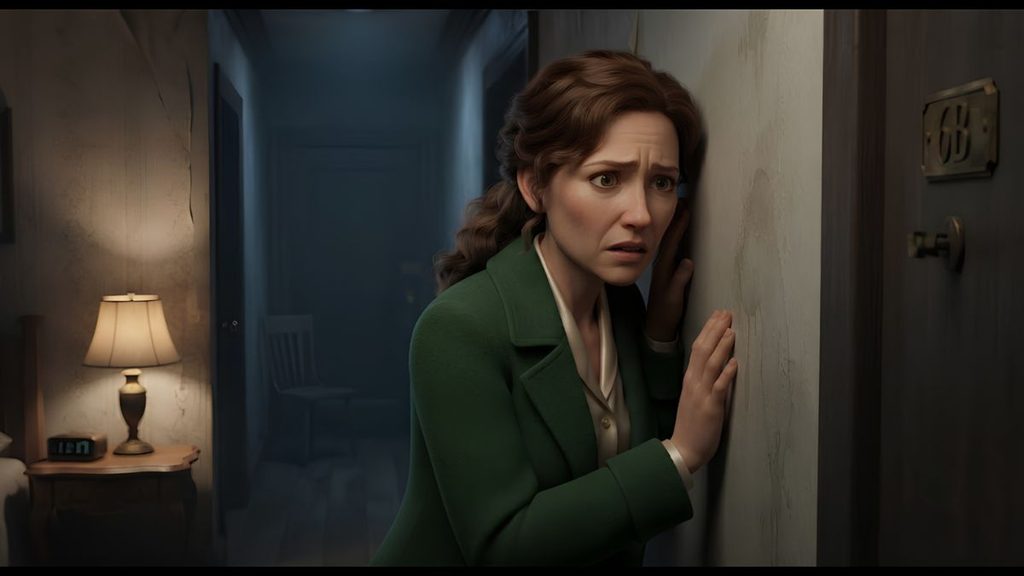
Characters: Eleanor and Marcus
Eleanor had always liked quiet buildings.
Not silent buildings.
Silent buildings made her uncomfortable.
She preferred the gentle sounds of people living nearby. A door closing somewhere down the hall. Water running through pipes. Someone laughing behind a wall. Footsteps crossing an apartment above her.
Those sounds reminded her that she was not completely alone.
Her apartment was on the sixth floor of an older building called Hawthorne House.
It was a narrow brick building with eight floors, tall windows, and a lobby that always smelled faintly of furniture polish.
Eleanor had lived there for four years.
She knew most of her neighbors by sight.
Mr. Collins lived on the fifth floor.
A young couple named Rachel and Peter lived across the hall.
The eighth floor belonged mostly to families.
And Apartment 6B was directly beside Eleanor’s apartment.
It had been empty for as long as she could remember.
The door was always locked.
No welcome mat.
No shoes outside.
No packages.
No sound.
The building manager had once told Eleanor that 6B had been vacant for years.
“Fifteen, maybe sixteen,” he had said.
“Why hasn’t anyone rented it?”
The manager had shrugged.
“Some apartments are difficult to sell.”
Eleanor had not asked more.
She didn’t care.
Until the night she heard someone talking through the wall.
It happened at 11:17.
Eleanor was sitting on her sofa reading when she heard a man’s voice.
Very faint.
She looked up.
The voice seemed to be coming from the wall beside her.
At first, she assumed someone in another apartment was watching television.
She lowered the book.
The voice continued.
It was too muffled to understand.
Eleanor smiled to herself.
Of course.
Someone had turned up their television.
She returned to her book.
A few seconds later, she heard something that made her stop.
The voice said her name.
“Eleanor.”
She slowly lowered the book.
The apartment became completely still.
She stared at the wall.
Nothing.
Then the voice came again.
“Eleanor.”
This time, she was certain.
Someone had spoken her name.
She stood.
Her heart began beating faster.
She walked toward the wall.
“Hello?”
The voice stopped.
Eleanor waited.
Nothing.
She put her hand against the wallpaper.
The wall was cold.
She laughed nervously.
“Very funny.”
There was no answer.
She checked the hallway.
Apartment 6B’s door was still locked.
She stood there for several seconds before returning inside.
She didn’t sleep well that night.
The following morning, Eleanor mentioned it to Marcus.
Marcus was her younger brother.
He lived about twenty minutes away and visited her every Sunday.
He was practical, skeptical, and usually impossible to frighten.
“You heard a television,” he said.
“I heard someone say my name.”
“Maybe someone was talking about you.”
“Through the wall?”
“Sound travels.”
“From an empty apartment?”
Marcus stopped eating.
“Empty?”
“6B.”
He looked toward the hallway.
“Are you sure it’s empty?”
“Yes.”
“How long?”
“Apparently fifteen years.”
Marcus smiled.
“Then maybe it’s haunted.”
Eleanor gave him a look.
“Very helpful.”
He laughed.
But that night, Eleanor listened.
At exactly 11:17, the voice returned.
She was sitting at her kitchen table.
The voice came through the wall.
This time, she heard the words clearly.
“You always leave the kitchen light on.”
Eleanor froze.
Her eyes moved toward the kitchen.
The light was on.
She had left it on because she had been reading there earlier.
Nobody should have known that.
She switched it off.
The voice became quiet.
Then it said:
“Better.”
Eleanor stood so quickly that her chair scraped the floor.
She walked into the hallway.
Apartment 6B remained dark.
She knocked.
Once.
Nothing.
She knocked again.
“Hello?”
Silence.
She pressed her ear against the door.
Nothing.
Then, very faintly, from the other side:
“Don’t knock.”
Eleanor stepped backward.
She returned to her apartment and locked the door.
She didn’t tell Marcus.
The next day, she called the building manager.
His name was Mr. Harris.
He had managed Hawthorne House for almost twenty years.
“Do you know who owns 6B?” Eleanor asked.
“Why?”
“I heard someone inside.”
There was a pause.
“That’s impossible.”
“Why?”
“Because nobody has lived there since before I became manager.”
“How long?”
“Sixteen years.”
“Are you sure?”
“Yes.”
Eleanor hesitated.
“Was there a previous tenant?”
“An older man.”
“What was his name?”
Mr. Harris was silent.
“Mr. Harris?”
“Thomas Bell.”
Eleanor wrote the name down.
“Does he still live there?”
“No.”
“Where is he?”
Another pause.
“He died.”
“When?”
“Sixteen years ago.”
Eleanor felt cold.
“Inside the apartment?”
“No.”
Mr. Harris’s voice changed.
“He died at the hospital.”
Eleanor exhaled.
“Then why has the apartment been empty?”
“I don’t know.”
“Is there something wrong with it?”
Mr. Harris didn’t answer immediately.
“Some places simply don’t rent well.”
That evening, Eleanor searched online.
There was almost nothing about Thomas Bell.
She found an old newspaper article about his death.
Thomas Bell had been sixty-eight.
He had worked as a university librarian.
He had lived alone.
The article mentioned that he had no immediate family.
Eleanor stared at the photograph beside the article.
Thomas Bell looked ordinary.
Thin face.
Gray hair.
Serious expression.
Nothing frightening.
She closed the page.
At 11:17, the voice returned.
“Eleanor.”
She didn’t answer.
“Eleanor.”
She remained completely still.
“I know you’re listening.”
She closed her eyes.
The voice continued.
“You used to sleep with the television on.”
Eleanor’s eyes opened.
That was true.
When she was younger, she had hated sleeping in silence.
She had watched late-night television until she fell asleep.
She had never told anyone in the building.
Not even Marcus.
The voice continued.
“You don’t anymore.”
Eleanor stood.
“Who are you?”
Silence.
Then:
“Someone who remembers.”
“Remembers what?”
The voice didn’t answer.
Instead, it said:
“You were twelve when your father left.”
Eleanor’s breath caught.
She had not spoken about her father in years.
He had left when she was twelve.
Only Eleanor, Marcus, and their mother knew the details.
Her mother had died six years earlier.
Marcus was the only person still alive who might know.
Eleanor walked backward.
“How do you know that?”
The voice whispered:
“Because you told me.”
Eleanor shook her head.
“I never met you.”
The voice became softer.
“You did.”
Then the apartment fell silent.
Eleanor called Marcus.
He answered immediately.
“What happened?”
“I need you to come here.”
“Are you okay?”
“Just come.”
He arrived twenty minutes later.
Eleanor told him everything.
Marcus listened without interrupting.
When she finished, he looked troubled.
“Maybe someone has access to the apartment.”
“How?”
“Maintenance key.”
“Then why hasn’t anyone seen them?”
“I don’t know.”
“Marcus.”
He sighed.
“Okay. We’ll check.”
They walked into the hallway.
Marcus knocked on 6B.
Nothing.
He tried the door handle.
Locked.
“Get the manager,” Eleanor said.
They found Mr. Harris downstairs.
He looked irritated at first.
Then Marcus explained what they had heard.
Mr. Harris’s expression changed.
“You heard a voice?”
“Yes,” Eleanor said.
“What did it say?”
Eleanor told him.
Mr. Harris looked toward the elevator.
“Stay here.”
He returned with a ring of keys.
They climbed to the sixth floor.
Mr. Harris unlocked Apartment 6B.
The door opened.
Cold air flowed into the hallway.
The apartment was completely empty.
No furniture.
No television.
No curtains.
No photographs.
Dust covered the floor.
Marcus stepped inside.
He switched on the lights.
Nothing happened.
“They’re disconnected,” Mr. Harris said.
Eleanor stared.
There was a faint smell in the room.
Something old.
Something like paper.
They searched every room.
Nothing.
Then Eleanor noticed a small door at the end of the hallway.
“What’s that?”
Mr. Harris looked at it.
“I don’t know.”
Marcus opened it.
Inside was a narrow storage room.
The walls were covered with shelves.
And the shelves were filled with boxes.
Marcus pulled one down.
Dust rose into the air.
“Records?”
He opened it.
Inside were notebooks.
Dozens of them.
Eleanor picked one up.
The cover was labeled:
Thomas Bell
She opened it.
The pages were filled with handwriting.
Names.
Dates.
Observations.
Marcus looked over her shoulder.
“These are journals.”
Eleanor turned the pages.
Most were ordinary.
Notes about books.
Neighbors.
Weather.
Groceries.
But then she found something that made her stop.
A page dated fifteen years earlier.
The handwriting read:
11:17 p.m.
The woman next door leaves her kitchen light on every night.
Eleanor stared.
The woman next door.
She had not lived there fifteen years ago.
She had moved into Hawthorne House only four years earlier.
Marcus read the next line.
She doesn’t know yet.
“What does that mean?” he asked.
Eleanor turned the page.
Nothing.
She turned another.
A new entry.
The apartment has begun remembering people who haven’t arrived.
Marcus frowned.
“This doesn’t make sense.”
Eleanor continued reading.
The next pages were stranger.
Thomas had written about voices.
About sounds traveling through walls.
About memories that did not belong to him.
One sentence appeared repeatedly.
At 11:17, the apartment speaks.
Eleanor closed the journal.
“I want to leave.”
Marcus nodded.
They left 6B.
Mr. Harris locked the door.
“Nobody enters this apartment again,” he said.
That night, Eleanor stayed at Marcus’s house.
She slept on the sofa.
At 11:17, she woke suddenly.
Marcus was asleep in the next room.
The house was dark.
Then Eleanor heard a voice.
Not through a wall.
Not from another room.
It sounded as though someone were standing directly beside her.
“Eleanor.”
She sat up.
The room was empty.
The voice continued.
“You shouldn’t have opened the door.”
Eleanor couldn’t move.
“What do you want?”
A pause.
Then:
“I want you to remember.”
“Remember what?”
The voice whispered:
“Apartment 6B was never empty.”
Eleanor’s stomach tightened.
She looked toward the dark hallway.
“Who is there?”
The voice answered:
“You’re asking the wrong question.”
“What should I ask?”
Silence.
Then:
“Who was here before you?”
Eleanor thought of Thomas Bell.
But the voice continued.
“Not Thomas.”
The lights suddenly came on.
Marcus appeared in the doorway.
“Eleanor?”
She turned.
“What happened?”
She looked around.
The voice was gone.
Marcus switched on another light.
“Why are you awake?”
“I heard someone.”
He looked worried.
“Where?”
“Here.”
He checked the rooms.
Nothing.
Then he looked at Eleanor.
“You need to sleep.”
She nodded.
But she knew she couldn’t.
The following morning, Eleanor returned to Hawthorne House with Marcus.
They found Mr. Harris in the basement.
Eleanor placed Thomas Bell’s journal on the table.
“Who was in 6B before him?”
Mr. Harris stared at the journal.
“I told you. Thomas was the last tenant.”
“Before Thomas.”
“I don’t know.”
“You’ve been manager for twenty years.”
“Twenty years isn’t forever.”
Marcus leaned forward.
“Look at the records.”
Mr. Harris sighed.
He opened an old filing cabinet.
After several minutes, he found a folder.
The oldest records were incomplete.
Tenants came and went.
Names faded.
Dates were missing.
Then Eleanor saw something.
A name.
Eleanor Bell.
She stared at it.
“What?”
Marcus looked over.
The tenant listed for Apartment 6B in 1974 was Eleanor Bell.
Eleanor felt dizzy.
“That’s my name.”
Mr. Harris shook his head.
“It’s probably a coincidence.”
“She was the same age?”
He checked the file.
“Twenty-six.”
Eleanor was twenty-six when she had first moved into Hawthorne House.
She looked at Marcus.
He had gone pale.
“That’s impossible.”
Mr. Harris continued searching.
Then he found a photograph.
An old black-and-white picture of a woman standing outside Apartment 6B.
Eleanor took it.
The woman looked exactly like her.
Same eyes.
Same face.
Same small scar above the eyebrow.
Eleanor touched the photograph.
“I don’t understand.”
Marcus whispered:
“Neither do I.”
On the back of the photograph was a handwritten sentence.
She will return when the apartment remembers her.
The basement became completely silent.
Then Eleanor heard something.
A voice.
Very faint.
Coming from somewhere above them.
11:17.
She looked at Marcus.
He heard it too.
The voice spoke through the ceiling.
“Eleanor.”
Marcus grabbed her arm.
“Don’t answer.”
The voice continued.
“You finally came home.”
Eleanor stared upward.
“No.”
Her voice trembled.
“This isn’t my home.”
The voice laughed softly.
Not cruelly.
Almost sadly.
“You said that the first time.”
The lights went out.
Marcus pulled Eleanor toward the stairs.
They ran.
Behind them, a door slammed.
Then another.
Then another.
Apartment doors throughout the building began opening and closing.
People shouted from the upper floors.
The elevator began moving by itself.
Floor six.
Seven.
Eight.
Then back down.
The display stopped at six.
The doors opened.
Eleanor looked toward them.
Inside the elevator, someone was standing.
A woman.
She was wearing an old-fashioned coat.
Her face was Eleanor’s face.
But older.
Much older.
The woman looked directly at her.
Then smiled.
Eleanor couldn’t breathe.
The elevator doors closed.
When they opened again, the elevator was empty.
The next morning, Apartment 6B was sealed permanently.
Mr. Harris refused to discuss what happened.
Marcus never mentioned the woman.
Neither did Eleanor.
She moved out of Hawthorne House two weeks later.
She chose a small house across town.
There were no shared walls.
No apartment above her.
No apartment beside her.
For several months, everything was quiet.
She began sleeping normally again.
She almost convinced herself that the entire experience had been some elaborate coincidence.
Then, one November evening, she was unpacking an old box.
Inside was Thomas Bell’s journal.
She had thought Mr. Harris had kept it.
She opened it.
Most of the pages were blank.
Except for one.
A new entry had appeared.
The handwriting was Eleanor’s.
She stared at the page.
The words were simple.
11:17 p.m.
The voice is still here.
Below that was another sentence.
It has learned the sound of my voice.
Eleanor dropped the journal.
She looked at the clock.
11:16.
The house was silent.
11:17.
A voice came from the wall.
“Eleanor.”
She closed her eyes.
The voice spoke again.
This time, it wasn’t the man’s voice.
It was hers.
Exactly hers.
“You’re always leaving the kitchen light on.”
Eleanor slowly opened her eyes.
The kitchen light was on.
She had not turned it on.
The voice whispered:
“Better.”
Eleanor stood alone in the darkness.
And for the first time, she understood what Thomas Bell had meant.
The apartment had never been empty.
Perhaps it had never been a place at all.
Perhaps it was something that remembered the people who lived near it.
Something that collected small details.
Habits.
Memories.
Fears.
Names.
And once it knew enough about someone, it could make them hear what they most wanted to deny.
The voice in Apartment 6B had known Eleanor before she knew it.
It had remembered a woman who had lived there decades earlier.
A woman who had looked exactly like her.
A woman who had apparently heard the same voice.
And now Eleanor understood the most frightening part.
The voice did not need Apartment 6B anymore.
It had learned her.
It knew where she lived.
It knew what she remembered.
It knew the sound of her voice.
And every night, at exactly 11:17, Eleanor heard someone speaking through the wall.
Sometimes it sounded like Thomas.
Sometimes it sounded like her mother.
Sometimes it sounded like Marcus.
But most nights, it sounded exactly like Eleanor.
And it always said the same thing.
“Eleanor.”
Then, after a pause:
“I remember you.”
Theme: Isolation, memory, unexplained communication, and the fear of being known by someone you cannot see.
3. The Last Passenger on Platform Four
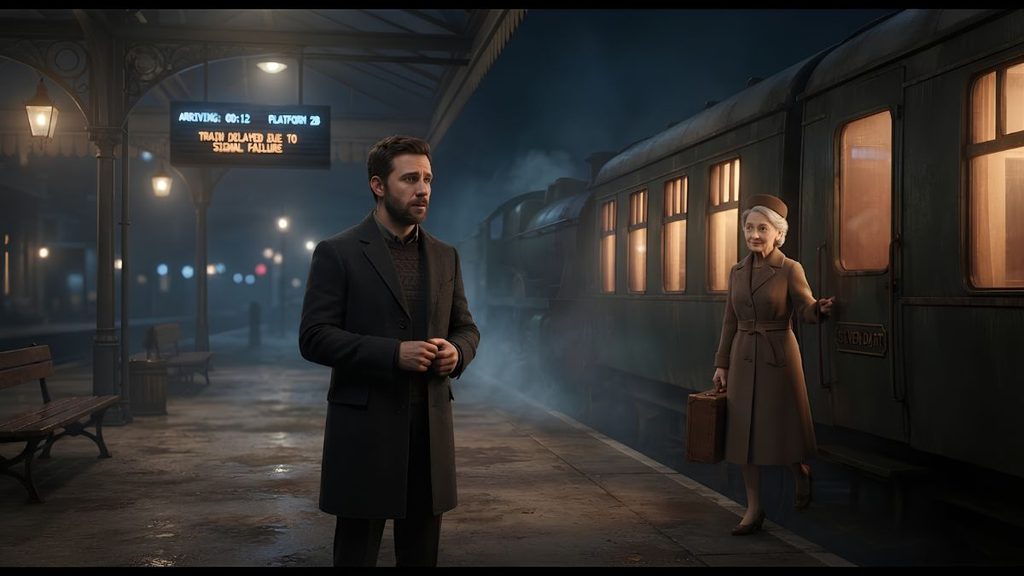
Characters: Oliver and Ruth
Oliver had always believed that railway stations were honest places.
They could be noisy, crowded, confusing, and occasionally unpleasant, but they were honest.
A train either arrived or it did not.
A platform either existed or it did not.
A departure board told you where you were going and when you were supposed to leave.
There was comfort in that.
That was why Oliver disliked being at the station so late at night.
It was nearly midnight when he reached Westbridge Station.
He had been visiting his sister across town and had stayed longer than planned. By the time he checked his phone, his last connection home was already approaching.
He hurried through the station entrance.
The main concourse was almost empty.
A cleaner pushed a wide mop across the polished floor.
A vending machine hummed beside a row of benches.
The electronic departure board flickered above the ticket gates.
Oliver looked up.
His train was listed.
11:52 PM
WESTBRIDGE TO HARTON
PLATFORM 4
He checked the time.
11:47.
“Perfect.”
He walked quickly toward Platform Four.
The station had once been much larger.
Old photographs displayed near the entrance showed crowds filling the platforms decades earlier.
Men in dark coats.
Women carrying leather cases.
Children holding their parents’ hands.
Steam rising around old trains.
The station had been renovated several times since then.
The old ticket booths had disappeared.
The wooden benches had been replaced.
The platform signs were modern.
And, most noticeably, the enormous clock that had once hung above the central concourse was gone.
Oliver remembered seeing it when he was a child.
It had been a large black clock with white numbers.
His father used to point at it whenever they were running late.
“Look at that thing,” he would say. “It never waits for anyone.”
The clock had been removed years ago.
Oliver had barely thought about it since.
He reached Platform Four at 11:50.
Only three other people were waiting.
A man in a business suit.
A young woman with headphones.
And an elderly man sitting at the far end of the platform.
Oliver checked the electronic sign.
HARTON
11:52
ON TIME
He sat down.
At 11:52, nothing happened.
11:53.
11:54.
The businessman looked at his phone.
The young woman removed one headphone.
At 11:55, the electronic sign changed.
DELAYED
Oliver sighed.
“Of course.”
At 11:57, the businessman left.
“Probably taking a taxi,” Oliver thought.
The young woman stood at the stairs.
Then she disappeared.
Oliver remained.
The elderly man remained.
At midnight, the platform was almost completely empty.
Oliver checked his phone.
No service.
He frowned.
He walked closer to the platform edge.
The tracks disappeared into darkness in both directions.
There was no sound.
No distant train.
No announcement.
The elderly man suddenly spoke.
“Has it always been this quiet?”
Oliver turned.
“What?”
The man looked down the tracks.
“The station.”
Oliver smiled politely.
“It’s usually busier.”
The man nodded.
“Yes.”
There was something strange about the way he said it.
As though he remembered the station being busy.
Oliver looked at him.
“Are you waiting for the Harton train?”
The man shook his head.
“No.”
“Then what are you waiting for?”
The man looked toward the tunnel.
“I’m not sure anymore.”
Oliver didn’t know what to say.
A cold breeze moved across the platform.
Then the lights flickered.
The elderly man stood.
“Listen.”
Oliver listened.
At first, there was nothing.
Then he heard it.
A distant rumble.
The sound grew louder.
Oliver stepped toward the edge.
A light appeared in the darkness.
A train was approaching.
He looked at the electronic board.
It still said:
DELAYED
The train came closer.
Oliver noticed something immediately.
There was no destination displayed above the windshield.
No number.
No railway logo.
No modern markings.
The train looked old.
Not abandoned.
Not damaged.
Just old.
Its dark green exterior reflected the platform lights.
The windows were large.
The doors were narrow.
The whole train looked as though it had arrived from another decade.
It slowed.
Then stopped.
Oliver looked at the elderly man.
The man stared at the train.
He whispered:
“It’s still running.”
The doors opened.
Nobody stepped out.
For several seconds, nothing moved.
Then an elderly woman appeared in the doorway.
She was wearing a long brown coat.
She carried a small suitcase.
Her gray hair was pinned neatly behind her head.
She stepped onto the platform.
She looked around.
Then she saw Oliver.
“Excuse me.”
Oliver turned.
“Yes?”
She looked relieved.
“Does the train still run?”
Oliver frowned.
“What?”
“The train.”
She glanced back at the carriage.
“Does it still run?”
Oliver didn’t understand the question.
“Yes,” he said slowly. “Trains still run.”
The woman’s shoulders relaxed.
“Good.”
She smiled.
“That’s good.”
Oliver glanced toward the elderly man.
But he was gone.
The platform was empty except for Oliver and the woman.
She looked around again.
“Is this Westbridge?”
“Yes.”
She smiled.
“I knew it.”
Then she asked:
“Does the station still have the clock?”
Oliver stared at her.
“The clock?”
“The large clock.”
He pointed toward the concourse.
“It was removed years ago.”
The woman’s smile disappeared.
“Removed?”
“Yes.”
“When?”
“I don’t know. Maybe ten years ago.”
She looked genuinely confused.
“That can’t be.”
Oliver felt uneasy.
“Why not?”
She looked toward the station entrance.
“Because I was watching it when I boarded the train.”
Oliver looked at the train.
“What year do you think it is?”
The woman frowned.
“Why?”
“Just tell me.”
She hesitated.
“1968.”
Oliver felt a chill move through him.
He laughed nervously.
“That’s impossible.”
The woman looked at him.
“Why?”
“Because it’s 2026.”
She stared at him.
For a moment, neither spoke.
Then the woman looked down at her suitcase.
“2026?”
Oliver nodded.
She whispered something he couldn’t hear.
“What did you say?”
She looked up.
“Then I missed my stop.”
Oliver glanced toward the train.
“You should get back on.”
The woman shook her head.
“No.”
“Why?”
“Because this isn’t where I was going.”
The doors of the train began to close.
The woman stepped backward.
“Wait,” Oliver said.
She looked at him.
“Who are you?”
She smiled sadly.
“My name is Ruth.”
Oliver looked at the name stitched onto her suitcase.
RUTH E. MARLOW
“Where are you going?”
Ruth looked down the tracks.
“Home.”
“Where is home?”
She pointed toward the darkness.
“Somewhere that isn’t there anymore.”
The train doors closed.
Oliver stepped toward the carriage.
“Wait!”
The train began moving.
Ruth stood behind the window.
She raised one hand.
Oliver watched as the train disappeared into the tunnel.
The platform became silent again.
He stood there for several seconds.
Then he looked at the electronic board.
12:03 AM
NO SCHEDULED SERVICE
Oliver stared.
He walked to the station office.
The door was locked.
He found a security guard near the main entrance.
“Did you see that train?”
The guard looked confused.
“What train?”
“The one that just left Platform Four.”
“There hasn’t been a train for forty minutes.”
“I know.”
The guard looked at him carefully.
“Are you all right?”
“An old train just arrived.”
“No.”
“There was a woman.”
The guard sighed.
“Sir, the last train was canceled.”
Oliver pointed toward Platform Four.
“I was standing there.”
The guard shook his head.
“Nothing came through.”
Oliver checked his phone.
It had service again.
The time was 12:07.
He opened the railway app.
There was no record of a train at 12:03.
No cancellation history.
Nothing.
He went home by taxi.
He barely slept.
The next morning, he searched for Westbridge Station’s history.
He found old photographs.
Construction records.
Renovation plans.
News articles.
Then he found a newspaper archive.
One headline made him stop.
WESTBRIDGE TRAIN SERVICE SUSPENDED AFTER 1968 NIGHT ACCIDENT
Oliver read the article.
A passenger train had been traveling through Westbridge Station on November 14, 1968.
It had been scheduled to continue toward Harton.
But it never arrived.
The train disappeared from the railway system after leaving Westbridge.
Officials initially believed there had been an accident somewhere along the line.
Search crews found nothing.
No wreckage.
No bodies.
No luggage.
No explanation.
The railway eventually declared the train missing.
The passengers were never found.
Oliver read the passenger list.
His eyes moved down the page.
Then stopped.
Ruth Eleanor Marlow.
Age 42.
Destination: Harton.
Oliver leaned back.
He read the name again.
It was the same woman.
He searched for a photograph.
After several minutes, he found one.
A grainy black-and-white image from a local newspaper.
Ruth stood outside the station.
Same face.
Same hair.
Same coat.
Same expression.
Oliver closed his laptop.
He told himself there had to be another explanation.
Someone could have looked like her.
The train could have been a tourist restoration project.
The newspaper could have been wrong.
His exhausted mind could have turned an ordinary event into something impossible.
He repeated these explanations for several days.
Then, one evening, he returned to Westbridge Station.
He didn’t know why.
Perhaps he wanted proof that the platform was ordinary.
Perhaps he wanted to prove himself wrong.
He walked through the station.
The modern clock above the ticket gates showed 10:58.
He went to Platform Four.
Nothing seemed unusual.
A couple waited near the stairs.
A railway employee checked a signal box.
A train arrived at 11:04.
It was modern.
Bright.
No mystery.
Oliver watched it leave.
He felt foolish.
He almost laughed.
Then he noticed something.
At the far end of Platform Four stood a woman.
An elderly woman.
She was wearing a long brown coat.
Oliver froze.
The woman was facing the tracks.
“Ruth?”
She turned.
But it wasn’t Ruth.
It was a different elderly woman.
She smiled politely.
“Sorry?”
Oliver shook his head.
“Nothing.”
The woman smiled.
“Do you know if the train is still running?”
Oliver looked toward the tracks.
“Which train?”
“The old one.”
His stomach tightened.
“There isn’t an old train.”
The woman frowned.
“Of course there is.”
Then she walked away.
Oliver followed.
“Wait.”
She disappeared around the corner.
He ran after her.
The corridor was empty.
No doors had opened.
No stairs led anywhere.
She was simply gone.
Oliver returned to Platform Four.
The electronic board flickered.
For less than a second, the modern display disappeared.
In its place appeared an old black panel.
White letters formed slowly.
WESTBRIDGE
PLATFORM 4
11:17 PM
HARTON
Then it vanished.
Oliver stood perfectly still.
He checked his phone.
11:16.
He stepped away from the platform.
At 11:17, he heard a distant rumble.
He didn’t look toward the tracks.
He walked quickly toward the station exit.
The rumble grew louder.
He could hear the train approaching.
The old train.
He reached the stairs.
Then someone spoke behind him.
“Oliver.”
He stopped.
He had never told anyone at the station his name.
He turned.
Ruth stood at the far end of the platform.
She looked exactly as she had the first night.
She smiled.
“You came back.”
Oliver couldn’t speak.
Ruth looked toward the concourse.
“Is the clock still gone?”
“Yes.”
She nodded sadly.
“Then there really isn’t much time left.”
“What does that mean?”
She looked at him.
“Nothing stays where we leave it.”
The train entered the station.
Its windows glowed warmly.
Oliver could see passengers inside.
Dozens of them.
Men.
Women.
Children.
All dressed in clothing from another time.
Nobody spoke.
Nobody looked toward the platform.
Ruth stepped toward the train.
“Wait,” Oliver said.
She turned.
“Where are you going?”
“Home.”
“But where is home?”
She smiled.
“You’ll understand when you stop looking for places that have disappeared.”
The doors opened.
Ruth stepped inside.
Before the doors closed, she looked at Oliver one last time.
“Tell them the clock was still there.”
Then the train departed.
Oliver watched until the last light disappeared.
The platform fell silent.
He never saw the train again.
He never saw Ruth again.
But he eventually found something that bothered him even more.
Months later, Westbridge Station underwent another renovation.
During construction, workers uncovered an old section of wall behind the modern ticket office.
Inside was a sealed room.
The room contained several forgotten objects.
Old railway schedules.
A wooden bench.
A rusted station sign.
And a large black clock.
The same clock Oliver remembered from childhood.
The clock still worked.
Its hands were stopped at 11:17.
The railway authorities eventually restored it.
They placed it in the station museum.
Oliver visited once.
He stood before the clock for a long time.
A small plaque beneath it explained that the clock had been removed during renovations in 2012 and accidentally sealed behind a wall.
There was no mention of the missing train.
No mention of Ruth.
No mention of the night Oliver had seen a train that did not exist.
Before leaving, Oliver looked at the clock.
11:17.
He smiled faintly.
Then he noticed something scratched into the wooden frame.
A name.
RUTH
Below it was another line.
Still waiting.
Oliver stepped backward.
The museum lights flickered.
For one brief moment, he heard the distant sound of a train.
Then silence.
He never returned to Platform Four after that.
But whenever he traveled by train, he watched the clocks carefully.
He had learned something he could never quite explain.
Stations were not always honest places.
Sometimes they remembered things that people had forgotten.
Sometimes a timetable was less important than a memory.
And sometimes, if you happened to be standing on the right platform at exactly the wrong time, a train could arrive from a place that no longer existed.
It might carry people who had been waiting for decades.
It might stop only long enough for one passenger to step off.
And that passenger might look at you with complete relief and ask a question that makes no sense.
“Does the station still have the clock?”
Oliver always knew what he would say.
He would tell her the truth.
He would tell her that the clock was still there.
Because perhaps, somewhere beyond the darkness between stations, Ruth was still waiting for the answer.
And perhaps that was all she had ever needed to hear.
Theme: Time, forgotten places, memory, and the quiet mystery of people who seem to belong to another era.
4. The Photograph That Lost a Person
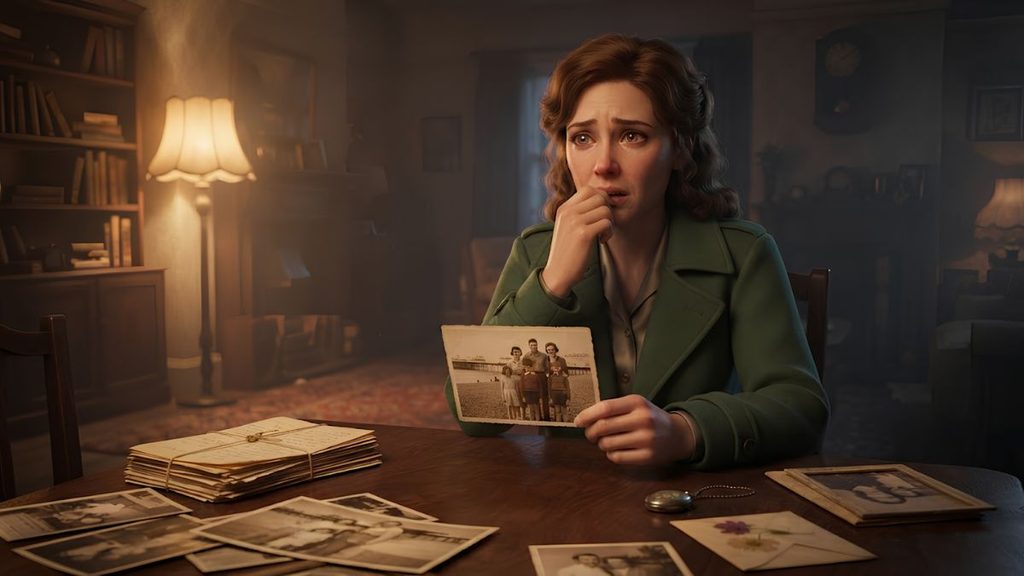
Characters: Amelia
Amelia found the photograph on a Tuesday afternoon.
It was tucked inside a cardboard box in the back of her father’s wardrobe, beneath a stack of old newspapers and a wool coat he had not worn in years.
She almost threw the box away.
Her father had been gone for seven months, and the house still contained too many reminders of him.
Every drawer seemed to contain something he had forgotten.
Old receipts.
Broken watches.
Letters.
Keys that opened nothing.
Photographs.
Amelia had spent weeks sorting through his belongings, trying to decide what should be kept and what could finally be released.
The photograph caught her attention because she recognized the beach.
She pulled it from the box.
It showed her family standing beside a wooden pier on a bright summer afternoon.
Her father stood on the left.
Her mother stood beside him.
Her brother, Daniel, was holding a red bucket.
And in the center was Amelia herself.
She was about seven years old.
She wore a yellow dress and had one hand raised against the sunlight.
Amelia smiled.
She remembered that vacation.
At least, she thought she did.
She remembered the smell of the sea.
The hotel room.
Her father buying ice cream.
Daniel refusing to swim because he had seen a jellyfish.
She remembered her mother laughing.
But something about the photograph felt wrong.
Amelia held it closer.
There was an empty space between Daniel and her.
Not much.
Perhaps the width of another person.
The background was visible through it.
Blue sky.
White sand.
A strip of ocean.
Amelia frowned.
She was certain someone had been standing there.
She lowered the photograph.
“Who?”
The question escaped before she realized she had spoken aloud.
She looked at the photograph again.
The empty space bothered her.
Not because it was strange.
Because it wasn’t supposed to be empty.
She remembered someone standing there.
A boy, perhaps.
Or a girl.
Someone close to the family.
Someone who had been part of that vacation.
But she could not remember the face.
She tried harder.
Nothing.
Only a feeling.
A voice.
Laughter.
A hand holding hers.
Amelia sat on the bedroom floor.
She studied the photograph for nearly an hour.
Then she called her mother.
“Mom, do you remember our trip to Seabrook?”
Her mother was quiet.
“Seabrook?”
“The vacation when I was seven.”
“Oh.”
Her mother’s voice softened.
“Yes. I remember.”
“Do you remember who went with us?”
“Just us.”
Amelia looked at the photograph.
“Are you sure?”
“Why?”
“I found a picture.”
“What picture?”
Amelia hesitated.
“There seems to be someone missing.”
Her mother laughed softly.
“You’re imagining things.”
“Maybe.”
They changed the subject.
But Amelia couldn’t.
That evening, she placed the photograph beside her bed.
She stared at it before going to sleep.
The empty space seemed larger in the darkness.
The next morning, Amelia called Daniel.
“Do you remember Seabrook?”
Her brother laughed.
“You’ve been looking through Dad’s boxes, haven’t you?”
“Yes.”
“That explains it.”
“Do you remember the vacation?”
“Of course.”
“Who was there?”
“Mom. Dad. You. Me.”
“Nobody else?”
Daniel paused.
“No.”
“Are you sure?”
“Why are you asking?”
Amelia told him about the photograph.
There was a long silence.
Then Daniel said:
“Send me a picture.”
She did.
He called back five minutes later.
“That’s weird.”
“What?”
“I remember someone.”
Amelia sat up.
“You do?”
“I don’t know.”
“Who?”
“I can’t see the face.”
“What do you remember?”
Daniel was quiet.
“A red shirt.”
Amelia looked at the photograph.
There was no red shirt.
“I remember playing with someone,” he continued.
“Where?”
“At the beach.”
“Who?”
“I don’t know.”
His voice became uncertain.
“Amelia, maybe we’re remembering another vacation.”
“Maybe.”
Neither of them sounded convinced.
A few days later, Amelia took the photograph to an old restoration studio downtown.
The studio belonged to a man named Henry Mercer.
He had restored photographs for more than forty years.
The place smelled of chemicals, paper, and old wood.
Photographs covered the walls.
Wedding portraits.
Family reunions.
Children who had grown old.
People who had died.
Henry examined Amelia’s photograph under a magnifying lamp.
“Interesting.”
“What?”
“There has been some damage here.”
He pointed toward the empty space.
“What kind?”
“Light exposure.”
“Can it be restored?”
“Possibly.”
Amelia hesitated.
“There’s something missing.”
Henry looked at her.
“You mean the person?”
Her heart stopped.
“You see it?”
Henry frowned.
“See what?”
“The person.”
He looked back at the photograph.
“I see an empty section.”
“Someone was standing there.”
Henry studied her expression.
“Are you certain?”
“Yes.”
He didn’t argue.
“Leave it with me.”
“How long?”
“A week.”
Amelia handed him the photograph.
Before leaving, she looked back.
Henry was still examining it.
She had almost reached the door when he spoke.
“Miss?”
She turned.
“Was this person important?”
Amelia swallowed.
“I think so.”
Henry nodded.
“Then perhaps we should find out who.”
For the next week, Amelia tried to forget about the photograph.
She worked.
She went grocery shopping.
She met friends.
She answered emails.
But the empty space followed her.
At night, she began dreaming.
In one dream, she was seven years old again.
She stood on a beach.
Her parents were laughing.
Daniel was running toward the water.
Someone held Amelia’s hand.
She turned.
The person’s face was hidden by sunlight.
“Wait,” Amelia said.
The person squeezed her hand.
Then disappeared.
She woke before she could see the face.
The same dream came every night.
On the seventh day, Henry called.
“I think you should come in.”
Amelia arrived that afternoon.
Henry was waiting behind the counter.
The restored photograph lay beneath a sheet of white paper.
He looked unusually serious.
“What happened?”
“I found something.”
He removed the sheet.
Amelia looked down.
For several seconds, she couldn’t understand what she was seeing.
The photograph was almost identical.
Her father.
Her mother.
Daniel.
Amelia.
The beach.
The pier.
But now there was someone standing in the empty space.
A boy.
About ten years old.
He wore a red shirt.
His hair was dark.
He stood close to Amelia.
And he was looking directly at the camera.
Amelia stopped breathing.
She knew that face.
Not from the photograph.
From somewhere else.
Somewhere much later.
She stepped backward.
“Who is that?”
Henry looked at her.
“I was hoping you could tell me.”
Amelia stared at the boy.
She knew him.
She had seen that face hundreds of times.
But where?
Then it came to her.
A framed photograph.
A school yearbook.
An old newspaper article.
A funeral.
She whispered:
“Thomas.”
Henry waited.
“Thomas Reed.”
“Who was he?”
Amelia couldn’t answer.
Because she didn’t know.
And yet she knew the name.
She drove directly to her mother’s house.
She placed the restored photograph on the kitchen table.
Her mother looked at it.
The color drained from her face.
“Where did you get this?”
“Henry restored it.”
Her mother didn’t touch the photograph.
“Who is he?”
Her mother stared at the boy.
“Amelia.”
“Mom.”
“Don’t.”
“Who is Thomas?”
Her mother sat down.
For a long time, she said nothing.
Then she whispered:
“He was your cousin.”
Amelia felt dizzy.
“What?”
“Your father’s sister’s son.”
“Uncle Robert’s son?”
“No.”
Her mother looked away.
“Your father’s sister was named Evelyn.”
Amelia had never heard the name.
“That’s impossible.”
“She died before you were born.”
“Why have I never heard of her?”
Her mother closed her eyes.
“Because your father didn’t want you to.”
Amelia stared at her.
“What happened?”
Her mother looked toward the window.
“Thomas died.”
“When?”
“After that vacation.”
“How?”
“A drowning accident.”
Amelia looked at the photograph.
“No.”
“He was swimming near the pier.”
“How old?”
“Ten.”
Amelia sat down.
The room seemed to move around her.
She remembered a boy.
Red shirt.
Wet hair.
Laughter.
A hand holding hers.
Her father shouting.
Someone crying.
Then nothing.
“Why don’t I remember him?”
Her mother began to cry.
“Your father thought it was better that way.”
“Better?”
“He couldn’t bear talking about it.”
“So he erased him?”
“No.”
“Then why?”
“Because you were seven.”
Her mother’s voice broke.
“You kept asking where Thomas had gone.”
Amelia stared at the photograph.
“And?”
“Your father told you he had gone home.”
Amelia’s chest tightened.
“But I forgot.”
“You didn’t at first.”
Her mother wiped her eyes.
“Children forget things when adults stop talking about them.”
Amelia looked at the photograph again.
The boy seemed almost alive.
She remembered him now.
Not everything.
Pieces.
Thomas teaching her how to skip stones.
Thomas stealing her ice cream.
Thomas telling her that the ocean could hear secrets.
Thomas promising to show her something behind the pier.
Then the memory changed.
Water.
Screaming.
Her father’s hand around her shoulders.
Her mother crying.
A red shirt floating far away.
Amelia closed her eyes.
“Why did Dad keep the photograph?”
Her mother didn’t answer.
Amelia understood.
He hadn’t been able to throw it away.
That night, she returned to her father’s house.
She searched the boxes again.
This time she looked for Thomas.
She found an envelope inside an old desk drawer.
Her name was written on it.
For Amelia, when she is old enough to understand.
Her hands shook as she opened it.
Inside was a letter.
Her father’s handwriting.
Amelia,
There are things I should have told you.
I don’t know whether this letter will help or hurt you.
When you were seven, you lost someone.
His name was Thomas.
He was your cousin, but you loved him like a brother.
I wanted to tell you the truth.
But every time I tried, you cried.
You asked why he wasn’t coming back.
I couldn’t answer.
So I stopped talking about him.
I thought silence would protect you.
I was wrong.
Silence doesn’t erase pain.
It only makes the memories harder to find.
If you ever remember him, don’t be afraid.
He was real.
You loved him.
And he loved you.
Your father
Amelia read the letter twice.
Then she noticed something written at the bottom.
One final sentence.
I am sorry I let you forget him.
She cried for a long time.
Not because the memory was frightening.
Because it was returning.
Over the next few weeks, Amelia began remembering Thomas.
Not all at once.
A little at a time.
A red bucket.
A seashell.
A joke.
A scar on his knee.
A song he used to sing.
A promise to meet her again beside the pier.
She searched through old family records.
She found his name.
She found a school photograph.
She found a birthday card.
She found a newspaper article about the accident.
She even found an old home video.
The recording was only a few minutes long.
The camera shook as her father filmed the beach.
Daniel ran past.
Her mother laughed.
Then Thomas appeared.
He looked directly at the camera.
“Amelia!”
The seven-year-old version of Amelia ran into the frame.
Thomas held out a shell.
“For you.”
She laughed.
The recording ended.
Amelia watched it several times.
Each time, she noticed something different.
On the final viewing, she noticed Thomas looking past the camera.
At her father.
His expression changed.
He looked afraid.
The video ended before anything else happened.
Amelia never discovered what Thomas had wanted to tell her.
Perhaps it had been nothing.
Perhaps he had simply been frightened by the waves.
Perhaps the memory had changed over the years.
She decided she didn’t need to know.
Some mysteries remained mysteries.
What mattered was that Thomas had existed.
He had been part of her family.
He had been loved.
And for years, his absence had been hidden inside an empty space in a photograph.
A month later, Amelia returned to Henry’s studio.
She carried the original photograph.
“I want another copy.”
Henry smiled.
“Of the restored one?”
“Yes.”
“How many?”
“Three.”
He prepared the copies.
Before Amelia left, Henry looked at the photograph.
“May I ask something?”
“Of course.”
“Why do you think the person disappeared from the original?”
Amelia looked at Thomas.
“I don’t know.”
Henry nodded.
“Photographs are strange.”
“How so?”
“They preserve moments.”
He paused.
“But they don’t always preserve the truth about what those moments meant.”
Amelia smiled.
“That’s true.”
She took the photographs home.
She placed one beside her father’s letter.
One went into her mother’s house.
The third she kept.
She put it in a frame beside her bed.
For the first time, the photograph didn’t frighten her.
It comforted her.
Sometimes, late at night, Amelia would look at Thomas’s face.
She wondered whether memories could really disappear.
Perhaps they could.
Perhaps people could be forgotten.
Perhaps silence could slowly remove someone from a family’s story.
But she no longer believed that forgetting meant someone had never mattered.
Sometimes a person disappeared from memory precisely because the people who loved them were trying desperately not to remember the pain of losing them.
Thomas had not vanished.
He had simply been hidden.
And once Amelia remembered him, she understood something her father had never been able to explain.
Grief does not always disappear when memories fade.
Sometimes grief waits quietly beneath them.
Waiting for someone to turn over an old photograph.
Waiting for a name.
Waiting for a face.
Waiting for someone to finally ask:
“Who was standing there?”
Years later, Amelia returned to Seabrook.
She stood beside the old pier.
The town had changed.
The hotel was gone.
The beach was narrower.
The wooden pier had been replaced by a modern one.
But the sea was the same.
Amelia carried the photograph with her.
She stood where her family had once stood.
Then she looked at the place where Thomas had been.
The wind moved through her hair.
For a moment, she could almost hear his voice.
She smiled.
“Hi, Thomas.”
The waves moved gently against the shore.
She stayed there for a while.
Then she placed a small seashell beside the railing.
A simple one.
White.
Smooth.
Nothing remarkable.
But it reminded her of the boy in the red shirt.
The boy who had once stood beside her.
The boy who had disappeared from a photograph.
The boy she had forgotten.
And the boy she would never forget again.
When Amelia returned home, she placed the photograph beside her father’s letter.
She turned off the light.
The room became quiet.
On the bedside table, the family stood together once more.
Her father.
Her mother.
Daniel.
Amelia.
And Thomas.
No empty space remained between them.
The photograph had finally remembered what the family had forgotten.
And perhaps that was the strangest thing of all.
Not that a missing person had appeared.
But that, after all those years, someone who had been erased from memory had found his way home.
Theme: Family memory, forgotten history, identity, and the terrifying possibility that memories can disappear without leaving a trace.
5. The House With No Morning
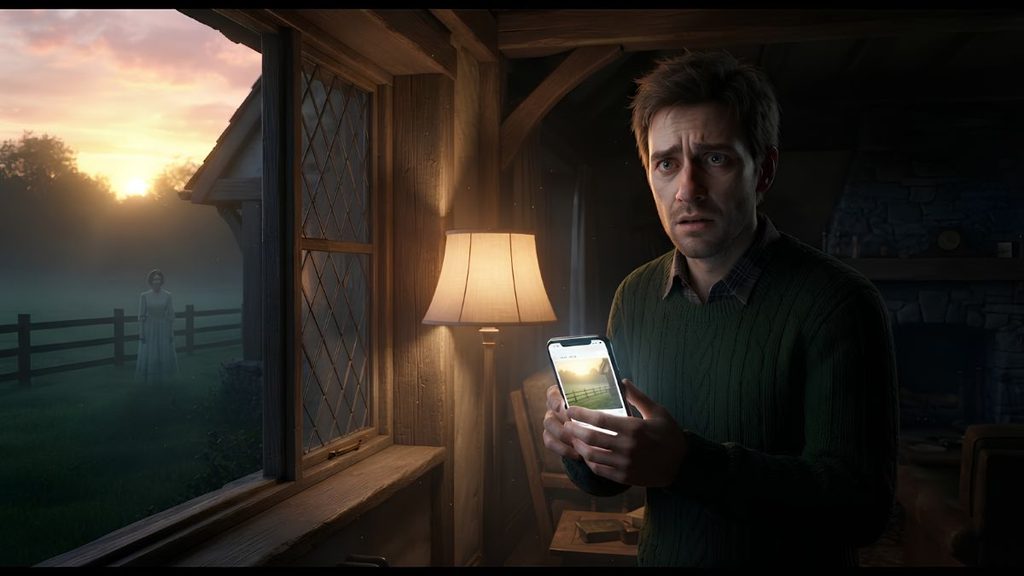
Characters: Nathan and Elise
Nathan had spent most of the summer listening to other people.
Car horns outside his apartment.
Neighbors arguing through thin walls.
Phones ringing in cafés.
Construction workers beginning their day before he had finished sleeping.
Even at night, the city never seemed completely quiet.
There was always an engine somewhere.
A siren.
A door slamming.
Someone laughing on the sidewalk.
So when Nathan found a small countryside cottage available for one week, he booked it without thinking too much.
The cottage stood at the end of a narrow road surrounded by fields.
There was a village several miles away, but the house itself seemed completely alone.
The owner, a quiet woman named Elise, met him outside on the first afternoon.
She was in her early forties, with dark hair pulled loosely behind her head and a calm expression that made Nathan feel as though she had known him longer than a few minutes.
“Everything works,” she said, handing him the key.
“Electricity?”
“Yes.”
“Water?”
“Yes.”
“Internet?”
“Sometimes.”
Nathan laughed.
“I can survive that.”
Elise smiled.
“Most people come here because they want to.”
“Want to do what?”
“Get away.”
Nathan looked at the empty fields.
“That’s exactly why I’m here.”
She nodded.
“Then you’ll like the house.”
Before leaving, Elise pointed toward the old wooden fence behind the cottage.
“If you need anything, call me.”
Nathan noticed there was something strange in her expression.
Not fear.
Not concern.
Something closer to hesitation.
He almost asked about it.
Instead, he said goodbye.
That evening, Nathan cooked pasta, opened a bottle of water, and sat beside the kitchen window.
The countryside was beautiful.
The sun disappeared behind the distant trees.
Birds settled somewhere beyond the fields.
The wind moved through tall grass.
For the first time in months, Nathan heard almost nothing.
He smiled.
“This is what quiet sounds like.”
He went to bed early.
The house was completely dark.
And completely silent.
So silent that Nathan could hear the old clock ticking in the hallway.
Tick.
Tick.
Tick.
He fell asleep quickly.
At 7:30 the next morning, he woke.
He opened his eyes.
The bedroom was still dark.
Nathan reached for his phone.
7:30 a.m.
He frowned.
The curtains were closed.
He assumed he had forgotten to open them the night before.
He walked across the room and pulled them apart.
Nothing changed.
Outside was darkness.
Not the soft darkness of early morning.
Not the blue-gray darkness that comes before sunrise.
It was black.
The fields were invisible.
The trees were invisible.
Even the fence ten feet from the window could not be seen.
Nathan stared at the glass.
“What the…”
He checked his phone again.
7:31.
He opened the weather app.
Clear skies.
Sunrise: 6:04 a.m.
Nathan laughed nervously.
“Okay.”
He made coffee.
Maybe there was fog.
Maybe the weather app was wrong.
Maybe the countryside simply had a strange horizon.
He waited.
7:45.
8:00.
8:30.
The darkness remained.
At 9:00, Nathan finally stepped outside.
The moment he opened the front door, sunlight hit his face.
He froze.
The morning was bright.
Completely normal.
The fields were green.
The sky was blue.
Birds flew above the trees.
Nathan slowly turned toward the cottage.
The windows reflected sunlight.
He walked around the house.
Everything looked ordinary.
He pulled out his phone and took a photograph of the field.
The picture showed exactly what he was seeing.
Bright morning.
Blue sky.
Green grass.
Nathan looked toward the bedroom window.
It was dark.
He walked back inside.
The moment he crossed the doorway, the world outside disappeared into darkness again.
Nathan stopped.
He opened the front door.
Daylight.
He stepped inside.
Darkness.
He stepped outside.
Daylight.
Inside.
Darkness.
Nathan stood between the two worlds.
For several seconds, he did nothing.
Then he slowly closed the door.
He told himself it was some strange reflection.
Perhaps the glass had been treated.
Perhaps the windows were tinted.
Perhaps the house was designed in some unusual way.
There had to be an explanation.
There always was.
He spent the rest of the day outside.
By noon, everything felt normal.
Nathan walked through the fields.
He took photographs.
He called his friend Daniel and described the strange morning.
Daniel laughed.
“You went to the countryside for one day and already found a ghost.”
“Very funny.”
“Send me a picture.”
Nathan sent him the photograph.
Daniel replied almost immediately.
“Looks beautiful.”
Nathan stared at the message.
He looked around.
Everything was beautiful.
Nothing was wrong.
Yet when he walked toward the cottage, a strange feeling returned.
He could see the house.
He could see the windows.
But every window looked black.
He stopped at the edge of the field.
For the first time, Nathan wondered whether he had made a mistake coming there.
That evening, he called Elise.
She answered after several rings.
“Hello?”
“Hi. It’s Nathan.”
“Is something wrong?”
Nathan hesitated.
“Have you ever noticed anything strange about the windows?”
There was silence.
“What do you mean?”
“Yesterday morning, the outside looked completely dark through them.”
Elise breathed quietly.
“And when you went outside?”
“It was daylight.”
Another silence.
Nathan’s stomach tightened.
“You know about this.”
Elise did not answer immediately.
Finally, she said, “Did you take a photograph?”
Nathan looked at his phone.
“Yes.”
“Does the photograph show daylight?”
“Yes.”
Elise exhaled.
“Then don’t worry.”
Nathan almost laughed.
“Don’t worry?”
“I didn’t say it wasn’t strange.”
“Elise, what is happening?”
She was quiet.
Then she said, “Some houses hold on to things.”
Nathan frowned.
“What things?”
“Time, sometimes.”
The line went silent.
Nathan waited.
“Elise?”
“I’m sorry,” she said. “I shouldn’t have rented it to you.”
Nathan stood.
“Why?”
But the call ended.
He called again.
No answer.
That night, Nathan barely slept.
At 2:00 a.m., he walked through the house checking every window.
All of them showed darkness.
But when he opened the curtains and looked directly through the glass, he could see tiny points of light.
Stars.
Thousands of them.
The sky outside looked impossibly clear.
Nathan checked the time.
2:03 a.m.
That made sense.
He went back to bed.
At 7:30 the next morning, he woke again.
Darkness.
Exactly the same.
He checked his phone.
7:30.
He opened the curtains.
Nothing.
He took a photograph.
The picture showed daylight.
Nathan stared at it.
This time, the photograph showed something else.
A woman standing beside the fence.
Nathan zoomed in.
The woman was Elise.
He immediately opened the bedroom window.
Outside was bright daylight.
The fence was empty.
No one stood there.
He checked the photograph again.
Elise was still there.
She appeared to be looking directly toward the cottage.
Nathan called her.
No answer.
He called again.
Nothing.
Then a message arrived.
Don’t open the back door.
Nathan stared at the words.
He slowly turned toward the hallway.
The back door was at the end of it.
He had not noticed before, but beneath the door was a thin line of darkness.
Not shadow.
Darkness.
It seemed deeper than the rest of the room.
Nathan stayed away from it.
For the rest of the day, he remained outside as much as possible.
At sunset, he watched the sky turn orange.
He waited for the darkness to come naturally.
At 8:12, the cottage windows became black.
Nathan stood in the field.
The house looked as though every window had been painted with ink.
He walked toward it.
The closer he came, the quieter everything became.
The wind stopped.
The insects stopped.
Even the birds disappeared.
Nathan stood outside the front door.
He could hear the old clock inside.
Tick.
Tick.
Tick.
He opened the door.
The sound of the countryside vanished.
Inside, the clock was louder.
Tick.
Tick.
Tick.
Nathan looked at it.
8:13 p.m.
He waited.
The second hand moved.
The minute hand moved.
Everything seemed normal.
Then the clock stopped.
8:17.
Nathan held his breath.
A second later, it started again.
Tick.
Tick.
Tick.
He went upstairs.
His bedroom was exactly as he had left it.
Except for one thing.
His phone was lying on the bed.
He was holding his phone in his hand.
Nathan stopped.
He looked at the phone in his hand.
Then at the phone on the bed.
Both screens showed 8:17.
He walked closer.
The second phone displayed a photograph.
Nathan looked at it.
It showed him sleeping.
In the same bedroom.
The photograph had been taken from the corner of the ceiling.
He dropped the phone.
The screen remained lit.
Nathan ran downstairs.
He grabbed his jacket and opened the front door.
Bright evening sunlight flooded the porch.
He stepped outside.
The countryside returned.
Wind.
Birds.
Insects.
He ran toward the road.
He did not stop until he reached the fence.
Then he turned.
The cottage stood behind him.
Normal.
Peaceful.
Almost innocent.
Nathan pulled out his phone and called Elise.
This time she answered.
“Where are you?”
“I’m outside.”
“Good.”
“What is happening?”
Elise sighed.
“I hoped it wouldn’t happen again.”
“What does that mean?”
“The house was built in 1926.”
Nathan waited.
“One winter, a family lived there. A mother, father, and daughter.”
“What happened?”
“They disappeared.”
Nathan felt cold despite the warm evening.
“Disappeared?”
“People searched for them. There were no bodies. No signs of violence. Nothing.”
“And the house?”
“It stayed empty.”
Elise paused.
“Years later, someone bought it. They noticed the same thing.”
“The darkness.”
“Yes.”
Nathan looked at the windows.
“Why didn’t you tell me?”
“Because most people don’t see it.”
“Most?”
“Some people spend a week there and experience nothing.”
“And the others?”
Elise’s voice became quieter.
“They notice the mornings.”
Nathan swallowed.
“What does that mean?”
“The house doesn’t always agree with the world outside.”
He said nothing.
Elise continued.
“Sometimes the house shows you yesterday.”
Nathan looked toward the cottage.
“Sometimes tomorrow.”
“And sometimes?”
Elise did not answer.
Nathan already knew he did not want to hear it.
“Sometimes,” she said, “it shows you a morning that never happened.”
The call ended.
Nathan stayed outside until midnight.
He slept in his car.
At least, he tried.
At 6:45 the next morning, he woke to birds.
Sunrise was beginning.
For one moment, everything felt normal.
Then he remembered.
He looked toward the cottage.
The bedroom window was black.
Nathan checked his phone.
7:30.
The darkness had returned.
He took a photograph.
Daylight.
He looked through the window.
Darkness.
This time, something was visible.
A table.
Set for three.
Nathan stared.
There was a woman sitting at the table.
She looked like Elise.
Across from her sat a young girl.
The third chair was empty.
Nathan zoomed in.
The photograph became blurry.
Then the woman at the table looked directly toward the camera.
Nathan dropped his phone.
He stepped backward.
The photograph changed.
He picked it up again.
Now the table was empty.
All three chairs were empty.
Nathan looked at the house.
For the first time, he noticed a small wooden plaque beside the front door.
He had never seen it before.
It read:
1926
Below it was another line.
THE HOUSE REMEMBERS THE MORNING.
Nathan backed away.
He decided to leave.
He packed his bags.
He put them in the car.
He drove toward the road.
But after ten minutes, he was back at the cottage.
He tried again.
Same result.
The road curved.
The fields changed.
The trees changed.
Yet somehow, he always returned to the house.
At noon, he called Elise.
She answered immediately.
“You’re still there.”
“I can’t leave.”
“I know.”
Nathan closed his eyes.
“How do I get out?”
“You have to wait.”
“For what?”
“The fifth morning.”
Nathan looked at the calendar on his phone.
He had arrived Monday.
It was Friday.
“Tonight?”
“No.”
Elise paused.
“Tomorrow.”
Nathan felt his chest tighten.
“Why?”
“Because tomorrow is when the house decides whether you belong to it.”
Nathan almost shouted.
“What does that even mean?”
Elise whispered:
“I don’t know.”
Then she said something that Nathan would remember for the rest of his life.
“If someone knocks, don’t answer.”
The call ended.
That night, Nathan stayed awake.
He sat in the living room with every light turned on.
11:00.
12:00.
1:00.
2:00.
Nothing.
At 5:00, he began to feel exhausted.
At 6:00, he heard birds outside.
At 6:30, the first hint of blue appeared through the windows.
Nathan almost cried with relief.
Then the clock struck 7:30.
Everything went black.
The windows.
The hallway.
The kitchen.
Even the lights seemed strangely weak.
Nathan stood in the living room.
The clock ticked.
7:31.
7:32.
Then came the knock.
Three slow knocks.
Knock.
Knock.
Knock.
Nathan froze.
Another three.
Knock.
Knock.
Knock.
He remembered Elise’s warning.
Don’t answer.
The knocking stopped.
A woman’s voice came through the door.
“Hello?”
Nathan did not move.
The voice came again.
“Please.”
It was Elise.
Nathan stared at the door.
“Elise?”
“Yes.”
Her voice sounded frightened.
“Please open the door.”
Nathan stepped closer.
Then stopped.
Something was wrong.
The voice sounded exactly like Elise.
But there was no emotion behind it.
No breathing.
No hesitation.
Just words.
Then the woman outside whispered:
“Have you seen the morning yet?”
Nathan’s blood ran cold.
The sentence was strange.
But what frightened him most was the way she said it.
As though she had asked the question many times before.
Nathan looked through the window beside the door.
Darkness.
Nothing else.
He backed away.
The woman knocked again.
“Have you seen the morning yet?”
Nathan remained silent.
Then she said:
“I haven’t.”
The door handle moved.
Once.
Twice.
Then stopped.
Nathan stood frozen until he heard footsteps walking away.
He waited.
Ten minutes.
Twenty.
Finally, he approached the window.
He looked outside.
A woman stood beside the fence.
It was Elise.
This time, she was real.
Nathan opened the door.
She ran inside.
“Close it.”
He did.
Elise leaned against the wall, breathing hard.
“You shouldn’t have opened the door.”
Nathan stared at her.
“You told me not to.”
“I know.”
“Who was that?”
Elise looked toward the window.
“I don’t know.”
“You said the house shows things.”
“Sometimes.”
“Was that one of the things?”
Elise shook her head.
“No.”
Nathan waited.
She looked at him.
“That was someone who was trapped here.”
Nathan felt the room grow colder.
“Who?”
Elise glanced toward the hallway.
“My sister.”
Nathan said nothing.
Elise continued.
“She rented this house eleven years ago.”
“The same thing happened?”
“Yes.”
“The dark mornings.”
“Yes.”
“The photographs.”
“Yes.”
“The knocking.”
Elise looked down.
“She answered.”
Nathan swallowed.
“What happened?”
“We found her car two days later.”
“Was she inside?”
“No.”
“Then where was she?”
Elise’s eyes filled with tears.
“We never found her.”
The clock ticked.
7:41.
Nathan looked at the windows.
For the first time, the darkness seemed slightly lighter.
A faint gray glow appeared.
Elise noticed it.
“Don’t look.”
Nathan turned.
“What?”
“Don’t look at the morning.”
“Why?”
“Because if the house shows you something, it wants you to recognize it.”
Nathan understood.
The house did not simply hide the morning.
It was waiting for someone to accept the wrong one.
They sat in silence.
Minutes passed.
The darkness slowly became gray.
Then blue.
Then gold.
Sunlight entered through the windows.
Nathan closed his eyes.
He waited.
Elise whispered:
“Now.”
He opened them.
Morning.
Real morning.
The fields were bright.
The trees were green.
Birds flew across the sky.
The house looked ordinary.
The clock read 7:52.
Nathan laughed.
Then he cried.
He did not care which.
He packed his belongings.
This time, when he drove down the road, the cottage disappeared behind the trees.
He did not turn around.
Three weeks later, Nathan received an envelope.
There was no return address.
Inside was a photograph.
It showed the cottage.
Morning sunlight covered the fields.
The front door stood open.
Nathan looked closer.
Someone was standing in the doorway.
Elise.
Beside her was another woman.
Nathan recognized her from the photograph.
The woman who had knocked.
His hands began to shake.
On the back of the photograph, someone had written:
Thank you for waiting.
Nathan turned the photograph over again.
There was one more detail.
A date.
Tomorrow.
Nathan stared at it for a long time.
Then he walked to his bedroom window.
Outside, the sun was setting.
He watched it disappear.
Night came normally.
For the first time in weeks, Nathan felt safe.
He went to bed.
At 7:30 the next morning, sunlight entered the room.
Nathan smiled.
He reached for his phone.
7:30.
He sat up.
Then he noticed something.
His bedroom window was completely dark.
Nathan did not move.
The phone in his hand displayed a photograph.
It showed bright morning outside.
But in the photograph, someone was standing beside his window.
A woman.
Looking directly at him.
Nathan slowly lowered the phone.
Three knocks sounded from somewhere inside the apartment.
Knock.
Knock.
Knock.
He stared at the bedroom door.
A familiar voice whispered from the hallway.
“Have you seen the morning yet?”
Nathan closed his eyes.
And for the first time, he understood what the house had been trying to teach him.
Some places do not trap people by locking the doors.
Some places trap people by making them question which side of the door is real.
Theme: Isolation, distorted reality, time, and the fear of being trapped somewhere outside the normal rhythm of life.
6. The Library Book Returned Tomorrow
Characters: Sophie
Sophie found the book on a rainy Tuesday afternoon.
It was hidden inside a cardboard box in the back of her grandmother’s attic.
Her grandmother, Evelyn, had died three months earlier.
Since then, Sophie had been helping her mother sort through the house.
Most of the work was ordinary.
Old clothes.
Christmas decorations.
Photographs.
Letters.
Receipts from shops that no longer existed.
There were also dozens of books.
Evelyn had loved reading.
Some books were stacked neatly on shelves.
Others were scattered across tables and windowsills.
Sophie had already filled several boxes with novels she wanted to keep.
The last box was different.
It had been pushed beneath an old wooden desk.
There was no label on it.
Sophie pulled it into the light.
Dust covered the lid.
She opened it.
Inside were notebooks, postcards, an old pair of reading glasses, and one book.
The book was dark green.
Its cover had no picture.
No author’s name.
No publisher.
Nothing.
Sophie picked it up.
It felt strangely heavy.
She opened the first page.
There was no title page.
No copyright information.
No library stamp.
No name.
Only a handwritten sentence appeared inside the cover.
Please return this tomorrow.
Sophie frowned.
She turned the book over.
Nothing.
She opened the first page again.
The handwriting looked old.
Careful.
Almost formal.
She recognized it immediately.
Her grandmother’s handwriting.
Sophie sat on the attic floor.
“Return it where?” she whispered.
There was no answer.
She checked the box again.
Nothing else referred to the book.
Curiosity won.
She carried it downstairs.
That evening, Sophie searched online for the title.
She had to look carefully.
The title was written in tiny letters on the first chapter page.
The House Beyond the Last Street.
She typed it into several search engines.
Nothing.
She searched libraries.
Nothing.
She searched used-book databases.
Nothing.
She searched the title with her grandmother’s name.
Still nothing.
Finally, she found a discussion forum where someone had mentioned unpublished manuscripts.
She searched there.
Nothing.
Sophie stared at the screen.
Maybe it was simply something her grandmother had written.
Perhaps Evelyn had started a novel and never finished it.
Sophie opened the book again.
The first sentence made her stop.
Sophie had always believed that an ordinary life was easier to understand.
She stared at the page.
Her name.
Not a common name in her family.
Her name.
She read the next paragraph.
The story described a woman living alone in an apartment.
A woman who worked from home.
A woman who drank tea in the evening.
A woman who kept books beside her bed.
Sophie looked around her apartment.
She lived alone.
She worked from home.
She drank tea every evening.
There were books beside her bed.
She laughed quietly.
“That’s a little creepy.”
But coincidences happened.
She continued reading.
The woman in the story lived in an old apartment building with a narrow hallway and a brass number on the front door.
Sophie looked at her own door.
Brass number.
The woman had a small crack in the kitchen window.
Sophie looked toward her kitchen.
There was a crack in the glass.
The woman owned a blue mug with a tiny white flower painted on the side.
Sophie slowly turned toward the kitchen counter.
Her blue mug sat beside the sink.
A tiny white flower was painted on it.
Sophie stopped reading.
She closed the book.
For several minutes, she sat completely still.
Then she opened it again.
The next chapter described her living room.
Not a similar living room.
Her living room.
The gray sofa.
The small wooden table.
The lamp beside the window.
Even the plant Sophie had almost killed twice.
She read faster.
The story described the woman walking to the kitchen.
Making tea.
Returning to the sofa.
Opening a book.
Sophie looked down.
She was sitting exactly where the woman was sitting.
Her hands began to feel cold.
She closed the book again.
This time, she put it on the table.
She did not sleep well.
At 2:14 a.m., she heard a sound from the living room.
A soft thump.
Sophie sat up.
She listened.
Nothing.
She got out of bed.
The apartment was dark.
She walked toward the living room.
The green book was still on the table.
Sophie switched on the lamp.
The book was open.
She was certain she had closed it.
The page contained one sentence.
Sophie looked toward the doorway.
She froze.
Someone was standing behind her.
She spun around.
Nobody.
The hallway was empty.
Sophie looked back at the book.
The sentence had not changed.
She closed it.
This time, she placed a heavy vase on top of it.
Then she went back to bed.
In the morning, the book was still under the vase.
Sophie almost laughed at herself.
She had been tired.
Overly imaginative.
Maybe the book had simply fallen open.
She made coffee.
Then she noticed something.
A page had been added.
It was not there the previous night.
She was certain.
Sophie picked up the book.
A new page had appeared between two chapters.
The handwriting was different from the printed text.
It was written in dark ink.
The sentence said:
Sophie woke later than usual and burned the toast.
Sophie stared at it.
She had not burned any toast yet.
She looked toward the kitchen.
The toaster was still empty.
She laughed.
“Fine.”
She made breakfast.
Then, distracted by a phone call, she forgot the toast.
Smoke filled the kitchen.
Sophie coughed and rushed to the toaster.
The bread was black.
She turned off the machine.
Her hands trembled.
She returned to the book.
The page now contained another sentence.
She stood in the kitchen, wondering whether the book had known.
Sophie dropped it.
That was enough.
She put the book in a drawer.
She locked the drawer.
Then she called her mother.
“Mom, did Grandma ever write?”
Her mother sounded confused.
“Write what?”
“Stories.”
“Not that I know of.”
“Did she ever mention a book called The House Beyond the Last Street?”
Silence.
“Why?”
“I found it in the attic.”
Her mother took a breath.
“Sophie, there were a lot of books in that house.”
“This one is different.”
“How?”
Sophie hesitated.
She did not know how to explain it without sounding ridiculous.
“I’ll tell you later.”
After the call, she returned to work.
For the rest of the day, nothing strange happened.
At least nothing she could prove.
That night, Sophie opened the drawer.
The book was still there.
She removed it.
A new page had appeared.
She read it.
It described her mother’s phone call.
Not generally.
Exactly.
It mentioned the words they had spoken.
It described Sophie’s hesitation.
It even described the moment when Sophie had looked at the clock.
She turned the page.
Blank.
Another page.
Blank.
The final pages remained empty.
Sophie counted them.
Seven blank pages.
She closed the book.
The next morning, there were six.
One new page had appeared.
It described her previous day.
The burned toast.
The phone call.
Her walk to the grocery store.
A man dropping a bag of oranges.
A child crying near the checkout.
Everything.
Even small things Sophie had forgotten.
She checked the book throughout the day.
Nothing changed.
But the next morning, another page appeared.
It described what had happened on Tuesday.
Then another page on Wednesday.
Then another on Thursday.
Every morning, the book contained a new account of the previous day.
Sophie began writing down everything she did.
She wanted to know whether the book was predicting events or simply recording them afterward.
On Friday, she deliberately changed her routine.
Instead of drinking tea, she made coffee.
Instead of working in the living room, she worked in the bedroom.
Instead of ordering dinner, she cooked soup.
The following morning, the new page described exactly those choices.
Sophie stared at the page.
The book wasn’t predicting everything.
It was recording everything.
But how?
She searched again.
This time, she searched her grandmother’s name with the title.
Nothing.
Then she remembered something.
Evelyn had a sister.
Margaret.
Sophie had never met her.
Margaret had died before Sophie was born.
She searched the family records.
Margaret Evelyn Hart.
Born 1938.
Died 1987.
Sophie stared at the dates.
The handwriting in the book looked old.
She wondered whether the book had belonged to Margaret.
She called an older relative.
Her great-uncle Peter answered.
“Peter, did Margaret write books?”
He laughed softly.
“Your grandmother’s sister?”
“Yes.”
“She wrote constantly.”
“Stories?”
“Mostly journals.”
“Did she ever write a novel called The House Beyond the Last Street?”
The laughter stopped.
“Where did you hear that title?”
Sophie sat down.
“You know it?”
Peter took a long breath.
“Margaret had a manuscript.”
“What happened to it?”
“She believed it wasn’t a manuscript.”
“What do you mean?”
“She thought it was writing itself.”
Sophie felt cold.
“What?”
Peter lowered his voice.
“She became obsessed with it.”
“What happened?”
“She said the book knew what people would do before they did it.”
“Did she finish it?”
“No.”
“What happened to the book?”
Peter paused.
“I thought Evelyn destroyed it.”
Sophie looked at the green cover.
“She didn’t.”
Another silence.
Then Peter said:
“Sophie, listen to me.”
“I’m listening.”
“If that is Margaret’s book, don’t read the last page.”
“There isn’t a last page.”
“There will be.”
The call ended.
Sophie did not read that evening.
She put the book inside a metal box.
Then she carried the box into the storage closet.
She locked the closet.
She slept badly.
At 7:00 the next morning, she heard a knock.
Three quiet knocks.
She sat up.
Nobody should have been at her apartment.
Another three knocks.
Sophie walked to the front door.
She looked through the peephole.
The hallway was empty.
She opened the door.
Nothing.
On the floor was an envelope.
No name.
No address.
Inside was a photograph.
It showed her grandmother, Evelyn, standing beside a young woman.
Margaret.
Between them was the green book.
On the back of the photograph, Evelyn had written:
She finished it once.
Sophie turned the photograph over again.
There was something else.
A date.
October 17, 1987.
Sophie checked the calendar.
It was October 17.
She looked toward the storage closet.
The metal box was sitting outside the door.
Sophie had locked it inside.
She approached slowly.
The box was open.
The book was on the floor.
Open.
One of the blank pages was no longer blank.
Sophie did not want to look.
She looked anyway.
The page said:
Sophie found the photograph and understood why her grandmother had hidden the book.
She stepped backward.
Then another line appeared beneath it.
She understood why Margaret had disappeared.
Sophie stopped breathing.
Her great-uncle had never said Margaret disappeared.
He had said she died.
Sophie called him.
No answer.
She called again.
Nothing.
She searched old records.
There was no death certificate she could find.
No funeral notice.
No obituary.
Only a family note saying Margaret had died.
Sophie looked at the book.
Another sentence appeared.
Sophie would spend the afternoon searching for Margaret.
She whispered:
“No.”
She closed the book.
The sentence remained.
She opened it again.
The page was blank.
Sophie stared.
She waited.
Nothing happened.
Maybe she had imagined it.
Then words slowly appeared.
Good.
Sophie dropped the book.
She ran outside.
She spent the afternoon at the library.
Ironically, it was the safest place she could think of.
She searched newspapers from 1987.
Hours passed.
Finally, she found something.
A small article.
No photograph.
No headline.
Just a few paragraphs.
A woman named Margaret Hart had disappeared from her apartment on October 17, 1987.
There was no sign of forced entry.
No body.
No explanation.
The police had eventually closed the case.
Sophie read the article three times.
Then she noticed the address.
Margaret had lived in the same building Sophie lived in now.
The building had been renovated.
The apartment numbers had changed.
But it was the same building.
Sophie returned home before sunset.
The green book was waiting on the table.
She did not remember bringing it there.
She stood in the doorway.
The book opened by itself.
The pages moved.
Slowly.
One after another.
Then stopped.
The final seven pages were no longer blank.
Sophie approached.
The first page described Margaret.
The second described her disappearance.
The third described Evelyn finding the book.
The fourth described Evelyn hiding it.
The fifth described Sophie discovering it.
The sixth described everything Sophie had done since.
The seventh page contained one sentence.
Tomorrow, Sophie will finish reading.
Sophie stepped away.
“No.”
She picked up the book.
She carried it to the kitchen.
She put it inside the sink.
Then she turned on the faucet.
Water poured over the cover.
Nothing happened.
The pages remained dry.
She picked up a match.
She held it near the corner.
The flame went out.
She tried again.
Nothing.
The book remained untouched.
Sophie suddenly understood.
It did not matter what she did to the book.
The book was not waiting to be destroyed.
It was waiting to be read.
She carried it back to the table.
She sat down.
For a long time, she simply looked at it.
Then she opened the final page.
The sentence remained.
Tomorrow, Sophie will finish reading.
Below it was a blank space.
Sophie waited.
Nothing appeared.
She turned the page.
There was no page.
The book ended.
Sophie stared.
She had expected something else.
A final prediction.
A warning.
An explanation.
Instead, there was only the empty back cover.
She closed the book.
Nothing happened.
She laughed.
A small, nervous laugh.
“That’s it?”
She stood.
Then she noticed something on the inside cover.
The handwritten note had changed.
It no longer said:
Please return this tomorrow.
Now it said:
Thank you.
Sophie stood completely still.
The following morning, she woke before sunrise.
For a few seconds, she forgot about the book.
Then she remembered.
She walked into the living room.
The green book was gone.
The table was empty.
Sophie searched everywhere.
Nothing.
Then she noticed a box beside the front door.
The same cardboard box from her grandmother’s attic.
Inside were the notebooks, postcards, reading glasses, and books.
The green book was gone.
Sophie opened one of the notebooks.
The first page contained a handwritten entry.
Margaret’s handwriting.
October 17, 1987.
Sophie read.
Margaret had written about the book.
She had discovered that it did not tell the future.
It recorded possibilities.
Every decision created a different story.
The book simply showed the path a person was already walking.
But there was one final warning.
Never believe the book owns your choices.
Sophie read the sentence again.
Then she understood.
The book had not forced her to read it.
It had not forced her to follow anything.
Every time she had become frightened, she had chosen to continue.
Every time she had changed her routine, she had made a decision.
The book had recorded those decisions afterward.
Perhaps that was the real trick.
Not predicting the future.
Making people afraid of it.
Sophie closed the notebook.
She looked toward the empty table.
For the first time in days, she felt calm.
Then she noticed something.
A single sheet of green paper lay beneath the table.
She picked it up.
There was one sentence.
Tomorrow, someone else will find the book.
Sophie looked toward the cardboard box.
The green book was not there.
She turned toward the front door.
Someone knocked.
Three quiet knocks.
Sophie did not move.
The knocking came again.
She looked at the green paper.
Then she smiled.
Not because she wasn’t afraid.
She was.
But because she finally understood something the book had never been able to predict.
What she did next was still her choice.
Sophie folded the paper.
She placed it inside the old notebook.
Then she walked to the door.
And opened it.
The hallway was empty.
But on the floor sat a dark green book.
Its cover was closed.
There was no title.
No author’s name.
No library stamp.
Only a handwritten note inside.
Please return this tomorrow.
Sophie stared at it.
Then she looked down the empty hallway.
Somewhere in the building, an old clock began to tick.
And for the first time, Sophie wondered whether the book had ever belonged to her grandmother at all.
Perhaps Evelyn had only been the person who found it.
Perhaps Margaret had only been the person who read it.
And perhaps every reader believed, at first, that they were the one holding the book.
Until they realized the book had been waiting for them long before they knew it existed.
Theme: Fate, curiosity, books, free will, and the unsettling possibility that someone else already knows how your story ends.
7. The Window Across the Street
Characters: Grace and Henry
Grace first noticed the window on a Tuesday evening.
She had been living in her new apartment for only four days.
The move had been exhausting.
Boxes still occupied half the living room. Books were stacked against the bedroom wall. A saucepan sat on the floor because Grace had not yet decided where the kitchen utensils belonged.
But the apartment itself was comfortable.
It was on the fourth floor of an older building overlooking a narrow street.
Across the street stood another building.
It was taller than Grace’s.
Older too.
Its brick walls were darkened by years of rain, and most of its windows were covered with curtains.
Grace had barely paid attention to it during the first few days.
That evening, however, she stood beside her living-room window with a cup of tea.
It was nearly eleven.
The street below was quiet.
A few cars passed.
A woman walked a dog.
Then Grace noticed a light.
One window across the street was illuminated.
It was warm yellow, like an old reading lamp.
Grace looked closer.
A man sat beside the window.
He appeared to be reading.
Grace could only see his outline.
Dark hair.
White shirt.
One arm resting on a chair.
A book in his hands.
She watched for a few seconds.
Then she smiled.
“At least I’m not the only one awake.”
She returned to unpacking.
The next evening, the light appeared again.
Same window.
Same yellow glow.
Same man.
Grace barely noticed him at first.
But when she looked again twenty minutes later, something felt strange.
He had not moved.
She continued unpacking.
Another twenty minutes passed.
She looked again.
The man was still sitting in exactly the same position.
His head was slightly tilted.
His hands were in the same place.
Grace stared.
Perhaps he was deeply absorbed in his book.
She stepped closer to the glass.
The man slowly lifted his head.
Grace froze.
He was looking directly at her.
She stepped away.
A moment later, she laughed at herself.
“Okay.”
She closed the curtains.
That should have been the end of it.
But the following night, she looked outside again.
The light was there.
The man was there.
And the moment Grace appeared at the window, he turned his head toward her.
This time, she was certain.
He was watching her.
Grace closed the curtains immediately.
She told herself she was being ridiculous.
People looked out windows.
People noticed neighbors.
It was not unusual.
The building opposite was close enough that residents could easily see one another.
Still, she kept the curtains closed for the rest of the night.
The next morning, Grace mentioned it to her friend Henry.
They had known each other for several years.
Henry worked nearby and often stopped by after work.
“You think someone is watching you?”
Grace shrugged.
“I don’t know.”
“Do you know the building?”
“No.”
“Maybe he’s just curious.”
“About me?”
Henry smiled.
“You’re fascinating.”
Grace rolled her eyes.
“I’m serious.”
“So am I.”
She showed him the window.
During the day, the opposite building looked completely different.
It seemed almost abandoned.
The entrance was boarded.
Dust covered several windows.
A faded sign hung beside the doorway.
Henry looked at it.
“That place looks empty.”
“Maybe the upper floors are occupied.”
“Maybe.”
Grace did not mention the light.
She did not want to sound paranoid.
That night, she closed the curtains before sunset.
At 11:00, she opened them slightly.
The window was dark.
Grace felt relieved.
She watched for a few seconds.
Nothing.
Then the light came on.
Grace’s stomach tightened.
The man appeared.
But he was no longer sitting.
He was standing.
He stood beside the window.
Facing her apartment.
Grace slowly lowered the curtain.
Her hands felt cold.
She waited.
Nothing happened.
Then she heard three soft knocks.
Grace turned.
The sound had come from her own window.
Knock.
Knock.
Knock.
She did not move.
Her apartment was on the fourth floor.
There was no balcony.
No fire escape.
Nobody could possibly be outside.
She walked toward the window.
The curtain remained closed.
Another knock.
Grace stopped.
She did not touch the curtain.
After several minutes, the sound stopped.
She spent the rest of the night with every light on.
The next morning, she called the building manager.
“Mr. Harris?”
“Yes?”
“I wanted to ask about the building opposite mine.”
There was a pause.
“Which building?”
Grace gave him the address.
Another pause.
“Why?”
“Do people live there?”
“No.”
The answer came too quickly.
Grace frowned.
“Nobody?”
“It’s been vacant for years.”
“What about electricity?”
“There isn’t any.”
Grace felt a chill.
“I’ve seen a light.”
Mr. Harris was silent.
“A light?”
“Yes.”
“In one of the upper windows.”
“That’s impossible.”
Grace looked across the street.
The window was dark in daylight.
“Are you sure?”
“Very.”
He sounded uncomfortable.
Grace thanked him.
Then she called Henry.
He arrived twenty minutes later.
“Show me.”
Grace pointed across the street.
“That window.”
Henry stared.
“Which one?”
She pointed again.
“The one on the fourth floor.”
Henry frowned.
“There’s no fourth-floor window there.”
Grace stared at him.
“Yes, there is.”
He walked closer to her window.
“No.”
She looked again.
The building had several rows of windows.
But the place where she had seen the light was not a window.
It was a section of brick wall.
Grace felt her mouth go dry.
“That’s not possible.”
Henry looked at her.
“Maybe you’re looking at a different part of the building at night.”
“Every night?”
“Light can change things.”
Grace shook her head.
“I know what I saw.”
Henry did not argue.
Instead, he said, “Let’s go over there.”
They crossed the street.
The building was surrounded by a metal fence.
A faded notice warned people not to enter.
The entrance was locked.
Henry looked through the bars.
Dust.
Broken tiles.
Dark hallways.
No electricity.
Grace looked upward.
The window she had seen was somewhere near the top.
Except there was no window.
Only brick.
She stepped closer.
“That’s where it was.”
Henry looked at the wall.
“Grace.”
“I know.”
“There’s nothing there.”
They stood silently.
Then Henry noticed something.
“Look.”
Near the bottom of the building was an old plaque.
Most of the lettering had faded.
But one word remained visible.
Hawthorne.
Henry searched it on his phone.
The building had once been the Hawthorne Apartments.
It had been condemned seventeen years earlier after a structural problem.
No one had lived there since.
Grace read the article.
“Seventeen years?”
Henry nodded.
She stared at the building.
“Then who is the man?”
Henry had no answer.
They returned to Grace’s apartment.
That evening, Grace did something she had never done before.
She kept the curtains open.
She wanted to see whether the window appeared again.
At 10:30, nothing.
11:00.
Nothing.
11:15.
Nothing.
Grace began to relax.
Then, at exactly 11:17, a yellow light appeared across the street.
Grace stopped breathing.
The impossible window was back.
The man was sitting beside it.
Henry was beside her.
He stared.
For several seconds, neither spoke.
Then Henry whispered:
“I see him.”
Grace looked at him.
“You do?”
Henry nodded.
The man slowly turned his head.
He looked directly at Grace.
Then at Henry.
Then back at Grace.
Henry stepped away from the window.
“We’re closing the curtains.”
Grace nodded.
But before they could move, the man stood.
He walked toward the glass.
One step.
Then another.
Then another.
He stopped inches from the window.
His face remained hidden in shadow.
Henry whispered:
“Grace.”
“I know.”
The man raised one hand.
He placed it against the glass.
Grace stared.
Then the lights went out.
The window disappeared.
The wall was solid brick again.
Henry checked his phone.
11:18.
Grace whispered:
“Why 11:17?”
Henry looked at her.
“I don’t know.”
They searched old newspaper archives.
It took several hours.
Eventually, they found an article about the Hawthorne Apartments.
The building had been evacuated after an electrical fire.
The fire had started at 11:17 p.m.
One resident had been reported missing.
A man named Henry Vale.
Grace looked at the name.
Then at her friend.
“Henry.”
He stared at the article.
“That’s my name.”
Grace felt uncomfortable.
“It’s just a name.”
Henry nodded.
“Yeah.”
But neither of them believed that.
The article contained an old photograph.
It showed the Hawthorne Apartments before the fire.
Grace enlarged it.
The photograph had been taken from the street.
She looked at the upper floors.
There was a window.
The same impossible window.
And beside it stood a young man.
Grace stared at the face.
It was difficult to see.
But there was something familiar.
Not familiar like someone she knew.
Familiar like a face she had dreamed about.
She closed the article.
“We’re done.”
Henry nodded.
That night, Grace slept at Henry’s apartment.
She did not want to be alone.
At 3:00 a.m., she woke.
Henry was asleep on the sofa.
Grace checked her phone.
3:02.
She walked to the window.
The street was empty.
The Hawthorne building stood across the road.
Dark.
She watched it for a moment.
Then she noticed something.
A light.
Not across the street.
Inside her own apartment.
Grace turned.
The lamp in the living room was on.
She was certain she had switched it off.
She walked toward it.
The light flickered.
Then went out.
Her phone vibrated.
A message from Henry.
Don’t look out the window.
Grace froze.
Henry was asleep on the sofa.
She looked toward him.
His phone was lying beside him.
The message had come from his phone.
Grace walked closer.
Henry’s phone was unlocked.
The message had been sent from his number.
But he was still asleep.
Grace looked at the screen.
Another message appeared.
He’s closer now.
Grace turned toward the window.
She did not want to.
She knew she should not.
But she looked.
The Hawthorne building was dark.
The impossible window was gone.
Then something moved in the reflection of Grace’s glass.
A man stood behind her.
Grace spun around.
Nobody.
She screamed.
Henry woke immediately.
“What happened?”
Grace pointed toward the window.
“There was someone behind me.”
Henry stood.
He looked around the room.
Nothing.
Then his phone vibrated.
He checked it.
A new message.
Don’t let him see you leave.
Henry looked at Grace.
Neither spoke.
They remained inside until sunrise.
The next morning, they went back to the building manager.
Mr. Harris looked tired when they entered his office.
“You saw it again.”
Grace nodded.
He closed his eyes.
“I was hoping you wouldn’t.”
“You know what it is.”
“I know what people say.”
“Tell us.”
He looked at Henry.
Then at Grace.
“The Hawthorne building has always had stories.”
“What kind?”
“People see lights.”
“Anything else?”
“People see someone standing at a window.”
Grace swallowed.
“Who?”
Mr. Harris shook his head.
“Nobody knows.”
“Why does it happen at 11:17?”
He looked toward the floor.
“That’s when the fire started.”
Grace asked quietly:
“What happened to Henry Vale?”
Mr. Harris looked at her.
“He was never found.”
Henry stepped forward.
“Was he in that apartment?”
Mr. Harris nodded.
“Fourth floor.”
Grace felt a chill.
“The window.”
“There was a window in his apartment.”
“But there isn’t one now.”
“No.”
“Why?”
Mr. Harris hesitated.
“After the fire, that section of the building was sealed.”
“Why?”
“Because the room behind it was gone.”
Grace stared.
“Gone?”
“Collapsed.”
Mr. Harris looked at them.
“There is no apartment there anymore.”
They left without another word.
That night, Grace stayed home.
Henry wanted her to leave.
She refused.
“I need to understand this.”
“You don’t need to understand it.”
“I need to know why it keeps appearing.”
Henry looked at her.
“Maybe it isn’t appearing for you.”
“What do you mean?”
“Maybe it’s appearing because you’re looking.”
Grace considered that.
“Then I’ll stop.”
She closed the curtains.
She turned off the lights.
She sat on the sofa.
11:00.
11:10.
11:16.
She watched the clock.
11:17.
Nothing happened.
Grace smiled.
11:18.
Still nothing.
She began to relax.
Then her phone vibrated.
A photograph had been received.
No sender.
Grace opened it.
Her hands went cold.
The photograph showed her apartment from across the street.
The curtains were open.
Grace was sitting on the sofa.
She was looking at her phone.
But she was looking at the photograph while holding the phone.
The timestamp was 11:17.
Grace looked toward the curtains.
They were still closed.
She checked the photograph again.
In the reflection of the window behind her, someone was standing.
The man.
Grace dropped the phone.
A knock came from the front door.
She froze.
Three knocks.
Knock.
Knock.
Knock.
She did not move.
Then Henry called.
“Grace, don’t open the door.”
She grabbed her phone.
“Where are you?”
“Outside.”
Grace’s heart stopped.
She looked toward the door.
Henry continued.
“I can see your window.”
“How?”
“I’m across the street.”
Grace slowly turned toward the curtains.
They were closed.
“Don’t look,” Henry said.
Grace whispered:
“What do you see?”
Silence.
Then Henry said:
“The light.”
Grace’s phone vibrated.
Another photograph.
She opened it.
This time, the picture showed the Hawthorne building.
The impossible window was illuminated.
The man stood beside it.
But there was something different.
The man was no longer looking toward Grace.
He was looking at the camera.
And behind him stood another figure.
Grace recognized the silhouette.
Henry.
She stared at the photograph.
Then at the front door.
Someone knocked again.
Three times.
Knock.
Knock.
Knock.
Grace did not answer.
She waited.
Eventually, the knocking stopped.
At sunrise, she opened the curtains.
The Hawthorne building looked ordinary.
No light.
No window.
No man.
Henry arrived shortly afterward.
Grace showed him the photographs.
He stared at them.
“That’s me.”
“I know.”
“But I wasn’t there.”
Grace nodded.
They sat in silence.
Finally, Henry said:
“Maybe that’s the point.”
“What?”
“Maybe the man isn’t watching you.”
Grace looked at him.
“Then what is he doing?”
Henry looked toward the opposite building.
“Maybe he’s waiting for someone to take his place.”
Grace felt a coldness move through her.
She stood and closed the curtains.
Neither of them spoke for a long time.
Weeks passed.
Grace eventually moved to another apartment.
She chose a building on the other side of town.
It had no view of the Hawthorne Apartments.
She told herself that was enough.
Life slowly returned to normal.
She unpacked.
She met friends.
She worked.
She slept.
The strange photographs remained in a box she never opened.
Then, one evening, she received a message from Henry.
Have you ever wondered why the window was visible only from your apartment?
Grace stared at the message.
She called him.
No answer.
She tried again.
Nothing.
Then another message appeared.
I found something.
Grace typed:
What?
The reply came immediately.
Old building plans.
Then another message.
There was never supposed to be a window there.
Grace waited.
But there was a room.
Her phone vibrated again.
And that room was numbered 417.
Grace looked at her new apartment number.
She stopped breathing.
A final message appeared.
Grace, don’t look outside.
She slowly raised her eyes.
Her new apartment window was directly in front of her.
Across the street stood another building.
Most of its windows were dark.
One was illuminated.
Warm yellow light.
Grace stood perfectly still.
Someone sat beside it.
A man.
He slowly lifted his head.
Grace stepped backward.
The man stood.
He walked toward the glass.
One step.
Then another.
Grace reached for the curtains.
Before she could close them, the man raised his hand.
He placed it against the window.
Grace’s phone vibrated.
A final message from Henry.
Now you understand.
Grace looked at the man.
Then at the impossible window.
And suddenly she understood the most frightening part.
The window had never been across the street.
The window was wherever she happened to be looking.
And whatever was sitting behind it had never needed a real room.
It only needed someone to notice.
Grace closed the curtains.
She turned away.
For several minutes, nothing happened.
Then she heard three soft knocks.
Not from the front door.
Not from the wall.
From the window behind her.
Knock.
Knock.
Knock.
Grace did not turn around.
She stood perfectly still.
And in the darkness behind the curtain, something waited for her to look again.
Theme: Observation, loneliness, perception, and the fear that something may be watching from somewhere that should be empty.
Why Do Adults Enjoy Scary Stories Before Bed?
It might seem strange to choose something frightening at bedtime.
After all, bedtime is usually associated with relaxation and comfort.
Yet many adults enjoy horror precisely because it provides a controlled experience of fear.
When reading a scary story, the reader knows they are safe. The frightening events exist inside a fictional world.
That creates an interesting contrast.
The reader can experience suspense, anticipation, and curiosity without actually being in danger.
There is also something satisfying about reaching the end of a frightening story and realizing that the tension has finally been resolved.
For some readers, the experience can be similar to watching a suspenseful movie or listening to a mystery podcast late at night.
The darkness can even make the atmosphere more immersive.
The Difference Between Scary and Disturbing
Not every frightening story is suitable for bedtime.
There is an important difference between being scared and being disturbed.
A scary story might make you look toward the hallway after hearing a strange sound.
A disturbing story might leave you thinking about an upsetting scene long after you have stopped reading.
For bedtime reading, atmospheric fear can often work better than extremely graphic horror.
Stories can create suspense through:
- Strange noises
- Unexplained events
- Abandoned buildings
- Mysterious strangers
- Old photographs
- Missing objects
- Unusual messages
- Forgotten memories
- Dark forests
- Empty roads
- Isolated houses
- Unexpected phone calls
- Familiar places that suddenly seem unfamiliar
These elements can create fear without relying on excessive violence.
Psychological Horror for Adults
Psychological horror is particularly effective for adult readers because it focuses on uncertainty.
The central question may not be:
“What is attacking the character?”
Instead, it may be:
“Can the character trust what they are experiencing?”
A character might begin noticing small inconsistencies.
A clock that always stops at the same time.
A photograph that appears different each morning.
A neighbor who insists they have never met before.
A room that seems slightly different whenever the character enters it.
A voice heard through a wall when nobody lives next door.
None of these things needs to be immediately explained.
The uncertainty becomes the source of fear.
Psychological horror works especially well at bedtime because it can remain quiet and atmospheric rather than depending on constant action.
Supernatural Scary Bedtime Stories
Supernatural stories introduce events that cannot easily be explained by ordinary logic.
These stories may involve ghosts, mysterious houses, strange dreams, unexplained visitors, old legends, or places with unusual histories.
However, supernatural horror does not have to be extremely frightening.
A story about a woman who receives a letter from someone who died years ago can be mysterious without becoming graphic.
A man staying in an old countryside inn might hear someone walking down the hallway every night.
A couple might discover that an old photograph contains someone who should not be there.
A person moving into a new apartment might notice that one door in the building is always locked.
The supernatural element works best when it is introduced gradually.
The reader should have enough information to become curious but not enough to feel completely certain about what is happening.
Scary Stories About Old Houses
Old houses are among the most effective settings for bedtime horror.
They naturally contain mystery.
A house may have been occupied by several generations of people.
It may contain hidden rooms, old photographs, forgotten belongings, locked cupboards, handwritten notes, or strange architectural details.
An ordinary house can become frightening simply through atmosphere.
A hallway that looks harmless during the day can feel completely different at midnight.
A staircase can seem longer.
An empty room can feel occupied.
A window can reflect something that is difficult to identify.
The best stories about old houses do not necessarily explain every detail.
Sometimes leaving one question unanswered makes the story more memorable.
Scary Stories About Hotels and Inns
Hotels are another excellent setting because travelers are naturally surrounded by unfamiliar things.
You do not know the building.
You do not know the other guests.
You do not know its history.
A room may feel perfectly ordinary until the character notices something unusual.
Perhaps there is a second key on the desk.
Perhaps someone keeps knocking at the door.
Perhaps the receptionist insists the character has stayed there before.
Perhaps the room number does not appear on the hotel’s official directory.
These stories can create suspense while remaining relatively simple.
The unfamiliar environment does much of the work.
Quiet Horror Can Be More Effective
One of the most useful principles of good horror writing is that less can sometimes be more.
If every page contains something terrifying, the reader quickly becomes accustomed to it.
But if most of the story feels normal, one strange detail can become powerful.
Imagine a character sitting alone in a kitchen.
The refrigerator hums.
Rain falls outside.
A clock ticks.
Everything seems ordinary.
Then the character hears three knocks from inside the wall.
Nothing else happens.
That may be more effective than immediately introducing a dramatic monster.
The reader begins wondering where the sound came from.
Was it plumbing?
An animal?
Someone trapped inside?
Or something else?
The imagination fills in the missing information.
The Importance of Atmosphere
Atmosphere is one of the foundations of a good scary bedtime story.
The setting should feel alive.
A deserted road might be surrounded by tall grass moving in the wind.
An old house might smell faintly of dust and wood.
A coastal village might become silent after sunset.
A hotel corridor might have lights that flicker occasionally.
A forest might become completely still before something happens.
Small sensory details can make the story feel real.
Useful atmospheric elements include:
- Rain
- Fog
- Wind
- Candlelight
- Distant thunder
- Old wooden floors
- Flickering lights
- Empty streets
- Quiet forests
- Moonlight
- Clocks
- Shadows
- Old photographs
- Soft footsteps
- Doors opening slowly
These details help create tension without constantly telling the reader that something is frightening.
Scary Stories With a Mystery
Some of the best bedtime horror stories are really mysteries with frightening elements.
The character discovers something strange and spends the story trying to understand it.
Perhaps an old diary contains a warning.
Perhaps a house has a room nobody talks about.
Perhaps a series of photographs shows the same unknown person across several decades.
Perhaps someone keeps leaving objects outside a character’s door.
The reader becomes involved because there are questions to answer.
A strong mystery gives the reader clues without revealing everything immediately.
The ending can then provide an explanation, a partial explanation, or an even stranger question.
The Role of Isolation
Isolation makes ordinary situations more frightening.
A character alone in a city apartment may hear a strange sound, but they can usually call someone.
A character alone in a remote cabin has fewer options.
This is why forests, islands, mountain villages, country roads, remote hotels, and houses far from town appear so often in horror fiction.
The setting creates vulnerability.
However, isolation does not always have to be geographical.
A person can feel isolated in a crowded city.
They may live in an apartment building surrounded by hundreds of people but still feel completely alone.
That can create a particularly effective form of adult psychological horror.
Scary Stories About Dreams
Dreams provide another powerful theme for bedtime stories.
A character might repeatedly dream about the same house.
Each night, they discover another room.
Eventually, something from the dream begins appearing in their waking life.
Another character might dream about a conversation and later hear the exact words spoken by a stranger.
Dream-based horror can remain mysterious because dreams already operate differently from ordinary reality.
The reader is never completely certain where one ends and the other begins.
Nostalgia Can Become Frightening
Things from childhood can create surprisingly effective horror.
An old toy.
A childhood photograph.
A forgotten playground.
A song.
A family home.
A school notebook.
A letter from an old friend.
Nostalgia usually creates warmth, but placing one unsettling detail inside a familiar memory can change the entire feeling.
For example, a character might discover an old photograph from childhood and notice a person standing in the background.
They do not remember that person.
The next day, they find another photograph.
The same person is there.
This combination of familiarity and uncertainty can create powerful psychological tension.
Why Ordinary Places Make Good Horror Settings
Horror does not always need castles, cemeteries, or abandoned hospitals.
An ordinary apartment can be frightening.
So can a supermarket.
A train station.
A local library.
A familiar street.
A quiet office.
A neighborhood café.
The more familiar the setting, the easier it is for readers to imagine themselves there.
That is especially effective with bedtime stories.
A reader can look around their own bedroom after finishing a story and briefly wonder whether the ordinary sounds around them have a different explanation.
That moment of imagination is part of the fun.
Short Scary Bedtime Stories
Short scary stories work well for readers who want a quick dose of suspense before sleeping.
A short story can focus on one central idea.
For example:
A strange sound.
A mysterious visitor.
An unexplained photograph.
A locked room.
A forgotten message.
A recurring dream.
A missing object.
Because the story is short, the writer does not need to build a complicated world.
The tension can begin quickly and build toward a final reveal.
Short stories are also useful for readers who want something entertaining without committing to a long horror novel.
Longer Scary Bedtime Stories
Longer stories allow more time for atmosphere and character development.
A character can gradually become aware that something unusual is happening.
The setting can become increasingly important.
Clues can appear naturally.
The mystery can develop over several scenes.
Longer stories are particularly effective when the fear grows slowly.
Instead of immediately revealing the central mystery, the story can begin with an ordinary evening and introduce one unusual detail at a time.
By the end, the reader understands that the first strange detail was more important than it seemed.
Scary Stories With Unexpected Endings
A good ending can completely change the meaning of a scary story.
The reader may believe they understand what is happening, only to discover that an important detail was misunderstood.
For example, a character may believe someone is following them.
Later, they discover that the person was actually trying to warn them.
Or a character may believe they are hearing a ghost in an empty house.
The final scene reveals something much more complicated.
Unexpected endings work best when the clues were present throughout the story.
The ending should feel surprising but still believable within the story’s world.
The Importance of Character
Fear becomes more effective when readers care about the person experiencing it.
A character should have a reason to stay.
They may be looking after a family home.
They may be investigating something connected to their childhood.
They may have taken a temporary job in a remote location.
They may be trying to help someone they love.
Their personal reason for being there makes the story more meaningful.
A frightened character who has something important to lose creates more emotional tension than a character who simply wanders into danger without purpose.
Adult Themes in Scary Bedtime Stories
Adult horror can explore themes beyond simple fear.
Some stories can examine:
- Loneliness
- Grief
- Regret
- Aging
- Memory
- Broken relationships
- Guilt
- Fear of change
- Unresolved family history
- The passage of time
- Isolation
- Trust
- Identity
This gives scary bedtime stories greater emotional depth.
The supernatural or mysterious element becomes a way of exploring something human.
A haunted house might represent grief.
A recurring ghost might represent an unresolved memory.
A strange journey might represent fear of change.
A mysterious photograph might represent the parts of family history we never knew.
How to Read Scary Stories Before Sleep
There is no single right way to enjoy horror before bed.
Some people prefer reading on a comfortable sofa.
Others enjoy listening to an audio story in a dark bedroom.
Some readers prefer a small lamp rather than complete darkness.
If a story feels too intense, it is perfectly reasonable to stop and choose something lighter.
The goal is entertainment.
A bedtime story should fit your mood rather than forcing you to continue when you no longer feel comfortable.
For readers who enjoy suspense but still want a relaxing bedtime routine, atmospheric mysteries can be a good middle ground.
Creating a Comfortable Horror Routine
A simple routine can make scary stories more enjoyable.
You might begin by lowering the lights and making a warm drink.
Put your phone away.
Choose a story that matches your mood.
Read slowly.
Allow yourself to imagine the setting.
When the story ends, spend a few minutes returning to your normal surroundings.
You might listen to quiet music, read something comforting, or simply close your eyes and breathe slowly.
This creates a clear separation between fictional fear and real-world relaxation.
Choosing the Right Level of Fear
Not every night is suitable for the same kind of horror.
If you are already stressed, an extremely intense story may not be the best choice.
On another evening, you might enjoy something darker.
A useful way to organize scary bedtime stories is by intensity.
Mildly Spooky
These stories rely mostly on atmosphere.
They may involve strange houses, unusual sounds, mysterious letters, or unexplained coincidences.
Suspenseful
These stories introduce a stronger sense of danger or uncertainty.
The reader knows something is wrong but does not know exactly what.
Psychological
These stories focus on memory, perception, identity, dreams, and uncertainty.
They may leave the reader thinking about the story after it ends.
Supernatural
These stories include ghosts, unexplained phenomena, mysterious places, or events beyond ordinary explanation.
Dark Horror
These stories can explore heavier themes and stronger fear.
They are better suited to readers specifically looking for a more intense experience.
Why Scary Stories Stay in Our Minds
A frightening story often stays with us because the brain naturally wants to complete unfinished information.
If a story explains everything, there may be little left to wonder about.
But if a door closes without explanation, the reader may continue thinking about what was behind it.
If a character hears footsteps but never discovers who made them, the mystery remains.
If the final photograph contains one unexplained detail, the reader may mentally return to it.
This is one reason subtle horror can be more memorable than constant shock.
Scary Bedtime Stories Without Excessive Gore
Horror does not require graphic violence.
Stories can be frightening because of:
- Suspense
- Silence
- Uncertainty
- Isolation
- Strange behavior
- Psychological tension
- Unexplained events
- Supernatural mystery
- Unexpected discoveries
This approach is particularly suitable for a bedtime collection intended for adults who enjoy horror but do not necessarily want extremely graphic content.
The fear comes from the story itself rather than from shocking descriptions.
Reading Scary Stories Alone
Reading horror alone can create a stronger atmosphere.
There are fewer distractions.
The reader notices every sound around them.
A quiet room becomes part of the experience.
This does not mean the story needs to be extremely frightening.
Even a gentle mystery can feel more immersive when read alone late at night.
The important thing is to choose a level of horror that remains enjoyable.
Listening to Scary Bedtime Stories
Some readers prefer listening rather than reading.
Audio adds another layer because the narrator controls pacing, pauses, and emphasis.
A quiet voice can make an atmospheric story feel particularly immersive.
Background sounds can also contribute to the experience, although the story should remain understandable without them.
For bedtime listening, slower narration and natural pauses can make a scary story feel more like a mysterious nighttime experience rather than an intense performance.
What Makes a Good Scary Bedtime Story?
A memorable scary bedtime story usually has several qualities.
- A Strong Opening: The first few paragraphs should create curiosity. Something should make the reader want to know what happens next.
- A Believable Setting: The environment should feel real enough for the reader to imagine being there.
- Gradual Tension: Fear usually works better when it builds rather than appearing all at once.
- Interesting Characters: Readers should care about what happens to the people in the story.
- Mystery: Not everything should be immediately explained.
- A Satisfying Ending: The conclusion should provide some emotional or narrative payoff.
- An Appropriate Level of Fear: The story should deliver the kind of horror promised by its premise.
Common Mistakes in Scary Bedtime Stories
Not every scary story succeeds.
Some rely too heavily on predictable jump scares.
Others introduce a frightening character without establishing why the reader should care.
Another common problem is explaining the mystery too quickly.
If every strange event receives an immediate explanation, tension disappears.
Overusing frightening descriptions can also weaken a story.
When everything is frightening, nothing feels especially frightening.
The best horror usually gives the reader moments of normality between unsettling events.
Scary Stories and the Imagination
One of the greatest strengths of written horror is that the reader creates part of the experience.
A writer can describe a dark hallway.
The reader imagines what the hallway looks like.
The writer can mention footsteps.
The reader imagines where they are coming from.
The writer can describe a shadow disappearing around a corner.
The reader decides what the shadow might have been.
This makes written scary stories highly personal.
Every reader creates a slightly different version of the frightening world.
A Good Balance Between Fear and Comfort
Because these stories are designed for bedtime, balance matters.
A scary story can create suspense and still end in a way that gives the reader closure.
The character might escape.
A mystery might be solved.
A supernatural presence might disappear.
A difficult memory might finally be understood.
Even darker stories can end quietly rather than violently.
That balance can make the collection suitable for adults who enjoy nighttime suspense but still want to finish their reading feeling settled.
Building a Collection of Scary Bedtime Stories
A strong collection should offer different kinds of fear.
Instead of repeating the same haunted-house formula, stories can explore different settings and moods.
A collection might include:
- A mysterious hotel
- An old family house
- A strange neighbor
- A forgotten childhood memory
- A lonely road
- A forest cabin
- An unexplained photograph
- A mysterious phone call
- A strange train journey
- A recurring dream
- A locked room
- An abandoned garden
- A deserted coastal village
- A missing person’s diary
- A mysterious visitor
This variety keeps readers interested.
Some stories can be psychological.
Others can be supernatural.
Some can be mysterious rather than terrifying.
Others can provide a stronger horror experience.
Who Should Read Scary Bedtime Stories for Adults?
These stories are particularly suitable for adults who enjoy:
- Horror fiction
- Suspense
- Psychological mysteries
- Supernatural stories
- Ghost stories
- Atmospheric fiction
- Mystery endings
- Short nighttime reads
- Audio storytelling
- Stories with unexpected twists
They can also be enjoyable for readers who do not normally read horror but want something different from traditional romantic or peaceful bedtime stories.
Final Thoughts
Scary bedtime stories for adults offer a different kind of nighttime experience.
They can make an ordinary room feel mysterious.
They can turn a quiet sound into a question.
They can transform a familiar street into an unfamiliar place.
Most importantly, good horror does not depend entirely on shock.
It depends on curiosity.
It depends on atmosphere.
It depends on characters we care about.
And it depends on the small space between what we know and what we cannot explain.
A good scary bedtime story lets readers step briefly into that space.
You can close the book afterward.
Turn on the light.
Look around your room.
Everything is normal again.
And perhaps that is part of the appeal.
The fear belongs to the story.
The mystery belongs to the imagination.
And when the final page ends, the reader can return to the quiet comfort of the real world.
For adults who enjoy a little suspense before sleep, that combination of darkness, mystery, imagination, and storytelling can make bedtime surprisingly memorable.
The best scary bedtime stories do not simply frighten you.
They give your imagination somewhere interesting to wander before the night becomes quiet.