
Hope is one of the most powerful ideas in storytelling.
It does not require a perfect ending, an easy life, or a problem that disappears overnight. Sometimes hope is simply the feeling that tomorrow may offer another possibility. It can appear when someone decides to begin again, when a difficult relationship starts to heal, when a community comes together, or when a person discovers strength they did not know they possessed.
Stories of hope give readers a space to slow down and remember that difficult moments are only one part of a much larger journey.
For adults especially, hopeful stories can feel meaningful because they reflect experiences that are rarely simple. Careers change. Relationships evolve. Plans fail. People move away. Opportunities arrive unexpectedly. Some dreams take longer than expected.
A good story of hope does not pretend these difficulties do not exist. Instead, it shows how people continue moving forward despite them.
This article explores what makes stories of hope meaningful, the themes they can explore, and why they can be especially comforting for quiet reading, reflection, and bedtime.
What Are Stories of Hope?
Stories of hope are narratives centered around the possibility of something better.
That “better” outcome can take many forms.
It might be:
- A new beginning
- A second chance
- A repaired friendship
- A family reunion
- A personal transformation
- A community coming together
- A long-awaited opportunity
- Recovery from disappointment
- Finding purpose after change
- Learning to appreciate the present
- Starting again after failure
Hope does not necessarily mean that everything works out exactly as planned.
In fact, some of the most meaningful hopeful stories end with uncertainty.
A character may not know what tomorrow will bring, but they have regained the courage to face it.
That distinction makes hope different from simple optimism.
Optimism says, “Everything will be fine.”
Hope can say, “I don’t know what will happen, but I believe there is still a reason to continue.”
Stories of Hope
1. The House at the End of Willow Lane
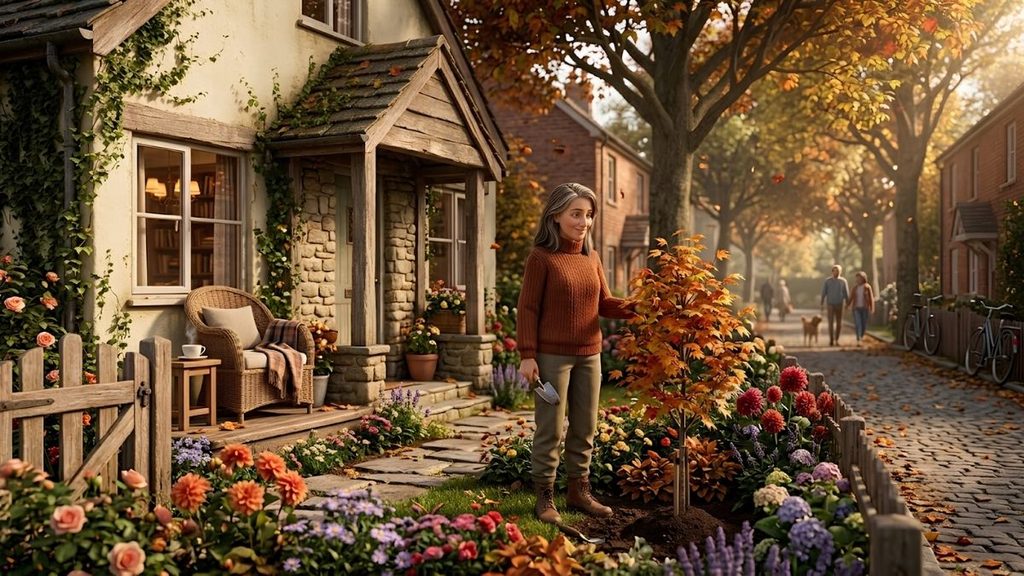
Type: New Beginnings | Starting Over & Belonging
Margaret Ellis had spent most of her adult life believing that a home was something practical.
It was a place to sleep.
A place to keep clothes.
A place to return to after work.
It needed a reliable roof, a functioning kitchen, enough storage, and perhaps a comfortable chair near a window.
Anything beyond that seemed unnecessary.
For nearly twenty years, Margaret had lived in apartments in the city. She had changed addresses several times, but each move had been almost identical.
She packed.
She hired movers.
She carried boxes upstairs.
She arranged furniture.
She learned the nearest grocery store.
Then she returned to work.
Her life had been full, but it had rarely been slow.
Margaret worked as a project manager for an architecture company, and her days were usually filled with meetings, deadlines, phone calls, and plans that changed before they were finished.
She was good at her work.
People depended on her.
She liked being dependable.
But sometime during her early fifties, Margaret began noticing something she could not quite explain.
She was tired even when she had slept.
She looked forward to weekends, but when they arrived, she often spent them catching up on things she had postponed during the week.
Her apartment was comfortable.
Her life was organized.
Yet something felt missing.
She couldn’t name it.
Then, one rainy Thursday evening, Margaret received an unexpected phone call.
Her aunt had passed away.
The news was not entirely unexpected. Her aunt had been ill for some time.
Still, hearing the words made Margaret sit quietly at her kitchen table.
Her aunt had owned a small cottage in a town several hours away.
It was an old house at the end of Willow Lane.
Margaret had visited it only a handful of times as a child.
After the funeral and the necessary paperwork, Margaret learned that the cottage had been left to her.
She considered selling it immediately.
There were practical reasons to do so.
The house needed work.
The roof needed attention.
The garden had become overgrown.
The kitchen was decades out of date.
Margaret lived in the city and had no intention of becoming a full-time homeowner in a small town.
So she decided on a simple plan.
She would spend several weeks at the cottage, repair what was necessary, prepare it for sale, and return to her apartment.
It seemed sensible.
The kind of decision she had always made.
She drove to Willow Lane on a gray Saturday morning.
The road became quieter as she left the city behind.
Buildings became smaller.
Traffic disappeared.
Fields appeared between houses.
By the time Margaret reached the cottage, rain had begun falling again.
She parked beside the narrow stone path and looked at the house.
It was smaller than she remembered.
The paint was faded.
One shutter hung slightly crooked.
The garden had grown wild enough that the front steps were almost hidden.
Margaret unlocked the door.
The house smelled of old wood, dust, and something faintly familiar.
She stood in the entrance for a moment.
Then she sighed.
“All right,” she said to herself.
“Let’s see what we’re dealing with.”
The first week was unpleasant.
Margaret discovered that the heating system needed servicing.
The kitchen sink leaked.
Several floorboards creaked.
The back fence had partially collapsed.
There were boxes in the attic that she had no idea what to do with.
She made lists.
She contacted repair workers.
She measured rooms.
She researched paint colors.
She created a spreadsheet.
It was comforting.
Problems could be solved.
A broken sink could be repaired.
A wall could be painted.
A fence could be replaced.
A house could be prepared for sale.
That was how Margaret understood the world.
Then, one morning, someone knocked on her door.
Margaret opened it to find an elderly man holding a basket.
“You’re Margaret, aren’t you?”
“Yes.”
“I’m Arthur. I live three houses down.”
He held out the basket.
“Apples.”
Margaret looked inside.
There were perhaps a dozen red and green apples.
“Thank you,” she said.
Arthur smiled.
“Your aunt used to like them.”
Margaret smiled politely.
“I didn’t know that.”
“Oh, she did.”
He looked toward the garden.
“She used to sit outside every morning.”
Margaret glanced at the overgrown yard.
“I can’t imagine sitting out there right now.”
Arthur laughed.
“Neither could I.”
That was the beginning.
The next day, another neighbor stopped by.
Her name was Linda.
She brought Margaret a list of local tradespeople.
“Your aunt always knew who to call,” Linda explained. “I thought you might need some numbers.”
A week later, a boy named Ethan appeared at the gate.
He was perhaps ten years old.
“Are you going to fix the house?”
Margaret looked at him.
“That’s the plan.”
“Are you going to sell it?”
“Probably.”
He thought about this.
“That’s too bad.”
Margaret raised an eyebrow.
“Why?”
“Because it’s the best house on the lane.”
Margaret looked at the peeling paint.
“I don’t think so.”
Ethan shrugged.
“You will.”
Then he ran away.
Margaret watched him disappear around the corner.
She smiled despite herself.
The house remained a project.
But slowly, it began becoming something else.
The first change happened almost by accident.
Margaret had planned to replace the old garden gate.
One afternoon, she stood looking at it with a tape measure when Arthur walked over.
“Don’t replace it.”
“Why not?”
“It only needs fixing.”
“The wood is rotten.”
“Some of it.”
He examined the hinges.
“Bring me a screwdriver tomorrow.”
Margaret almost laughed.
“You think we can repair this?”
Arthur looked offended.
“We can repair most things.”
The next morning, he arrived with tools.
They worked together for two hours.
The gate still wasn’t perfect when they finished.
One hinge remained slightly crooked.
The wood showed years of weather.
But it opened and closed properly.
Margaret stood back.
“Not bad.”
Arthur smiled.
“Better than new.”
Margaret wasn’t convinced.
But she liked the way the gate looked.
It seemed to belong there.
That evening, she sat on the front steps for the first time.
The lane was quiet.
Somewhere nearby, someone was mowing a lawn.
A dog barked twice and then stopped.
A bicycle passed.
Margaret realized she could hear birds.
She couldn’t remember the last time she had simply sat somewhere without checking her phone.
She stayed for twenty minutes.
The next morning, she sat there again.
Soon it became part of her routine.
Coffee.
Front steps.
Twenty minutes of quiet.
Then work.
Margaret began repairing the house one small project at a time.
She painted the kitchen walls.
She fixed a loose shelf.
She cleaned the windows.
She replaced a broken light fixture.
She planted herbs beside the back door.
She bought two pots of lavender and placed them near the front entrance.
She didn’t do everything at once.
For the first time in years, she wasn’t trying to finish something quickly.
One Saturday, Linda invited Margaret to the local market.
“I need vegetables,” Linda said. “You need to meet people.”
“I’ve already met you.”
“That’s not enough.”
Margaret laughed.
The market was small.
There were tables selling bread, vegetables, flowers, preserves, and handmade crafts.
Margaret bought tomatoes she didn’t need.
Then bread.
Then a jar of honey.
She ran into Arthur.
She met several people whose names she forgot almost immediately.
And for the first time since arriving in Willow Lane, she stopped thinking about the cottage as a property.
She began thinking about the street.
The people.
The market.
The small bakery around the corner.
The park at the end of the road.
The old library.
The sound of children playing after school.
These things had not appeared suddenly.
They had been there all along.
Margaret simply hadn’t been paying attention.
Weeks became months.
The house changed slowly.
The garden was no longer wild.
The fence was repaired.
The windows were clean.
The kitchen smelled of herbs.
A small chair appeared beside the front window.
Margaret began reading there in the evenings.
Sometimes Arthur came over.
Sometimes Linda stopped by.
Ethan occasionally appeared at the gate with questions.
“Are you still selling the house?”
Margaret would always give the same answer.
“I haven’t decided.”
But she knew she had.
She just hadn’t admitted it.
One autumn afternoon, Margaret received a call from a real estate agent.
“Are you ready to put the cottage on the market?”
Margaret looked around the kitchen.
On the counter sat a bowl of apples Arthur had given her.
The lavender outside the window had begun to flower.
A calendar hung beside the refrigerator.
Her life was written across the room in small ordinary details.
She looked toward the front door.
“No,” she said.
There was a pause.
“Are you sure?”
Margaret smiled.
“Yes.”
After ending the call, she walked outside.
The afternoon was cool.
Leaves moved across the lane.
Arthur was trimming his hedge.
He looked over.
“Changed your mind?”
Margaret smiled.
“I suppose I have.”
Arthur nodded as if he had expected this.
“I thought you might.”
“How?”
“You stopped measuring the rooms.”
Margaret laughed.
She hadn’t realized that.
For months, she had measured everything.
The kitchen.
The bedrooms.
The garden.
The fence.
But somewhere along the way, she had stopped.
The house was no longer something she was preparing for someone else.
It was simply where she lived.
That evening, Margaret sat on the front steps with a cup of tea.
The sky turned pale orange.
A bicycle passed.
Someone called goodbye from farther down the lane.
The windows of the neighboring houses began glowing one by one.
Margaret thought about the person she had been when she first arrived.
She had believed starting over meant leaving something behind.
She had thought she needed to erase her old life and create a new one.
But that wasn’t what had happened.
Her city years were still part of her.
Her career was still part of her.
The apartment was still filled with memories.
Nothing had disappeared.
She had simply made room for something else.
A slower morning.
A repaired gate.
A garden.
A cup of coffee on the front steps.
Neighbors who knew her name.
A boy who believed her house was the best on the lane.
Margaret smiled.
Perhaps that was what a new beginning really meant.
Not becoming someone completely different.
Not forgetting the past.
Not knowing exactly what would happen next.
Perhaps it simply meant allowing life to become larger than the plans you had made for it.
The following spring, Margaret planted a small tree beside the garden fence.
Ethan helped her dig the hole.
“How long until it’s big?” he asked.
“Years.”
He looked disappointed.
“That’s a long time.”
Margaret pressed soil around the young tree.
“Some things are worth waiting for.”
Ethan thought about this.
Then he nodded.
Margaret looked at the small tree.
It was barely taller than her shoulder.
She knew she might never see it fully grown.
But that didn’t matter.
She had finally learned something she had spent most of her life forgetting.
Not everything meaningful needed to be completed.
Some things simply needed to be started.
And so the house at the end of Willow Lane remained.
Its paint was never perfectly fresh.
The gate was still slightly crooked.
The floorboards still creaked.
The garden was never completely under control.
But every morning, Margaret opened the curtains.
She made coffee.
She walked outside.
And before beginning the day, she stood quietly at the gate and listened to the neighborhood waking around her.
For the first time in many years, she wasn’t wondering where she should go next.
She was exactly where she wanted to be.
And somehow, without planning it, the temporary house had become home.
Core themes: new beginnings, belonging, community, change, finding home.
2. The Piano in the Empty Hall

Type: Second Chances | Abandoned Dreams & Rediscovery
Thomas Avery had not touched a piano in thirty-seven years.
He occasionally heard one.
A melody drifting from a restaurant.
A child practicing scales through an apartment wall.
A pianist playing softly in the corner of a hotel lobby.
Whenever it happened, Thomas would notice.
He would listen for a few seconds longer than necessary.
Then he would continue walking.
He had become very good at continuing.
There had been a time when music was not something he merely heard.
It had been something he lived with.
As a child, Thomas had learned piano from an elderly music teacher named Mrs. Whitmore, who lived three streets away from his family home.
Her house smelled of polished wood, tea, and old sheet music.
Every Tuesday afternoon, Thomas would sit on the wooden piano stool while Mrs. Whitmore watched his fingers.
“Slowly,” she would remind him.
Thomas was impatient.
He wanted to play songs.
He wanted to play quickly.
He wanted to sound like the recordings his father listened to on Sunday mornings.
Mrs. Whitmore always smiled.
“Music isn’t a race, Thomas.”
At fourteen, Thomas began practicing seriously.
At sixteen, he played at school events.
At seventeen, he performed at a small local concert.
At eighteen, he began imagining a future involving music.
He didn’t know exactly what that future looked like.
Perhaps he would attend music school.
Perhaps he would become a performer.
Perhaps he would teach.
Perhaps he would simply find a way to make music part of his life.
At nineteen, he entered a regional piano competition.
He practiced for months.
He knew his piece almost perfectly.
But on the evening of the performance, something went wrong.
Thomas sat at the piano.
The hall was quiet.
The lights seemed brighter than usual.
He placed his hands above the keys.
Then he forgot the opening.
Only for a few seconds.
But those seconds felt enormous.
He began again.
A mistake followed.
Then another.
He finished the piece, but he knew it had gone badly.
Afterward, someone told him he had been nervous.
Another person suggested that perhaps performing wasn’t for him.
Thomas returned home that night and placed his sheet music inside a drawer.
He didn’t practice the next day.
Or the day after.
Then university began.
There were exams.
Friends.
A new city.
A first job.
Then another.
Life became busy.
The piano gradually disappeared.
Thomas did not make a conscious decision to abandon music.
That was what made it so strange.
He simply stopped.
Years passed.
He built a career in municipal administration.
He married.
He raised two children.
He moved houses.
He paid bills.
He attended birthdays and weddings.
He learned how to repair leaking taps.
He spent weekends mowing lawns and assembling furniture.
He became a dependable husband and father.
Later, he became a grandfather.
Music remained somewhere in the background.
But Thomas rarely thought about the piano.
Or at least, he told himself he didn’t.
Then, at sixty-one, Thomas volunteered to help renovate an old community hall.
The building had been closed for years.
It had once hosted concerts, meetings, weddings, school performances, and neighborhood celebrations.
Now the windows were dusty.
The paint was peeling.
Several chairs were broken.
The wooden floor needed polishing.
Thomas volunteered because he had retired recently and wanted something useful to occupy his mornings.
On his third week there, he was helping move old curtains.
“There’s something behind these,” said Daniel, another volunteer.
They pulled the heavy curtains away from the wall.
Behind them stood an upright piano.
Thomas stopped.
The instrument was covered in dust.
Several keys were yellowed.
One corner of the wooden case was scratched.
It looked as though nobody had touched it in decades.
Daniel laughed.
“Think it still works?”
Thomas didn’t answer.
He walked closer.
There was something about seeing the piano standing there that made the hall suddenly feel smaller.
He brushed his fingers across the dusty top.
A faint line appeared.
“Do you play?” Daniel asked.
Thomas hesitated.
“Not anymore.”
Daniel looked at him.
“You used to?”
“A long time ago.”
“Then you should try it.”
Thomas shook his head.
“I wouldn’t know where to start.”
Daniel smiled.
“Probably with the keys.”
Thomas laughed.
He sat down.
The stool creaked beneath him.
For a moment, he simply looked at the keyboard.
Then he placed one finger on a key.
The note sounded dull.
He played another.
Then another.
The piano was badly out of tune.
Yet something happened inside Thomas.
He remembered.
Not the competition.
Not the embarrassment.
He remembered Mrs. Whitmore’s house.
The afternoon sunlight through her curtains.
The sound of rain against the window.
Her voice saying, “Slowly.”
He remembered his father listening from the kitchen.
He remembered being seventeen and believing that life could become almost anything.
Thomas lifted his hands away.
“That’s enough,” he said.
But he returned the following morning.
The piano was still there.
He played for ten minutes.
The next day, fifteen.
He wasn’t trying to perform.
He wasn’t trying to recover his old ability.
He simply wanted to remember how it felt.
His fingers were stiff.
He forgot notes.
He made mistakes.
Sometimes he played the wrong chord and laughed at himself.
But he kept returning.
One morning, Daniel walked in while Thomas was playing.
“You’ve improved.”
Thomas smiled.
“I’ve only been practicing for a week.”
“Exactly.”
Thomas looked at the piano.
“I thought I’d feel embarrassed.”
“Why?”
“I used to be good.”
Daniel shrugged.
“Maybe you’re learning to be good again.”
Thomas thought about that.
But he wasn’t sure he wanted to be good.
For years, he had associated the piano with achievement.
Competitions.
Performances.
Judges.
Expectations.
He wondered whether that was why he had stopped loving it.
Perhaps somewhere along the way, music had become something he needed to prove.
Now there was no audience.
No competition.
No prize.
Nobody was keeping score.
That changed everything.
Thomas found a local piano teacher named Elena.
She was considerably younger than he was.
During their first lesson, Thomas apologized several times for forgetting basic things.
Elena smiled.
“You don’t need to apologize.”
“I used to know this.”
“You still know some of it.”
“Not enough.”
“Enough for today.”
Thomas went home thinking about those words.
Enough for today.
It was a simple idea.
He began practicing three evenings a week.
Sometimes he played for twenty minutes.
Sometimes forty.
He relearned scales.
He practiced pieces he remembered from his youth.
He also learned new music.
Some evenings he played beautifully.
Other evenings, nothing seemed to work.
He stopped judging those evenings.
That was perhaps the biggest change.
When his hands made mistakes, he didn’t close the music book in frustration.
He simply tried again.
Months passed.
The community hall reopened.
The first event was a small neighborhood gathering.
There were tables with tea and cakes.
Children ran between chairs.
Older residents talked about the building’s history.
Thomas helped arrange the seating.
As people began leaving, he returned to the piano.
He sat down.
He wasn’t planning to play.
A little girl named Sophie approached.
“Is it yours?”
Thomas smiled.
“No.”
“Can you play it?”
“A little.”
“Will you?”
Thomas looked at the keys.
Then at Sophie.
“All right.”
He played something simple.
The hall became quiet.
Nobody had been expecting a performance.
People stopped talking.
A few children sat on the floor.
Thomas played for perhaps five minutes.
When he finished, there was gentle applause.
Nothing dramatic.
But Thomas felt strangely emotional.
He looked down at his hands.
They were older now.
Veins stood out beneath the skin.
His fingers were not as quick as they had once been.
Yet they had done something he had once believed impossible.
They had played again.
The following week, someone asked him whether he would play at the next community gathering.
Thomas nearly said no.
Instead, he said, “Perhaps.”
That became a habit.
Every Thursday evening, Thomas played at the hall.
People began arriving early.
Some brought books.
Some brought tea.
Children occasionally requested songs.
Thomas learned a few.
He also discovered that he enjoyed playing quietly while people talked.
The piano no longer needed to be the center of attention.
It could simply be part of the room.
One evening, Thomas found an old photograph in a storage cupboard.
It showed the hall decades earlier.
A piano stood against the same wall.
A young woman sat at it.
Thomas recognized her immediately.
Mrs. Whitmore.
He stared at the photograph for a long time.
He had no idea she had ever played at the hall.
The discovery made him smile.
He took the photograph home.
The next day, he placed it beside his music books.
He thought about how strange life could be.
Something could disappear for decades and still be waiting somewhere.
Not necessarily in the same form.
Not necessarily in the same place.
But waiting.
Thomas began wondering whether he had made a mistake by abandoning music at nineteen.
For the first time, he considered the question honestly.
Perhaps he had.
But then he realized something else.
If he had not stopped playing, perhaps he would never have understood why he loved it.
At nineteen, he had wanted to become a pianist.
At sixty-one, he simply wanted to play.
There was a difference.
The first dream had been about becoming someone.
The second was about enjoying something.
That realization freed him.
Thomas stopped imagining what might have happened if he had continued.
He stopped wondering whether he could have performed professionally.
He stopped comparing his sixty-one-year-old hands with the hands of his nineteen-year-old self.
Instead, he began asking a different question.
What can music mean to me now?
The answer changed over time.
Sometimes it meant ten quiet minutes after dinner.
Sometimes it meant playing for children.
Sometimes it meant remembering his father.
Sometimes it meant thinking about Mrs. Whitmore.
Sometimes it meant sitting in an empty hall while rain tapped against the windows.
And sometimes it meant absolutely nothing.
Sometimes he simply enjoyed the sound.
One winter evening, Thomas arrived at the community hall early.
Snow had begun falling outside.
The building was warm and quiet.
He turned on only a few lights.
Then he sat at the piano.
There was no audience.
No event.
No reason to play.
He placed his hands on the keys.
For the next half hour, he played slowly.
When he finished, he remained seated.
Snow continued falling outside.
Thomas smiled.
He finally understood something that had taken him more than forty years to learn.
A second chance did not mean going backward.
It did not mean becoming nineteen again.
It did not mean correcting every mistake.
It meant being given another opportunity to meet something familiar as the person you had become.
Thomas had once believed that his disappointing performance had ended his relationship with music.
Now he saw it differently.
That performance had only ended one version of the story.
Another version had been waiting.
Older.
Quieter.
Less ambitious.
But perhaps more meaningful.
The next Thursday, the hall filled with people.
Children sat near the piano.
Adults gathered with cups of tea.
Someone had brought biscuits.
Thomas played for everyone.
Afterward, Sophie approached him.
“Will you play next week?”
Thomas smiled.
“Yes.”
“Promise?”
Thomas laughed.
“I promise.”
She ran away.
Thomas looked around the hall.
The piano was still old.
Still imperfect.
Still slightly out of tune.
But it had become part of the room again.
And so had he.
For years, Thomas had thought his abandoned dream was something lost in the past.
Now he understood that some dreams do not disappear.
They change.
They wait.
And sometimes, when life becomes quiet enough, they return not to ask you to become who you once wanted to be, but to remind you that there is still time to become something new.
Thomas closed the piano lid.
Outside, the evening had grown dark.
He turned off the lights and stepped into the cold.
Behind him, the empty hall became quiet again.
But next Thursday, the piano would be waiting.
And this time, Thomas would be there too.
Core themes: second chances, music, forgotten dreams, maturity, self-discovery.
3. The Red Scarf on the Park Bench
Type: Small Acts of Kindness | Anonymous Generosity
Every winter, Clara Bennett notices a red scarf appearing on the same park bench.
The scarf is always clean and warm.
There is never a note.
One morning, Clara discovers an elderly man sitting beside the bench.
He explains that someone started leaving winter clothing there years ago for anyone who needed it.
Clara becomes curious about the tradition.
She begins leaving gloves.
Another person adds blankets.
Someone brings coats.
Soon, the bench becomes a quiet place where people leave useful things without expecting recognition.
Clara eventually realizes that she has become part of something much larger than the original act of kindness.
Core themes: kindness, generosity, community, compassion, anonymous giving.
4. The Garden Behind the Library
Type: Finding Purpose | Volunteering & Community
For the first three months after retirement, Robert Hayes kept waiting for Monday.
It was a strange thing to notice.
For thirty-eight years, Monday had been the day he least wanted to see.
Sunday evenings had always carried a familiar weight. He would prepare his shirts, check his calendar, organize his briefcase, and think about the meetings waiting for him the next morning.
Then retirement arrived.
And Monday came.
But there was nowhere to go.
No train to catch.
No reports to review.
No colleagues waiting for his calculations.
No reason to wake before seven.
At first, Robert enjoyed it.
He slept late.
He made elaborate breakfasts.
He read newspapers from beginning to end.
He reorganized the kitchen cupboards.
He watched documentaries he had never had time for.
He told himself that he was finally enjoying freedom.
But after several weeks, freedom began to feel strangely empty.
His wife, Margaret, had died several years earlier, and his daughter lived in another city.
The house was quiet.
Too quiet, sometimes.
Robert had expected retirement to feel like a reward.
Instead, it sometimes felt like someone had quietly removed the structure from his life.
One Tuesday morning, he woke at six-thirty.
He lay in bed listening to the heating system.
There was nothing on his schedule.
He got up anyway.
He made coffee.
He sat at the kitchen table.
Then he looked at the clock.
Six forty-eight.
He sighed.
By eight o’clock, he had already read the newspaper twice.
At nine, he decided to walk to the library.
The walk was not particularly long.
Robert had visited the library many times during his working years, usually on Saturday mornings.
He liked the building.
It was an old brick structure with tall windows and a broad staircase.
Behind it stood a narrow strip of land that Robert had never noticed before.
That morning, he stopped.
There was a rusty metal gate.
Beyond it was a garden.
Or what had once been a garden.
The ground was covered with weeds.
Dead vines climbed along the wall.
Several wooden benches were almost completely hidden beneath leaves.
An old wooden sign hung crookedly near the entrance.
Robert stepped closer.
The faded lettering was still visible.
READING GARDEN
He stared at it.
A garden behind a library seemed like an excellent idea.
It was simply difficult to imagine that anyone had ever used this one.
“That’s been closed for years.”
Robert turned.
A woman stood behind him.
She was carrying several books.
“Sorry?”
“The garden,” she said.
She smiled.
“I’m Helen, the librarian.”
“Robert.”
“I’ve seen you here before.”
“Have you?”
Helen nodded.
“You always return your books early.”
Robert smiled.
“I dislike overdue notices.”
Helen laughed.
Robert looked through the gate again.
“What happened to the garden?”
“It used to belong to a children’s reading club.”
“When?”
“Oh, quite a long time ago.”
She shifted the books in her arms.
“Parents and volunteers maintained it. Children would sit outside and read during summer.”
“What happened?”
“People moved away. Volunteers stopped coming. Then the library had some building work done, and the garden was forgotten.”
Robert looked at the overgrown space.
“That’s a shame.”
“It is.”
They stood quietly for a moment.
Then Robert asked:
“Could it be brought back?”
Helen smiled.
“I suppose anything can be brought back if someone is willing to do the work.”
Robert looked at the weeds.
“How much work?”
Helen laughed.
“Quite a lot.”
Robert nodded.
“All right.”
She looked surprised.
“All right what?”
“I’ll help.”
Helen stared at him.
“You don’t have to.”
“I know.”
“Gardening isn’t particularly easy.”
Robert looked at the garden.
“Neither was accounting.”
That was how it began.
The next morning, Robert arrived with gloves.
Helen found him standing at the gate.
“You came.”
“I said I would.”
She unlocked it.
Robert stepped inside.
The garden was worse than it had looked from outside.
There were broken pots.
Old branches.
Wild grass.
A wooden table with one missing leg.
Robert stood in the middle.
For the first time in months, he felt something unfamiliar.
A small sense of purpose.
There was something to do.
Something that needed attention.
He started with the easiest task.
Weeds.
He spent nearly three hours removing them.
By lunchtime, his back hurt.
His hands were dirty.
His clothes were covered with soil.
But when he looked around, a small patch of earth had become visible.
It wasn’t much.
Still, it was progress.
The following day, he returned.
Then the next.
After a week, the path had reappeared.
After two weeks, the old benches were visible.
After three, Robert discovered a stone birdbath beneath a pile of leaves.
He cleaned it.
He repaired one of the benches.
He found the old garden sign and straightened it.
People began noticing.
The first person to help was a teenage boy named Lucas.
Lucas was waiting outside the library one afternoon.
“What are you doing?”
“Trying to find a garden.”
Lucas looked through the gate.
“There isn’t one.”
Robert smiled.
“That’s the problem.”
Lucas laughed.
“Can I help?”
Robert handed him a pair of gloves.
“Pull weeds.”
Lucas looked doubtful.
“That’s it?”
“That’s enough.”
Lucas worked for twenty minutes.
Then forty.
Eventually, he became surprisingly enthusiastic.
“There’s a path here!”
Robert nodded.
“I know.”
“No, I mean a real path.”
“I know.”
Lucas grinned.
“How old is this place?”
“Older than you.”
“That’s not very specific.”
Robert laughed.
Lucas began coming every Saturday.
Then a teacher named Mrs. Patel arrived with several trays of seedlings.
“I heard you’re restoring the garden.”
“We’re trying.”
She looked at the empty flower beds.
“I have some lavender, rosemary, and marigolds.”
Robert smiled.
“That would be wonderful.”
Soon, other people became involved.
An elderly couple donated gardening tools.
A local carpenter repaired the benches.
A parent brought a small wooden bookshelf designed for outdoor use.
Someone painted the garden gate.
Someone else brought bird feeders.
Robert began keeping a notebook.
Not because he needed to.
He simply enjoyed recording what changed.
April 3: Path cleared.
April 10: First seedlings planted.
April 17: Three birds visited the feeder.
April 24: Bench repaired.
The garden grew slowly.
So did Robert’s life.
His mornings now had structure.
He woke early.
Made coffee.
Walked to the library.
Worked in the garden.
Then went home for lunch.
In the afternoons, he sometimes returned to read.
One afternoon, Helen found him sitting beneath a tree.
“What are you reading?”
“A mystery.”
“Do you like it?”
“I’m not sure yet.”
“Why are you sitting outside?”
Robert looked around.
“Because I can.”
Helen smiled.
“Fair answer.”
The garden was becoming more than a garden.
It was becoming a place where people lingered.
Children began asking whether they could read outside.
Parents brought blankets.
Older residents sat on benches.
Someone suggested having a small reading afternoon.
Helen looked at Robert.
“What do you think?”
Robert hesitated.
“I’ve never organized anything like that.”
“You managed budgets for decades.”
“Budgets don’t ask questions.”
“Children do.”
Robert smiled.
“Fair point.”
They decided to try.
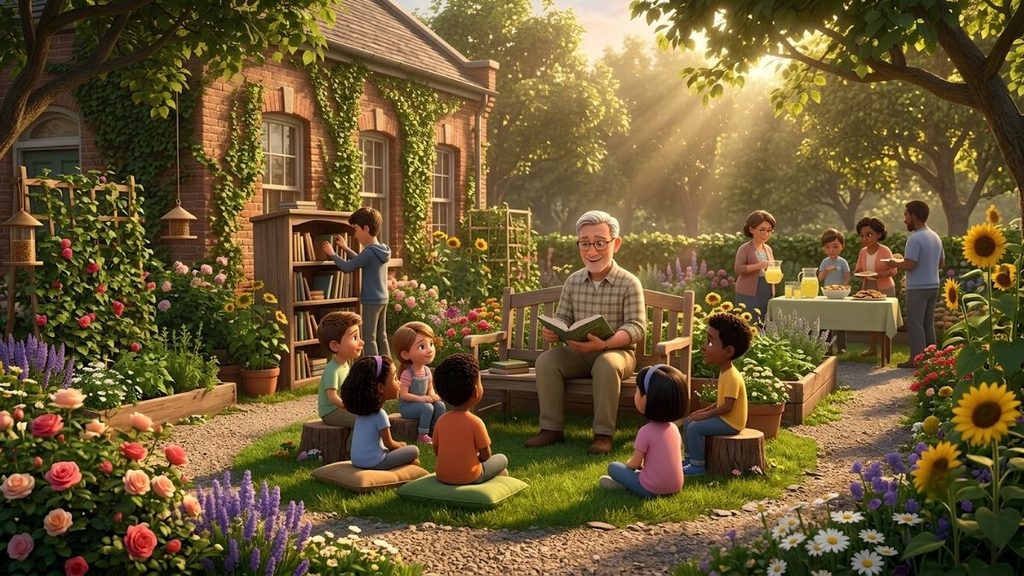
The first reading afternoon was held on a warm Saturday.
There were twelve children.
Robert arranged chairs beneath the trees.
Helen brought books.
Mrs. Patel brought lemonade.
Lucas helped set up the blankets.
At first, Robert felt nervous.
He had spent decades speaking confidently in offices.
Yet standing in front of twelve children felt more intimidating.
He held up a book.
“Does anyone like stories about animals?”
Several hands rose.
“What about mysteries?”
More hands.
“Stories with dragons?”
Almost every hand.
Robert laughed.
They chose a book.
Helen read the first few pages.
Then Robert took over.
His voice was not theatrical.
He did not imitate characters.
He simply read.
Slowly.
Clearly.
When he finished, the children asked questions.
One wanted to know what happened next.
Another wanted to draw the main character.
A little girl asked whether they could come back next Saturday.
Robert looked at Helen.
Helen smiled.
“Apparently, you have your answer.”
So they returned the following Saturday.
And the Saturday after that.
The reading afternoons became a regular part of the library calendar.
Robert began learning the children’s names.
He discovered who liked mysteries.
Who preferred animals.
Who was shy.
Who always asked difficult questions.
He realized that helping children discover books gave him a kind of satisfaction that his old career had never provided.
There were no quarterly reports.
No promotions.
No bonuses.
No performance reviews.
There was simply a child finishing a story and immediately asking for another.
One afternoon, Lucas sat beside Robert on a bench.
“Why do you do this?”
Robert looked at him.
“Do what?”
“The garden.”
Robert thought for a moment.
“I suppose I needed something to do.”
“That’s all?”
Robert smiled.
“No.”
He looked across the garden.
“I think I needed somewhere to be useful.”
Lucas was quiet.
Then he said:
“You are useful.”
Robert looked at him.
“Thank you.”
Lucas shrugged.
“It’s obvious.”
That evening, Robert walked home more slowly than usual.
The street was turning golden in the late sunlight.
He thought about retirement.
For months, he had believed retirement meant losing something.
His position.
His routine.
His identity.
His sense of importance.
But perhaps that wasn’t entirely true.
Maybe retirement had simply removed one definition of usefulness.
It had given him the chance to discover another.
The garden continued changing.
Summer arrived.
The lavender flowered.
Birds became regular visitors.
Children read beneath the trees.
The old benches filled with people.
Robert planted tomatoes along one wall.
He added herbs near the gate.
He repaired the wooden bookshelf.
He learned which plants needed more water.
He learned that gardening could not be rushed.
A seed did not care about schedules.
Flowers opened when they were ready.
Trees grew slowly.
Rain came when it came.
Robert liked that.
His entire working life had been built around deadlines.
The garden had none.
One morning, Helen approached him holding a letter.
“Robert.”
He looked up.
“What is it?”
“We’ve received funding.”
“For what?”
“The garden.”
Robert stared at her.
“Funding?”
She nodded.
“They want to expand it.”
He looked around.
The garden was already beautiful.
“What would they add?”
“More planting beds. A covered reading area. Better lighting.”
Robert smiled.
“That sounds good.”
Helen looked at him carefully.
“There’s something else.”
“What?”
“They want to name the garden.”
Robert laughed.
“After someone?”
“Perhaps.”
He shook his head.
“Not me.”
“Why not?”
“Because I didn’t create it.”
Helen smiled.
“Neither did anyone else.”
Robert looked around.
The garden belonged to everyone.
That was its greatest success.
It had started as neglected land behind a library.
Now it was filled with voices.
Children reading.
Adults talking.
Birds singing.
Leaves moving in the breeze.
People had brought something.
Time.
Seeds.
Tools.
Books.
Stories.
Ideas.
Robert had brought his need for purpose.
The garden had given him something better.
A place to share it.
Years later, Robert would sometimes sit alone in the garden after everyone had gone home.
The reading chairs would be empty.
The tables would be quiet.
The last sunlight would rest across the grass.
He would look at the plants he had helped establish.
Some had grown taller than he expected.
Others had disappeared and been replaced.
Nothing stayed exactly the same.
That was another lesson the garden had taught him.
Purpose did not have to be permanent to be meaningful.
A person could spend thirty-eight years doing one kind of work.
Then spend ten years doing something completely different.
Neither period erased the other.
They simply belonged to different chapters.
One autumn afternoon, Robert found a young boy sitting alone beneath the tree.
The boy was holding a book.
“You like that one?” Robert asked.
The boy nodded.
“My teacher said I should read more.”
“Your teacher is probably right.”
The boy looked around.
“Did you make this garden?”
Robert smiled.
“Lots of people did.”
“Why?”
Robert sat beside him.
He looked at the leaves falling slowly onto the path.
“Because it was empty.”
The boy considered this.
“And now?”
Robert smiled.
“Now people come here.”
The boy returned to his book.
Robert sat quietly beside him.
He didn’t need to say anything else.
The garden was full.
Not only with flowers.
With purpose.
With conversation.
With memories being made.
With people giving a little of themselves and receiving something unexpected in return.
Robert thought about that first morning when he had stood at the garden gate.
He had been searching for something to fill his time.
He had found something that filled much more than that.
He had found a reason to get up.
A reason to walk.
A reason to learn names.
A reason to listen.
A reason to return.
And he finally understood that purpose did not always arrive as a grand calling.
Sometimes it waited quietly behind a locked gate.
Sometimes it looked like a patch of weeds.
Sometimes it began with a pair of gardening gloves and a decision to stay long enough to make something grow.
As evening settled over the library, Robert stood and closed the garden gate.
Tomorrow, he knew, there would be weeds again.
Leaves would fall.
Plants would need water.
Someone would probably leave a book outside.
A child would ask another difficult question.
There would always be something to do.
Robert smiled as he walked home.
For the first time since retirement, Monday no longer felt empty.
He was looking forward to it.
Core themes: purpose, retirement, volunteering, community, meaningful work.
5. The Shop That Opened on Monday

Type: Overcoming Failure | Persistence & Rebuilding
For twenty-three years, Daniel Brooks knew exactly what he would do on Monday morning.
He would unlock the shop.
Raise the metal shutter.
Switch on the lights.
Put the kettle on.
Then he would wait for the first bicycle.
Sometimes it arrived within minutes.
Sometimes he had to wait an hour.
He never minded.
There was something comforting about opening the doors and knowing that the day had begun.
His shop was small.
It stood on a narrow street between a bakery and a hardware store.
The sign above the entrance read:
BROOKS BICYCLE REPAIRS
The lettering had faded slightly in the sun.
The front window displayed tires, bells, chains, brake cables, and a collection of old bicycle pumps.
Inside, the walls were covered with tools.
Wrenches hung from hooks.
Spare parts filled labeled boxes.
Two workbenches stood beneath bright lamps.
The place always smelled faintly of rubber, oil, metal, and coffee.
Daniel loved it.
He had opened the shop when he was twenty-nine.
At the beginning, he had almost no customers.
He repaired bicycles for friends.
Then neighbors.
Then children.
Then delivery workers.
Word spread.
People liked Daniel because he didn’t simply repair bicycles.
He explained things.
If someone’s brakes were worn, he showed them why.
If a tire was damaged, he explained what had caused it.
If a bicycle wasn’t worth repairing, he said so.
“If you spend more repairing this than buying another one,” he would tell customers, “you’ll regret it.”
His honesty earned trust.
Over the years, the shop became part of the neighborhood.
Parents brought their children’s first bicycles.
Teenagers came in after puncturing tires.
Older customers brought bicycles they had owned for decades.
Daniel knew some customers by name.
He knew which ones wanted quick repairs.
He knew who liked to talk.
He knew who preferred to leave their bicycle and collect it later.
For a long time, he believed the shop would always be there.
Then things changed.
A large sporting-goods store opened across town.
Online retailers began selling bicycle parts more cheaply.
Electric bicycles became increasingly popular.
Daniel tried to adapt.
He stocked new parts.
He offered discounts.
He stayed open longer.
He borrowed money to upgrade equipment.
But the numbers continued moving in the wrong direction.
One month became difficult.
Then another.
Then another.
Eventually, Daniel began using his savings to keep the shop open.
He told himself it was temporary.
“Next month will be better.”
It wasn’t.
The final morning was a Monday.
Daniel remembered that detail clearly.
He unlocked the door.
Raised the shutter.
Made coffee.
Then he sat behind the counter.
Only one customer came that morning.
It was an elderly man with a punctured tire.
Daniel repaired it.
The man paid.
Then he said, “Thank you.”
Daniel smiled.
“You’re welcome.”
After the customer left, Daniel sat quietly.
At noon, he made the decision.
He closed the shop.
There was no dramatic moment.
No crowd.
No farewell ceremony.
He simply turned the sign around.
CLOSED.
Then he lowered the shutter.
For the first time in twenty-three years, Daniel didn’t know what Monday meant.
He went home.
He sat at his kitchen table.
His wife, Sarah, put a cup of tea in front of him.
“You did everything you could,” she said.
Daniel nodded.
But he didn’t believe her.
He believed something else.
He had failed.
For months, that thought followed him everywhere.
When people asked what he did, he said, “I used to run a bicycle shop.”
The words used to bothered him.
He stopped cycling.
He stopped visiting the street where the shop had been.
He avoided former customers.
He didn’t want anyone to ask how things were going.
He spent his mornings doing almost nothing.
He watched television.
He read newspapers.
He repaired small things around the house simply because they needed fixing.
But none of it felt like work.
One rainy morning, Daniel heard a knock on the door.
He opened it.
A woman named Margaret stood outside.
Daniel recognized her.
She had been a customer for many years.
“I hope I’m not disturbing you.”
“No.”
She looked at him.
Then at the garage behind the house.
“I have something.”
She rolled a bicycle forward.
It was old.
Very old.
The frame was dark green.
The leather seat was cracked.
The handlebars were rusted.
“I found it in my father’s shed,” she explained.
Daniel crouched beside it.
“Your father’s?”
She nodded.
“He used to ride it everywhere.”
Daniel examined the chain.
“When did he stop?”
“About ten years ago.”
“And you want it repaired?”
Margaret smiled.
“If you think it’s possible.”
Daniel hesitated.
He had repaired thousands of bicycles.
But this one felt different.
“Leave it with me.”
Margaret looked surprised.
“How much?”
“I’ll tell you when it’s finished.”
Daniel wheeled the bicycle into the garage.
He spent the rest of the morning examining it.
The tires were beyond saving.
The chain was badly rusted.
The brakes needed replacing.
The gears were seized.
The wheels needed attention.
It would take time.
Daniel didn’t mind.
For the first time in months, he had something to do that mattered.
He worked slowly.
He cleaned the frame.
Removed rust.
Replaced cables.
Adjusted the wheels.
He had to improvise several repairs because the bicycle was old enough that some parts were no longer manufactured.
Three days later, it was ready.
Margaret returned.
Daniel wheeled the bicycle outside.
She stared at it.
“It looks like his.”
“It is his.”
She ran her hand over the handlebars.
“My father used to ride this to work.”
Daniel smiled.
“Then it has more miles in it.”
Margaret laughed.
She paid him.
Daniel almost refused the money.
But she insisted.
“I don’t know what else to give you.”
“You don’t have to give me anything.”
“I’d like to.”
She took the bicycle home.
Two days later, she returned.
With another bicycle.
“My neighbor heard you repaired this one.”
Daniel looked at the bicycle.
“What does this one need?”
“Everything.”
He laughed.
“All right.”
He repaired it.
Then another person came.
Then another.
People began bringing bicycles to Daniel’s garage.
He didn’t advertise.
He didn’t put up a sign.
The work simply returned.
One Saturday morning, a teenage boy named Lucas arrived with a bicycle that had a broken chain.
“Can you fix it?”
Daniel examined it.
“Yes.”
“How much?”
Daniel told him.
Lucas looked disappointed.
“I don’t have that much.”
Daniel studied him.
“How much do you have?”
Lucas counted the coins in his pocket.
Daniel smiled.
“That’ll do.”
He repaired the bicycle.
Lucas watched closely.
“Can you show me how?”
Daniel handed him a rag.
“Hold this.”
Over the next hour, Daniel explained how the chain worked.
Lucas listened carefully.
Before leaving, he said:
“Thanks.”
Daniel nodded.
“Take care of the bike.”
“I will.”
After Lucas left, Daniel stood in the garage.
The place was crowded with bicycles.
His hands smelled of oil.
His shirt was dirty.
He was smiling.
Something had changed.
He realized that the shop had not been the thing he loved.
The work was.
The conversations were.
The problem-solving was.
The satisfaction of taking something broken and making it useful again.
He had confused the business with the purpose.
The business had failed.
The purpose hadn’t.
That realization changed how Daniel thought about the past.
He began asking himself what he had done wrong.
The answers were uncomfortable.
He had borrowed too much money.
He had expanded too quickly.
He had ignored online competition.
He had refused to change his pricing.
He had assumed loyal customers would always be enough.
He had been so focused on keeping the shop alive that he had stopped noticing what the market was becoming.
Daniel wrote everything down.
Not as a confession.
As a lesson.
He created a new plan.
If he opened another shop, it would be smaller.
He would keep fewer products.
He would focus on repairs.
He would offer maintenance classes.
He would work with electric bicycles.
He would build relationships with local cycling groups.
Most importantly, he would avoid borrowing money he couldn’t comfortably repay.
The garage became busier.
Sarah laughed when she saw the number of bicycles.
“You’ve started another shop.”
Daniel shook his head.
“No.”
She looked around.
“What would you call this?”
“A garage.”
“It’s full of bicycles.”
“That’s true.”
“And you’re working every day.”
“Also true.”
Sarah smiled.
“Sounds familiar.”
Daniel laughed.
One evening, after everyone had gone home, Daniel sat in the garage.
He looked at his tools.
They were the same tools he had used in his old shop.
But he was different.
The failure had hurt.
It still did.
But it had taught him things success never had.
He understood his customers better.
He understood his finances better.
He understood his limits.
And he understood that starting again didn’t require pretending the first attempt had never happened.
Several months passed.
The garage became too small.
Bicycles filled the driveway.
Customers waited outside.
Lucas began helping Daniel on weekends.
Margaret recommended him to friends.
A local cycling club asked whether he could service their bicycles.
Daniel began considering something he had been afraid to consider.
Another workshop.
Not the old one.
A new one.
Smaller.
Simpler.
More carefully planned.
He found a modest building on a side street.
The rent was manageable.
There was enough space for three workbenches.
A small counter.
A storage room.
A front window.
Daniel stood inside the empty room for a long time.
He imagined bicycles hanging from the walls.
He imagined the smell of rubber and oil.
He imagined the kettle.
He imagined opening the door on Monday morning.
Then fear arrived.
What if it failed again?
Daniel stood in the empty room.
He didn’t have an answer.
But he realized something.
There was no guarantee.
There never had been.
The first time he had opened a shop, he thought success meant knowing that things would work.
Now he understood that success could also mean being willing to try while knowing they might not.
He signed the lease.
For the next two months, he worked slowly.
He painted the walls.
Installed shelves.
Bought only the tools he needed.
Negotiated with suppliers.
Created a simple website.
Contacted cycling groups.
He didn’t borrow more than necessary.
He didn’t try to become the biggest bicycle shop in town.
He wanted to become a reliable one.
On the final Sunday evening, Daniel stood outside the workshop.
Everything was ready.
The sign had not yet been installed.
Inside, three bicycles waited for repairs.
His tools were arranged.
The kettle sat on a shelf.
A handwritten list of appointments rested beside the counter.
Sarah stood beside him.
“Nervous?”
“Very.”
“Good.”
Daniel looked at her.
“Good?”
“It means you care.”
He smiled.
That night, Daniel barely slept.
At six-thirty the next morning, he arrived at the workshop.
The street was quiet.
The sky was pale.
He unlocked the door.
Raised the shutter.
Turned on the lights.
Then he placed a small handwritten sign in the window.
OPEN MONDAY.
He stood there for a moment.
Two words.
Nothing impressive.
No grand reopening.
No balloons.
No newspaper article.
Just two words.
But Daniel understood exactly what they meant.
They meant he had returned.
Not to the old business.
Not to his old life.
To something new.
At eight o’clock, the first customer arrived.
It was Lucas.
He walked in carrying a bicycle.
Daniel smiled.
“What’s wrong with it?”
Lucas grinned.
“Everything.”
Daniel laughed.
“Then you’ve come to the right place.”
The day passed quickly.
One customer became three.
Three became five.
Someone needed a tire.
Someone needed brakes.
Someone wanted advice about an electric bicycle.
At lunchtime, Daniel made coffee.
He looked around the workshop.
It was small.
It wasn’t perfect.
But it was alive.
He thought about the old shop.
He no longer felt ashamed.
It had failed.
That was true.
But failure had not erased the twenty-three years he had spent helping people.
It had not erased the skills he had learned.
It had not erased the relationships he had built.
And it certainly hadn’t erased his ability to begin again.
That evening, Daniel lowered the shutter.
He looked at the sign one more time.
OPEN MONDAY.
Tomorrow would be Tuesday.
There would be problems.
There would be difficult customers.
There would be bills.
There would be mistakes.
There might even be another difficult year someday.
But Daniel wasn’t afraid of uncertainty in the same way anymore.
He had learned that rebuilding didn’t mean guaranteeing success.
It meant taking what you had learned and using it differently.
He turned off the lights.
Locked the door.
And walked home.
The next morning, he would return.
Not because he was certain everything would work.
But because he had finally understood something important.
Sometimes hope isn’t the feeling that tells you everything will be fine.
Sometimes hope is simply the decision to open the door again.
And for Daniel, after everything that had happened, that was enough.
Core themes: failure, persistence, entrepreneurship, learning, resilience.
6. The Letter From the Other Side of Town

Type: Family & Reconnection | Healing Old Distance
Eleanor Parker had kept the same address for almost twenty years.
The house was not particularly large, and it was not especially beautiful. It was a quiet brick house on a street lined with mature trees, small gardens, and houses that seemed to have been painted the same colors for decades.
Eleanor liked it that way.
There was comfort in knowing where everything belonged.
The blue mug belonged on the second shelf.
The gardening gloves belonged beside the back door.
The spare keys belonged in the small ceramic bowl near the entrance.
And the old photographs belonged in the wooden cabinet in the living room.
Some photographs she looked at often.
Others she hadn’t touched in years.
Among them were photographs of her younger brother, James.
There was one of them standing beside their father at a seaside pier.
Another showed the two children sitting on the front steps of their childhood home.
There was one from a family picnic in which James was wearing a hat that was much too large for him.
Eleanor smiled whenever she saw that photograph.
Then she usually closed the cabinet.
She and James had not spoken properly in nearly fifteen years.
They had not always been distant.
When they were children, they had been inseparable.
They built cardboard houses in the living room.
They made secret plans during long family journeys.
They argued over who would sit beside their father in the car.
They competed over everything.
Who could run faster.
Who could stay awake later.
Who could finish a puzzle first.
As they grew older, their lives began moving in different directions.
James left town.
Eleanor stayed.
There were different jobs, different friendships, different responsibilities.
Then came the disagreement.
It had started over something that had once seemed important.
Years later, neither of them could explain exactly what the argument had been about.
They both remembered feeling hurt.
They both remembered saying things they wished they hadn’t.
And neither had known how to take the first step back.
At first, they expected the distance to last only a few weeks.
Then months passed.
Then a year.
Eventually, birthdays became the only occasions when they contacted one another.
A short message.
Happy birthday. Hope you’re well.
Thank you. Hope you are too.
Nothing more.
Eleanor sometimes wondered whether James thought about the past.
She wondered whether he remembered the cardboard houses.
The seaside.
The long car journeys.
She wondered whether he remembered her at all as the sister she had once been.
But she never asked.
Pride can become a strange thing over time.
At first, it protects you.
Later, it becomes a wall.
The Letter
One Tuesday afternoon, Eleanor returned from the grocery store and found an envelope on the hallway floor.
There was no stamp.
No postmark.
Only her name written across the front.
Eleanor Parker
She recognized the handwriting immediately.
She stood still.
For several seconds, she didn’t open it.
Then she sat at the kitchen table.
The envelope felt surprisingly heavy in her hands.
She opened it carefully.
Inside was a single sheet of paper.
The letter was from James.
Dear Eleanor,
She read the first line twice.
Then she continued.
James did not begin with an apology.
He did not explain why fifteen years had passed.
He did not accuse her.
Instead, he wrote about their childhood.
He remembered the cardboard houses.
He remembered how Eleanor used to draw windows on them with a blue pencil.
He remembered the family picnic where they had become lost for nearly twenty minutes.
He remembered their father calling their names from the top of a hill.
He remembered their arguments during long car journeys.
He remembered Eleanor secretly giving him the larger half of a sandwich after he had complained that he was hungry.
Then came a sentence that made Eleanor stop reading.
I have been thinking lately about how strange it is that I can remember those things so clearly and still find it difficult to remember what we were actually angry about.
Eleanor placed the letter on the table.
She walked to the window.
Outside, a woman was walking a dog.
A delivery van passed slowly.
Somewhere nearby, a child laughed.
Everything looked ordinary.
But Eleanor felt as though something inside her had shifted.
She returned to the table.
The final part of the letter was simple.
James wrote that he didn’t know whether Eleanor wanted to hear from him.
He said he didn’t expect the past to disappear.
He simply wondered whether they might begin talking again.
At the bottom he had written:
I still remember the cardboard houses.
Eleanor smiled.
Then, unexpectedly, she cried.
Not loudly.
Not dramatically.
Just quietly, sitting at the kitchen table with the letter in front of her.
Writing Back
Eleanor didn’t answer immediately.
For three days, the letter remained beside her bed.
She read it each night.
Sometimes she smiled.
Sometimes she felt angry.
Sometimes she wondered why it had taken fifteen years for either of them to say something so simple.
On the fourth evening, she took out a sheet of paper.
She began writing.
Dear James,
Then she stopped.
She didn’t know what to say.
So she wrote about the picnic.
She told him she remembered getting lost differently.
She remembered being convinced that their father knew exactly where they were, even though he had looked increasingly worried.
She remembered James finding a strawberry in the grass and insisting that it was still edible.
She remembered him wearing the oversized hat.
She told him she had kept one of the cardboard houses for years.
That wasn’t entirely true.
She had kept it for perhaps three years.
Then it had fallen apart.
But she remembered it.
She wrote for nearly an hour.
At the end, she added:
I don’t know if we can return to the way things were.
Then she thought about it.
She crossed out the sentence.
She replaced it with:
Maybe we don’t need to return to the way things were.
She folded the letter.
The next morning, she sent it.
The Letters
James replied a week later.
Then Eleanor replied again.
The letters continued.
At first, they were mostly about memories.
Their childhood home.
Their parents.
Old neighbors.
School.
Family holidays.
Then the letters became more personal.
James wrote about his work.
Eleanor wrote about her garden.
James told her about a small apartment he had once rented above a noisy restaurant.
Eleanor told him about the time she accidentally planted an entire row of herbs upside down.
They laughed about things they had forgotten.
They also talked about things they had never understood.
One evening, James wrote:
I think I spent years believing that if I admitted I was hurt, I would be admitting that I was wrong.
Eleanor read the sentence several times.
She understood.
In her reply, she wrote:
I think I did the same thing.
It was perhaps the closest either of them had come to an apology.
But it was enough.
The Other Side of Town
Their houses were not far apart.
That was the strange part.
For fifteen years, Eleanor had imagined James as someone living in a distant place.
But he was only on the other side of town.
Twenty minutes by car.
Forty minutes by bus.
An hour on foot.
Their physical distance had always been small.
It was everything else that had become enormous.
After several months of letters, James suggested meeting.
Not for a formal family dinner.
Not at either person’s home.
Just coffee.
Eleanor agreed.
They chose a quiet café halfway between their houses.
She arrived early.
She sat near the window.
She ordered tea.
Then she waited.
At exactly three o’clock, the door opened.
James walked in.
For a moment, neither moved.
Eleanor recognized him immediately.
But he looked older.
Of course he did.
Fifteen years had passed.
His hair had become gray around the temples.
He wore glasses.
His shoulders seemed slightly more tired than she remembered.
Then he smiled.
It was the same smile.
The one she remembered from childhood.
“Hello, Eleanor.”
She stood.
“Hello, James.”
They hugged.
It lasted only a few seconds.
But neither wanted to be the first to let go.
Coffee
They sat down.
For the first ten minutes, they talked about safe things.
The café.
The weather.
Traffic.
The price of coffee.
Then James laughed.
“We’re talking like strangers.”
Eleanor smiled.
“We’ve had practice.”
He looked down.
“I suppose we have.”
There was a silence.
Not an uncomfortable one.
Just a necessary one.
Finally, James said:
“I don’t remember what started the argument.”
“Neither do I.”
“I remember being angry.”
“So do I.”
“I remember thinking you didn’t understand me.”
“I remember thinking the same about you.”
They both laughed softly.
It wasn’t funny.
But after fifteen years, there was something strangely freeing about admitting how little they actually knew.
They didn’t try to solve the past.
They didn’t reconstruct every detail.
They didn’t decide who had been right.
Instead, they talked about what the years had been like.
James spoke about mistakes he had made.
Eleanor talked about opportunities she had missed.
They discovered that adulthood had not been as straightforward as either had imagined.
Both had experienced loneliness.
Both had made decisions they regretted.
Both had learned things they wished they had understood earlier.
And both had spent far too long believing that the other person had stopped caring.
A Different Kind of Relationship
After that first meeting, they began seeing each other occasionally.
Sometimes they had lunch.
Sometimes they walked through the park.
Sometimes James came to Eleanor’s garden.
He remembered the old gardening gloves from their childhood.
“Do you still make me do the unpleasant jobs?” he asked.
“Of course.”
He smiled.
Some things remained unchanged.
But other things were different.
They were no longer children.
They didn’t need to recreate their childhood relationship.
They needed to discover who they were now.
That took time.
There were awkward moments.
There were conversations they avoided.
There were occasional misunderstandings.
But this time, they spoke about them.
They learned to ask questions instead of making assumptions.
They learned to say, “I don’t understand what you mean.”
They learned to say, “That hurt me.”
They learned to say, “I’m sorry.”
Not every conversation was profound.
Sometimes they simply discussed groceries.
Sometimes they complained about traffic.
Sometimes James sent Eleanor photographs of his garden.
Sometimes Eleanor sent him pictures of a cake she had baked badly.
Their relationship became ordinary again.
And that was perhaps the greatest gift.
The Cardboard House
One Saturday afternoon, James visited Eleanor’s house.
They were looking through old photographs.
Eleanor opened the wooden cabinet.
She found the picture of the picnic.
James laughed.
“I had forgotten that hat.”
“I haven’t.”
“You kept this?”
“Of course.”
They continued looking.
Eventually, Eleanor found a small cardboard box.
Inside was a photograph of two children standing beside a cardboard house.
James picked it up.
“You really did keep one.”
“I told you.”
“I thought you meant you remembered one.”
Eleanor smiled.
“Sometimes remembering and keeping are almost the same thing.”
James looked at the photograph.
For a moment, neither spoke.
Then he said:
“Do you ever wish we’d fixed things sooner?”
Eleanor thought carefully.
“Yes.”
James nodded.
“Me too.”
“But we can’t change that.”
“No.”
She looked at him.
“We can change what happens next.”
James smiled.
“That sounds like something you wrote in one of your letters.”
“Maybe I did.”
The Letter Box
A year after James’s first letter arrived, Eleanor found another envelope in her mailbox.
This time, she knew exactly what it was.
She opened it while standing in the hallway.
Inside was a short note.
Dear Eleanor,
One year ago, I sent you a letter and had no idea whether you would answer.
Thank you for answering.
I know fifteen years is a long time.
But I’m grateful we didn’t let it become sixteen.
James
Eleanor read it twice.
Then she walked into the kitchen.
She placed the letter beside the first one.
Two pieces of paper.
Two small objects.
And between them was an entire year of conversations.
She thought about how easily the story could have ended differently.
James might never have written.
Eleanor might never have answered.
One of them might have decided that too much time had passed.
Instead, someone had written a letter.
Someone had chosen to remember something good.
Someone had taken the risk of being vulnerable.
And the other person had answered.
What They Could Change
That evening, Eleanor called James.
“Are you busy?”
“No.”
“I found your letter.”
“You just received it.”
“I know.”
He laughed.
She looked out the kitchen window.
The evening sky was turning pale gold.
“I was thinking about something.”
“What?”
“We spent fifteen years waiting for the other person to make the first move.”
James was quiet.
“Yes.”
“That’s a long time.”
“It is.”
“Let’s not do that again.”
There was a pause.
Then James said:
“All right.”
Outside, the street lights began coming on.
Eleanor thought about the distance between their homes.
Twenty minutes by car.
A short journey.
Almost nothing.
Yet for fifteen years, that small distance had felt impossible to cross.
She understood now that reconciliation wasn’t always a dramatic moment.
Sometimes it was a letter.
Sometimes it was coffee.
Sometimes it was listening.
Sometimes it was admitting that you no longer remembered why you were angry.
And sometimes healing began with something much smaller.
A memory.
A photograph.
A cardboard house drawn with a blue pencil.
The next morning, Eleanor placed the old photograph on her desk.
She didn’t put it away.
She left it where she could see it.
Not because she wanted to live in the past.
But because the photograph reminded her of something important.
People can become distant.
Years can pass.
Words can remain unsaid.
But a relationship is not necessarily finished simply because the past cannot be changed.
Sometimes there is still another page.
Sometimes there is still another letter.
Sometimes there is still a road to cross.
And sometimes the person waiting on the other side of town has been waiting too.
Core themes: family, reconciliation, forgiveness, memory, emotional healing.
7. The Bench Beneath the Chestnut Tree

Type: Friendship | Loneliness & Unexpected Connection
George Miller had always imagined that moving to a new town would feel like a beginning.
Instead, it felt like an interruption.
He had spent most of his adult life in the same city. He knew the streets without thinking about them. He knew which bakery opened earliest, which bus arrived late, which park became crowded on Sunday mornings, and which corner shop owner always kept the newspaper folded beneath the counter for him.
Then, quite suddenly, circumstances changed.
George sold his apartment.
He packed his belongings into a rented van.
He drove three hours north.
And he arrived in a town where almost nobody knew his name.
The town itself was pleasant.
It had narrow streets, old brick buildings, a small library, several cafés, and a public park at its center.
There was nothing unpleasant about it.
That was almost the problem.
Everything was perfectly ordinary.
The streets were quiet.
The houses were well kept.
People smiled politely.
Children walked home from school.
Shopkeepers swept their entrances.
Dogs waited patiently outside cafés.
Life continued.
But George had no place in it yet.
His new house was small and comfortable.
He had unpacked most of his boxes within the first week.
His books were on shelves.
His clothes were in drawers.
The kitchen contained everything he needed.
Still, every evening, when he closed the front door, the house became very quiet.
Too quiet.
George had not realized how much of his old life had been made up of small conversations.
A neighbor asking whether he had watched the football match.
A colleague complaining about the weather.
A shopkeeper recommending a new brand of tea.
A friend calling to ask whether he wanted lunch.
None of those conversations had seemed important at the time.
Now he missed them.
So, most afternoons, George began walking to the park.
There was a large chestnut tree near the center.
Beneath it stood a wooden bench.
George liked the bench because it faced a path rather than a road.
People passed slowly.
There were no cars.
No traffic.
Only footsteps, bicycles, dogs, and the occasional child running ahead of a parent.
George began sitting there for an hour every afternoon.
At first, he brought a book.
But he often found himself reading the same paragraph several times.
So eventually he stopped pretending he was there to read.
He simply sat.
He watched.
He listened.
He noticed how the afternoon light moved through the branches.
He noticed the leaves changing.
He noticed the same dog appearing every Tuesday.
He noticed an elderly man who always walked with a cane.
He noticed two schoolchildren who raced one another along the path.
And slowly, without realizing it, he began recognizing the rhythms of the park.
But nobody knew him.
Until Nora sat down.
The Woman on the Bench
It happened on a Wednesday.
George arrived at the bench shortly after three.
He sat in his usual place.
A few minutes later, a woman approached.
She was perhaps a little younger than George, with short silver-gray hair and a dark green coat.
She looked at the empty space beside him.
“Do you mind?”
George moved slightly.
“Not at all.”
She sat down.
Neither spoke again.
For nearly twenty minutes, they watched the park.
George wondered whether he should say something.
He decided against it.
The woman seemed perfectly comfortable with silence.
Eventually, she stood.
“Good afternoon.”
“Good afternoon.”
And she walked away.
George thought nothing more about it.
The next day, however, she returned.
She sat beside him again.
This time she carried a book.
George glanced at the cover.
He recognized the author.
“That’s a good one,” he said.
The woman looked at him.
“You’ve read it?”
“Twice.”
She smiled.
“I’ve only just started.”
They spoke for perhaps five minutes.
Then she returned to her book.
George returned to watching the park.
It was a small conversation.
But that evening, when George walked home, he found himself thinking about it.
The Daily Meeting
The woman returned the following day.
Her name was Nora.
She had lived in the town for almost thirty years.
She had worked as a primary school teacher before retiring.
George told her he had recently moved.
“That explains why I’ve never seen you before,” she said.
“Is that good or bad?”
Nora smiled.
“Neither. This town is simply small enough that we notice when someone new arrives.”
George laughed.
“Apparently I’ve been noticed.”
“You’re the man who sits under the chestnut tree.”
“That’s quite a reputation.”
“Not yet.”
George smiled.
Their conversations gradually became longer.
They talked about books.
Then cooking.
Then weather.
Then gardening.
Then old jobs.
Nora told George about the school where she had worked.
George told her about his former neighborhood.
They discovered that neither of them liked overly sweet desserts.
Both preferred early mornings.
Both enjoyed walking.
Neither understood why modern alarm clocks needed so many buttons.
Some days they talked for an hour.
Other days they barely spoke.
And that was fine too.
There was no expectation.
No pressure.
They simply met.
Familiarity
After several weeks, George noticed something.
He had begun arranging his afternoons around the bench.
If he had errands, he completed them before three.
If it rained, he wondered whether Nora would come.
If he arrived late, he hurried.
It surprised him.
He had known Nora for only a short time.
Yet her presence had quietly become part of his routine.
One afternoon, he arrived with two cups of coffee.
Nora raised an eyebrow.
“One of those for me?”
“Unless you’ve suddenly stopped drinking coffee.”
“I haven’t.”
He handed her the cup.
“Thank you.”
“You’re welcome.”
She took a sip.
“You remembered how I like it.”
“Black. No sugar.”
Nora smiled.
“You pay attention.”
George shrugged.
“I suppose I do.”
Neither mentioned the fact that the gesture had made them both happy.
The Rainy Afternoon
One October afternoon, the sky turned dark shortly after lunch.
George almost stayed home.
Then he remembered that Nora usually arrived at three.
So he took his umbrella and walked to the park.
When he reached the bench, Nora was already there.
“You came,” she said.
“So did you.”
She laughed.
They sat beneath the chestnut tree while rain tapped against the umbrella.
The park was nearly empty.
Leaves covered the paths.
Water collected along the edges of the pavement.
For once, the silence felt complete rather than lonely.
Nora looked toward the trees.
“I used to think retirement would be full of exciting things.”
George smiled.
“What happened?”
“I discovered that I mostly enjoy ordinary things.”
“Like sitting on benches?”
“Exactly.”
George looked around.
“I understand.”
They stayed for nearly an hour.
Neither wanted to leave first.
The Things They Didn’t Say
Their friendship never had a particular moment when it became important.
There was no dramatic conversation.
No declaration.
No promise.
Instead, it grew through repetition.
A shared coffee.
A recommendation for a book.
A joke about the weather.
A story about an old colleague.
A complaint about aching knees.
A discussion about soup.
A conversation about a childhood holiday.
Ordinary things.
Yet the ordinary things accumulated.
George began learning the town through Nora.
She showed him a bakery he had never noticed.
She told him which market sold the best vegetables.
She recommended a quiet walking path near the river.
She introduced him to a bookseller.
Without realizing it, George’s world became larger.
And Nora’s did too.
She began bringing books for George.
He repaired the loose handle on her garden gate.
She brought him a jar of homemade marmalade.
He helped her move a heavy planter.
Neither kept track.
Friendship rarely works that way.
A Change in the Weather
Winter arrived early.
The chestnut tree lost its leaves.
The bench became colder.
George bought a thicker coat.
Nora started wearing a knitted hat.
They still met.
Sometimes they sat for only twenty minutes.
Sometimes they walked instead.
One particularly cold afternoon, Nora said:
“We should probably find somewhere warmer.”
George nodded.
They walked to a nearby café.
The place was crowded.
They found a small table beside the window.
Nora ordered tea.
George ordered coffee.
They stayed until sunset.
After that, they occasionally met at the café during bad weather.
But the bench remained their place.
It represented the beginning.
The Empty Bench
Then one Tuesday afternoon, George arrived at three.
The bench was empty.
He wasn’t concerned.
Perhaps Nora was late.
He waited.
Three-fifteen.
Still nothing.
Three-thirty.
Nothing.
George told himself there was no reason to worry.
People had appointments.
Families.
Responsibilities.
Unexpected events.
He went home.
The next day, he returned.
The bench was empty.
George sat down.
He waited for an hour.
Nora didn’t come.
On Thursday, she wasn’t there.
Friday.
Saturday.
Still nothing.
George began to feel uneasy.
He considered asking around.
But he didn’t know Nora’s address.
He knew almost everything about her life except where she lived.
That realization bothered him.
They had spoken for months.
Yet there were still parts of one another’s lives they had never asked about.
On Monday, George returned to the bench.
Nothing.
He sat quietly.
For the first time in months, the park felt lonely again.
The Note
The next morning, George walked through the park earlier than usual.
He had no particular reason.
Perhaps he simply wanted to see the bench.
As he approached, he noticed something tucked beneath one of the wooden slats.
A small folded piece of paper.
He picked it up.
His name was written on the outside.
George
He opened it.
There were only a few lines.
Nora has gone to visit her daughter for several weeks.
She asked me to leave this here because she thought you might wonder.
She says she will see you when she returns.
At the bottom was a second line written in Nora’s handwriting.
I’ll see you when I return.
George smiled.
Then he laughed softly.
He had spent nearly a week worrying that something terrible had happened.
Instead, Nora was simply visiting her daughter.
He folded the note carefully.
He put it in his coat pocket.
Then he sat beneath the chestnut tree.
For the first time, George understood how much the friendship had changed his life.
When he first arrived in town, he had thought belonging meant having a history somewhere.
He had believed that because he didn’t know anyone, the town could never feel like home.
He had been wrong.
Belonging could begin with something much smaller.
A bench.
A conversation.
A familiar face.
Someone who remembered how you took your coffee.
Someone who noticed when you weren’t there.
The Weeks Without Nora
Nora was away for almost a month.
George continued visiting the bench.
He still brought his coffee.
Sometimes he read.
Sometimes he watched the park.
But something had changed.
He was no longer sitting there waiting for life to happen.
He began speaking to other people.
He greeted the elderly man with the cane.
He learned the name of the woman with the dog.
He started talking to the bookseller.
One afternoon, a man sat beside him.
“Do you mind?”
George smiled.
“Not at all.”
The man opened a newspaper.
They sat quietly.
After a few minutes, George said:
“Cold today.”
The man nodded.
“Very.”
It was a tiny conversation.
But George smiled afterward.
He understood now.
Connection didn’t always arrive fully formed.
Sometimes you had to leave a little space for it.
Nora Returns
One Tuesday morning, George was walking through the park when he heard a familiar voice.
“You’re early.”
He turned.
Nora stood beside the bench.
She looked slightly tired from traveling.
George smiled.
“You’re back.”
“I am.”
They hugged.
Then they sat.
For several minutes, neither spoke.
Finally, George said:
“How was your daughter?”
“Wonderful.”
“Did she feed you properly?”
“Too well.”
George laughed.
Nora looked at him.
“Did you miss me?”
George considered pretending otherwise.
Instead, he said:
“Yes.”
Nora smiled.
“I missed you too.”
There was no need to say more.
The chestnut tree stood above them.
Its branches were beginning to show the first signs of spring.
Small buds had appeared.
The park was filling with people again.
A dog ran across the grass.
Children chased one another along the path.
Someone was pushing a bicycle.
The town continued as it always had.
But George no longer felt like a stranger watching from the outside.
He had a place here.
Not because he had lived in the town for years.
Not because he knew every street.
Not because he had accumulated decades of memories.
He belonged because someone had sat beside him.
And because he had allowed himself to sit beside someone else.
The Bench Beneath the Chestnut Tree
Years later, George still visited the bench.
The tree had grown larger.
The wood on the bench had been replaced once.
The park had changed.
Some shops had closed.
Others had opened.
Children George had once seen running through the park now arrived with children of their own.
Nora still sat beside him whenever she could.
Sometimes they talked for hours.
Sometimes they simply watched the afternoon.
Their friendship never became complicated.
It remained what it had always been.
A quiet presence.
A familiar voice.
A place to return to.
One spring afternoon, George arrived first.
He sat beneath the chestnut tree.
A few minutes later, Nora appeared.
She sat beside him.
George handed her a cup of coffee.
She took it.
“Black?”
“No sugar.”
“After all these years, you remembered.”
George smiled.
“I pay attention.”
Nora looked toward the branches above them.
The chestnut tree was covered with fresh green leaves.
The afternoon sun moved slowly across the grass.
George thought about the first day he had sat on the bench alone.
He remembered believing that loneliness was the absence of people.
Now he knew better.
Sometimes loneliness was the feeling that nobody noticed whether you were there.
And friendship was the quiet discovery that someone did.
Nora looked at him.
“What are you thinking about?”
George smiled.
“Nothing important.”
She nodded.
“Good.”
They sat together beneath the tree.
Neither needed to fill the silence.
They had learned that some of the best friendships are not built from extraordinary conversations.
They are built from ordinary afternoons.
From showing up.
From remembering.
From listening.
From leaving a little space beside you.
And sometimes, all it takes for a person to feel at home is a bench beneath a tree and someone who says:
“I’ll see you when I return.”
Core themes: friendship, loneliness, companionship, belonging, everyday connection.
8. The Blue Door After Winter

Type: Hope After Loss | Memory & Renewal
For many years, Helen Carter had thought of the blue door simply as the front door.
It was the door she opened every morning.
The door she locked before going to bed.
The door through which grocery bags entered, muddy shoes were removed, parcels were delivered, and friends came to visit.
It had never seemed particularly important.
It was simply part of the house.
Then her husband painted it blue.
After that, Helen could never look at it in quite the same way again.
The House on Willow Street
Helen and her husband, Arthur, had lived on Willow Street for thirty-one years.
Their house was modest.
It had two floors, a small kitchen at the back, a narrow staircase, and a garden that Arthur had gradually filled with plants.
There was a rosebush beside the fence.
A small apple tree near the shed.
Lavender along the path.
And, of course, the blue door.
Arthur had painted it one Saturday morning in early spring.
Helen remembered the day clearly.
The old paint had become dull and chipped.
Arthur had decided it was time for a change.
He came home with several paint samples.
Helen looked at them.
“You’re not seriously considering blue.”
“Why not?”
“It will look strange.”
Arthur held up another sample.
“This one?”
“Too bright.”
“What about this?”
“Too dark.”
Finally, he showed her a deep, calm blue.
Helen studied it.
“That one is nice.”
Arthur smiled.
“Then that’s the one.”
He spent the entire afternoon painting.
By evening, the door had become a rich blue that seemed to change with the light.
In the morning it looked cool.
At sunset it seemed warmer.
On rainy days it appeared almost gray.
Arthur loved it.
Every time someone complimented the door, he would say:
“Helen chose the color.”
Even though that wasn’t quite true.
She had only approved it.
But she never corrected him.
After Arthur
Arthur died in winter.
There was no dramatic final moment.
He had simply become ill.
Then weaker.
Then tired.
Eventually, the house became quiet.
Very quiet.
Helen discovered that grief had its own strange rhythm.
Some mornings were difficult.
Others were surprisingly ordinary.
She would wake up expecting to hear Arthur downstairs.
Then she would remember.
The realization never arrived gently.
It simply appeared.
He wasn’t there.
Not today.
Not tomorrow.
Not next week.
Not ever again.
The first months passed slowly.
Helen continued doing the things that needed to be done.
She bought groceries.
Paid bills.
Watered the garden.
Answered messages.
She spoke with neighbors.
She attended family gatherings.
From the outside, her life seemed to continue.
But inside the house, everything felt paused.
She avoided changing anything.
Arthur’s favorite chair remained exactly where it had always been.
His gardening tools stayed in the shed.
His books remained on the shelf.
His old coat still hung behind the bedroom door.
And the blue door remained untouched.
By the end of winter, the paint had become badly weathered.
There were small cracks near the bottom.
The handle was loose.
The surface had lost some of its shine.
A neighbor mentioned it one afternoon.
“You should repaint that door when spring comes.”
Helen looked at it.
“Maybe.”
But she had no intention of doing so.
The door was one of the last things Arthur had touched.
Changing it felt almost like changing him.
The First Warm Day
Spring arrived slowly.
The snow disappeared.
Rain softened the ground.
Small green shoots appeared in the garden.
One morning, Helen opened the front door and noticed that a piece of blue paint had fallen onto the doorstep.
She bent down.
She picked it up.
It was tiny.
No bigger than a fingernail.
She turned it between her fingers.
For some reason, the sight made her sad.
She looked at the door.
The paint was peeling.
The wood beneath it was exposed in places.
The handle was becoming rusty.
Helen stood there for several minutes.
Then she closed the door.
That afternoon, she found an old tin of blue paint in the shed.
Arthur had kept it after painting the door.
The lid was difficult to open.
Helen eventually managed it.
Inside was thick, dried paint.
She smiled.
“Of course you kept it.”
It was exactly the sort of thing Arthur would have done.
He never threw anything away if he believed it might be useful someday.
She put the tin back.
For another week, she did nothing.
Cleaning the Door
One Saturday morning, Helen took a bucket outside.
She filled it with warm water.
She added a little soap.
Then she began cleaning the door.
She wasn’t repainting it.
Not yet.
She was simply removing dirt.
She wiped the panels.
Cleaned the corners.
Scrubbed around the handle.
As she worked, she remembered Arthur painting the door years earlier.
He had been terrible at painting straight lines.
There were tiny blue marks on the stone path.
Blue spots on his shoes.
A blue fingerprint on the kitchen table.
Helen had complained about all of them.
Arthur had laughed.
“Nobody will notice.”
“I will.”
“You’re very observant.”
“I live here.”
He had kissed her forehead.
Then gone back to painting.
Helen smiled at the memory.
When she finished cleaning, the door looked better.
Not new.
Not perfect.
Just cleaner.
She stood back.
For the first time, she noticed that the blue was still beautiful.
The Handle
A week later, Helen replaced the handle.
She had originally planned to ask a handyman.
Then she remembered Arthur teaching her how to repair small things around the house.
“Try it yourself first,” he used to say.
So she did.
It took her almost an hour.
The first screw wouldn’t move.
The second one disappeared under a piece of furniture.
Helen became frustrated.
Then she laughed.
She could almost hear Arthur saying:
“You’re making it harder than it needs to be.”
Eventually, the new handle was in place.
Helen tested it.
It worked.
She stood there with her hand resting on it.
Something about the small repair made her feel strangely capable.
She had spent months believing that moving forward required doing something enormous.
Instead, she had replaced a door handle.
That was all.
Yet it felt like something.
The Paint
The following weekend, Helen bought a new tin of blue paint.
She took it home.
She placed it on the kitchen table.
Then she stared at it for several minutes.
She wasn’t sure whether she was ready.
Repainting the door felt different from cleaning it.
Cleaning preserved what was already there.
Painting would change it.
She almost put the tin away.
Then she remembered something Arthur had once told her.
It had been years earlier, when they were discussing an old wooden table.
Helen had wanted to keep it exactly as it was because of its history.
Arthur had said:
“Things can be repaired without losing their stories.”
At the time, she had disagreed.
Now she understood.
A repaired thing was not a forgotten thing.
It was something that had been cared for.
Helen took the paint outside.
She opened the tin.
The smell immediately brought back the memory of that spring day thirty-one years earlier.
She picked up the brush.
And began.
The First Coat
The first coat looked uneven.
Some areas were darker.
Others were lighter.
Helen worried that she had made a mistake.
She waited for it to dry.
The next morning, she added a second coat.
The blue became richer.
Smoother.
More familiar.
Yet somehow different.
She replaced the old weather stripping.
Cleaned the brass knocker.
Polished the small number plate.
Then she stepped back.
The door looked almost exactly as it had when Arthur painted it.
But Helen knew something had changed.
She had done it herself.
The Neighbor
The first person to notice was Mrs. Wilson from three houses away.
She stopped while walking her dog.
“That’s beautiful.”
Helen smiled.
“Thank you.”
“Did you repaint it?”
“Yes.”
“I remember when your husband painted it.”
Helen nodded.
“So do I.”
Mrs. Wilson looked at the door.
“He chose a lovely color.”
“He did.”
There was a pause.
Then Helen said:
“He wasn’t very good at keeping paint off the pavement.”
Mrs. Wilson laughed.
“I remember that too.”
They stood together for a while.
They talked about Arthur.
Not about his illness.
Not about his final days.
They talked about his terrible painting technique.
His gardening.
His habit of leaving tools everywhere.
His insistence that every problem could be fixed with enough patience.
Helen realized something.
Talking about Arthur did not make the grief disappear.
But it made the memories feel lighter.
The Child With the Question
A few days later, a little girl from the neighborhood stopped outside the house.
She was perhaps seven years old.
She pointed at the door.
“Why is it blue?”
Helen smiled.
“My husband painted it.”
“Why blue?”
“He liked the color.”
“Did you?”
Helen thought about it.
“At first, I wasn’t sure.”
The girl looked surprised.
“Then why did you let him?”
“Because sometimes it’s nice to let someone you love choose the color.”
The girl considered this.
Then she smiled.
“I like it.”
“So do I.”
The girl ran back toward her mother.
Helen watched her go.
She stood in the doorway.
The blue door was open behind her.
For the first time in months, she felt something other than sadness.
She felt gratitude.
A New Routine
As spring continued, Helen began spending more time outside.
She planted new flowers.
Trimmed the lavender.
Cleaned the garden path.
She replaced a broken bird feeder.
She repaired one of Arthur’s old planters.
Some things she kept exactly as they were.
Other things she changed.
She learned that there was no rule.
She could decide.
Arthur’s favorite rose stayed.
His old gardening bench remained.
But she moved the pots around.
She planted herbs where he had once grown vegetables.
She bought new cushions for the garden chairs.
The house slowly became different.
Not because she was erasing Arthur.
Because she was living there.
The First Summer
By summer, the blue door had become a familiar sight again.
Neighbors stopped occasionally.
Friends visited.
Children passed on bicycles.
A delivery driver once said:
“I always know I’m at the right house when I see the blue door.”
Helen smiled.
She had heard Arthur say almost exactly the same thing.
One evening, she sat outside with a cup of tea.
The garden smelled of lavender.
The sky was turning gold.
She looked at the door.
For months, she had believed that keeping it unchanged was a way of keeping Arthur close.
Now she understood something different.
Arthur wasn’t in the paint.
He wasn’t in the handle.
He wasn’t in the wood.
He was in the memories.
In the stories.
In the habits she had learned from him.
In the way she still checked the garden every morning.
In the way she saved useful things.
In the way she sometimes talked to herself while repairing something.
In the way she still chose blue when she wanted the house to feel welcoming.
The door could change.
Her life could change.
And neither change meant that Arthur had been forgotten.
The Meaning of Repair
One afternoon, Helen invited Mrs. Wilson for tea.
They sat in the garden.
Mrs. Wilson looked toward the house.
“The door looks wonderful.”
Helen smiled.
“It took me a while.”
“I understand.”
Helen looked at her.
“Do you?”
Mrs. Wilson nodded.
“My husband died twenty years ago.”
Helen hadn’t known.
“He left me a workshop full of things I didn’t know how to use.”
“What did you do?”
“I learned.”
Helen smiled.
“That’s what I’m doing too.”
Mrs. Wilson nodded.
“We think moving forward means leaving people behind.”
Helen looked toward the blue door.
“But it doesn’t.”
“No.”
They sat quietly.
Then Mrs. Wilson said:
“We carry them differently.”
Helen liked that.
She thought about it for a long time.
Another Winter
When winter came again, the blue door looked different under the pale sky.
The garden became quiet.
The lavender disappeared beneath frost.
The apple tree lost its leaves.
Helen sometimes stood inside the doorway and watched snow settle on the path.
The first winter after Arthur’s death had felt endless.
This winter was different.
She still missed him.
There were evenings when the house felt painfully quiet.
There were songs she couldn’t listen to.
There were places she avoided.
Grief had not disappeared.
But it no longer filled every room.
There was space around it now.
Space for memories.
Space for laughter.
Space for new plans.
Space for ordinary days.
The Door in Spring
The following spring, Helen repainted the door again.
Not because it was badly damaged.
Simply because she wanted to.
She had become comfortable with the work.
She cleaned it.
Sanded the rough areas.
Applied fresh paint.
Then she stood back.
The blue looked beautiful.
She remembered the first time Arthur had painted it.
She remembered his blue-stained shoes.
She remembered his laugh.
She remembered the life they had shared.
Then she looked toward the garden.
New flowers were beginning to appear.
A bird had built a nest in the apple tree.
Someone was walking past the house.
A child was riding a bicycle.
Life was continuing.
Helen opened the door.
Warm sunlight entered the hallway.
She smiled.
The door was still blue.
Arthur’s color.
Their color.
But it was also hers now.
A New Chapter
Years later, people who visited the house sometimes asked about the blue door.
Helen always told them the story.
She explained that her husband had painted it decades earlier.
She told them how he had chosen the color.
How he had spilled paint on the pavement.
How she had complained.
How they had laughed.
And how, many years later, she had repainted it herself.
People often expected the story to end sadly.
Helen no longer did.
She understood that memories did not need to remain frozen.
A photograph could fade.
A house could change.
A garden could grow.
A door could be repaired.
And still, the love behind those things could remain.
That was the quiet lesson the blue door had taught her.
Preserving someone you love does not mean preserving everything exactly as it was.
Sometimes honoring the past means caring for what remains.
Sometimes it means repairing what has become worn.
Sometimes it means opening the door and allowing the future to come inside.
Helen stood in the doorway one warm spring evening.
The sunlight stretched across the garden.
She placed her hand on the blue wood.
For a moment, she remembered Arthur standing there with a paintbrush in his hand.
Then she smiled.
She turned toward the house.
And walked inside.
The blue door closed gently behind her.
Not as an ending.
But as part of a home that was still being lived in.
Core themes: loss, remembrance, renewal, acceptance, continuing forward.
9. The Clockmaker’s Apprentice
Type: Dreams That Take Time | Patience & Craft
Samuel Reed had wanted to become a clockmaker for as long as he could remember.
He could not remember exactly when the idea had first entered his mind.
Perhaps it had begun with the small clock in his grandmother’s hallway.
It stood on a narrow wooden table beneath a framed photograph of Samuel’s grandparents. The clock was old, with a round cream-colored face, black hands, and a glass door that reflected the afternoon sunlight.
Every hour, it made a soft clicking sound.
Samuel had always liked that sound.
As a child, he would stand in front of the clock and watch the second hand move.
Tick.
Tick.
Tick.
He found it comforting.
His grandmother once opened the wooden case for him and showed him the machinery inside.
Samuel stared at the tiny gears.
“There are so many pieces,” he said.
“There have to be,” his grandmother replied. “A clock needs every one of them.”
Samuel thought about that sentence for years.
At twelve, he decided he would become a clockmaker.
At fifteen, he drew pictures of watches and clocks in the margins of his school notebooks.
At seventeen, he visited a small repair shop in town and watched an elderly clockmaker work.
The man used tiny tools.
He wore a magnifying lens over one eye.
His hands moved slowly.
Samuel stood outside the shop window for almost an hour.
He imagined himself sitting at that workbench one day.
But life rarely follows the plans people make when they are young.
The First Delay
After finishing school, Samuel wanted to find a clockmaking apprenticeship.
His father had different ideas.
“Learn a trade that gives you steady work,” he advised.
Samuel understood.
His family did not have much money.
So he found a job at a hardware store.
He told himself it would only be temporary.
One year became three.
Then five.
He learned about tools, screws, hinges, locks, and mechanical parts.
Sometimes customers brought old clocks into the store and asked whether Samuel knew how to repair them.
He didn’t.
But he always wanted to try.
At night, he read books about mechanical clocks.
He learned the names of different components.
Escapements.
Mainsprings.
Balance wheels.
Pallets.
Gears.
He filled a notebook with diagrams.
One evening, he wrote:
Someday.
He underlined the word.
Then he closed the notebook.
Years passed.
Samuel met Anna.
They married.
They rented a small apartment.
Then they bought a modest house.
They had children.
The responsibilities of adulthood arrived one after another.
There were bills.
Repairs.
School fees.
Groceries.
Unexpected expenses.
The clockmaking dream remained.
But it moved farther away.
Whenever Samuel thought about pursuing it, another responsibility seemed more urgent.
“Next year,” he would tell himself.
Then:
“When the children are older.”
Then:
“When the mortgage is smaller.”
Then:
“When work becomes less demanding.”
There was always a reason to wait.
The Boxes in the Attic
Samuel never completely abandoned the dream.
He simply stored it away.
Like an old object in an attic.
He kept his clockmaking books.
He kept his drawings.
He even kept a small set of tools he had bought when he was twenty-two.
They remained in a wooden box.
Every few years, he would find the box while cleaning.
He would open it.
Inside were tiny screwdrivers, tweezers, a magnifying glass, and a brass tool whose purpose he could no longer remember.
He would smile.
Then he would put everything back.
“Maybe someday.”
The words became familiar.
His children grew older.
His daughter moved away for university.
His son found work in another city.
Samuel and Anna found themselves with a quieter house.
Then, eventually, Samuel retired.
For the first few weeks, retirement felt wonderful.
He slept late.
He read newspapers.
He walked to the market.
He repaired things around the house.
But after a while, the days began to feel strangely empty.
There was no longer a schedule telling him where to be.
One morning, Samuel sat at the kitchen table drinking tea.
The clock on the wall ticked quietly.
He watched the second hand.
Tick.
Tick.
Tick.
Then he remembered his old dream.
Not vaguely.
Not as a childhood fantasy.
Clearly.
He wanted to learn clockmaking.
He was sixty years old.
The thought made him laugh.
Then he stopped laughing.
Why not?
The Course
A week later, Samuel found a small clockmaking course advertised by a community workshop.
The course met twice a week.
There were eight students.
Samuel almost didn’t call.
He worried that he would be the oldest person there.
He worried that his hands would be too slow.
He worried that he would look foolish.
Then he remembered how many years he had already spent worrying about whether he was too late.
He called.
The instructor was a quiet woman named Margaret Ellis.
She had been repairing clocks for more than thirty years.
“Have you worked with mechanical movements before?” she asked.
“No.”
“Do you know how to use a jeweler’s screwdriver?”
“No.”
“Good.”
Samuel laughed.
“Why is that good?”
“Because you’ll learn properly.”
His first lesson was humbling.
The clock movement on his workbench was smaller than he had imagined.
The components were tiny.
The tools felt unfamiliar.
His fingers seemed enormous.
Margaret showed him how to hold the screwdriver.
“Don’t force it.”
Samuel tried.
The screwdriver slipped.
A tiny screw disappeared.
He stared at the floor.
Margaret smiled.
“Welcome to clockmaking.”
Learning to Be Slow
Samuel discovered that clockmaking required a quality he had spent most of his adult life ignoring.
Patience.
At the hardware store, he had learned to work quickly.
At home, he had become good at fixing things efficiently.
But clocks did not respond well to impatience.
A gear either fit correctly or it didn’t.
A spring either sat properly or it didn’t.
A screw either tightened gently or it was damaged.
There was no shortcut.
During one lesson, Samuel became frustrated with a stubborn movement.
“I’ve been working on this for forty minutes.”
Margaret looked at him.
“And?”
“I thought I’d be further.”
She nodded.
“That’s the first lesson.”
“What is?”
“You’re measuring the wrong thing.”
Samuel looked confused.
She pointed toward the clock.
“You are measuring how much you’ve accomplished. Measure how carefully you’ve learned.”
Samuel thought about that.
It stayed with him.
The First Working Clock
After several months, Samuel completed his first small clock.
It was not beautiful.
The case had scratches.
The hands were slightly uneven.
The movement was inexpensive.
But when Samuel wound it and placed it on the table, something remarkable happened.
The second hand moved.
Tick.
Tick.
Tick.
Samuel smiled.
He listened.
It was only a clock.
But to him, it sounded like a door opening.
He took it home.
Anna was waiting in the kitchen.
“How did it go?”
Samuel placed the clock on the shelf.
“It works.”
She looked at it.
Then at him.
“I knew it would.”
“No, you didn’t.”
“Of course I did.”
Samuel laughed.
They stood together listening to the quiet ticking.
That evening, Anna asked:
“Do you wish you’d done this earlier?”
Samuel considered the question.
“Sometimes.”
“And?”
He looked at the clock.
“But if I had done it earlier, I might not have appreciated it like this.”
Anna smiled.
“Then perhaps you arrived at the right time.”
The Years of Practice
Samuel did not become an expert overnight.
He spent years learning.
He repaired inexpensive clocks.
He practiced cleaning movements.
He learned how different mechanisms worked.
He attended workshops.
He read technical manuals.
He made mistakes.
Many mistakes.
A clock he thought he had repaired stopped after three days.
Another gained several minutes every hour.
One spring snapped while he was working.
Another time, he spent an entire afternoon searching for a tiny screw that had fallen onto the floor.
He found it inside his shoe.
Margaret laughed when he told her.
“You are progressing.”
“How can losing screws count as progress?”
“Because you are finding them faster.”
Samuel began keeping a small notebook.
In it, he wrote down every mistake.
Not to remember his failures.
To remember what they taught him.
He learned that a particular gear wore differently when placed under certain pressure.
He learned how to listen to a movement.
He learned that some clocks seemed almost to speak through their irregular sounds.
He learned that repairing an old clock was not simply mechanical work.
It was careful observation.
The Little Workshop
At sixty-three, Samuel converted part of his garage into a workshop.
He bought a sturdy wooden workbench.
He installed a bright lamp.
He organized his tools carefully.
He placed a magnifying lens beside the work area.
On the wall, he hung an old photograph of his grandmother’s clock.
Anna helped him paint the room.
His children visited during the weekend.
His daughter brought a small sign.
It read:
Samuel Reed
Clock Repair
He laughed when he saw it.
“You’ve made me look official.”
“You are official.”
The workshop was tiny.
Samuel didn’t mind.
He didn’t want a large business.
He wanted a place where he could work quietly.
His first customers were friends.
Then neighbors.
Then people from nearby towns.
Word spread slowly.
Samuel became known for being patient.
If someone brought him a clock, he didn’t immediately promise to repair it.
He examined it.
He listened.
He asked questions.
“Has it always stopped at this hour?”
“Was it recently moved?”
“Do you know how old it is?”
He treated every clock as though its history mattered.
Because it did.
The Family Clock
One autumn afternoon, an elderly woman named Eleanor arrived at Samuel’s workshop.
She carried a wooden clock wrapped carefully in a blanket.
“I was told you repair old clocks.”
“I try.”
She placed the clock on the workbench.
“This belonged to my great-grandfather.”
Samuel examined it.
It was beautiful.
The wooden case was dark with age.
The brass pendulum had dulled.
The glass had a small crack.
“I haven’t seen one quite like this,” Samuel said.
“Can you repair it?”
Samuel hesitated.
“I can try.”
Eleanor nodded.
“That’s enough.”
She told him that the clock had been in her family for more than a century.
It had stood in the hallway of her great-grandparents’ house.
Her grandmother remembered hearing it as a child.
Her mother had kept it after moving away.
Eventually, it came to Eleanor.
“It stopped five years ago,” she said.
“Why did you wait?”
She smiled.
“I wasn’t ready to let someone work on it.”
Samuel understood.
Sometimes an object became more than an object.
He promised to call when he had examined it.
Opening the Case
The next morning, Samuel began.
He worked slowly.
He removed the back panel.
Then the pendulum.
Then the hands.
Then the movement.
Dust had collected inside.
Several components were worn.
One gear was damaged.
A small spring had lost its strength.
Samuel photographed each stage.
He cleaned each component carefully.
He replaced only what was necessary.
For several weeks, he worked on the clock.
There were moments when he wondered whether it would ever run again.
One afternoon, he assembled the movement.
He wound it.
Nothing happened.
Samuel waited.
He checked the escapement.
Adjusted it.
Tried again.
Still nothing.
He set the clock aside.
The next morning, he returned.
He made another adjustment.
Nothing.
He felt the old frustration returning.
Then he remembered Margaret.
Measure how carefully you’ve learned.
Not how quickly you’ve finished.
Samuel took a breath.
He began again.
The First Tick
It was nearly evening when he finally heard it.
Tick.
Samuel froze.
Tick.
He leaned closer.
Tick.
The pendulum moved.
The gears began turning.
The hands advanced.
Samuel sat completely still.
For the next several minutes, he did nothing but listen.
Tick.
Tick.
Tick.
A small smile appeared on his face.
He had repaired hundreds of things in his life.
He had fixed doors.
Pipes.
Machines.
Furniture.
But this felt different.
Perhaps because the clock carried a history.
Perhaps because it had stopped long before Samuel had begun his own second chapter.
Perhaps because, in some strange way, repairing it felt like proof that waiting did not always mean losing something.
Sometimes things waited.
People waited.
Dreams waited.
And sometimes, if given enough patience, they started moving again.
Eleanor Returns
Eleanor arrived the following afternoon.
Samuel placed the clock on the table.
“It’s working.”
She didn’t immediately touch it.
“May I?”
“Of course.”
She rested her hand on the wooden case.
Then she heard it.
Tick.
Tick.
Tick.
Her eyes filled with tears.
“My grandmother used to tell me that sound meant everything was all right.”
Samuel smiled.
“It sounds healthy.”
Eleanor laughed softly.
“I think she would have liked you.”
They stood quietly beside the clock.
Then Eleanor asked:
“How much do I owe you?”
Samuel named the amount.
She paid him.
Before leaving, she turned back.
“Thank you.”
Samuel nodded.
“It was a pleasure.”
After she left, he remained in the workshop.
The evening light came through the window.
His tools were arranged neatly on the workbench.
The repaired clock ticked quietly.
Samuel thought about the boy he had once been.
The boy who had stood outside the clockmaker’s shop window.
The boy who had imagined himself working with tiny gears.
That boy had believed the dream would happen immediately.
He had been wrong.
But perhaps that didn’t matter.
The dream had not disappeared.
It had simply taken a long route.
The Clock on the Wall
Years later, Samuel’s workshop remained small.
He never became famous.
He never opened a large store.
He never repaired hundreds of clocks a year.
He didn’t need to.
People came because they knew he cared.
Sometimes customers brought clocks that were not worth repairing financially.
Samuel repaired them anyway if they mattered to the owner.
Sometimes he refused.
“This one needs too much work,” he would say.
But if someone explained why the clock mattered, he would reconsider.
He understood now that people rarely brought clocks to him merely because they wanted them to tell time.
They brought memories.
Family histories.
Wedding gifts.
Childhood reminders.
Objects that had belonged to parents and grandparents.
Samuel treated those memories carefully.
On the wall above his workbench hung his grandmother’s photograph.
Beside it was the little clock he had made during his first course.
It still worked.
Not perfectly.
But faithfully.
The Lesson of Time
One winter afternoon, a young man visited the workshop.
He was perhaps twenty years old.
He watched Samuel working.
“My grandfather wants me to learn this,” the young man said.
Samuel smiled.
“Do you want to?”
“I’m not sure.”
“That’s honest.”
The young man looked at the tools.
“Isn’t it difficult?”
“It is.”
“Does it take long?”
“Yes.”
The young man sighed.
“I don’t know if I have the patience.”
Samuel put down his screwdriver.
“Patience isn’t something you have before you begin.”
The young man looked at him.
“You develop it while doing the work.”
Samuel handed him a small screwdriver.
“Come back tomorrow if you want to try.”
The young man nodded.
Before leaving, he looked at the clock on the wall.
“How long did it take you to become good?”
Samuel smiled.
“I’m still learning.”
The young man laughed.
Samuel did too.
The Dream That Waited
That evening, Samuel closed the workshop.
He switched off the lamp.
Covered the workbench.
Locked the door.
Before going inside, he paused.
Through the workshop window, he could see the little clock on the wall.
Its hands continued moving.
Tick.
Tick.
Tick.
Samuel thought about all the years between the boy who dreamed of becoming a clockmaker and the old man who finally had a workshop of his own.
There had been jobs.
Marriage.
Children.
Bills.
Responsibilities.
Mistakes.
Delays.
Regrets.
There had also been love.
Family.
Friendship.
Learning.
And time.
So much time.
For most of his life, Samuel had thought time was something that disappeared.
Now he understood it differently.
Time was also something that built.
A person could learn at sixty.
Begin again at sixty-five.
Discover a forgotten dream at seventy.
There was no guarantee that every dream would come true.
But there was also no rule saying that dreams belonged only to the young.
Some dreams simply needed a different season.
Samuel turned off the final light.
Then he looked once more at the clock.
Its hands moved quietly through the darkness.
He smiled.
His dream had not been late.
It had arrived when he was finally ready to understand it.
And somewhere inside the little workshop, beneath the soft glow of the streetlight outside, the clock continued to tick.
Not loudly.
Not urgently.
Just steadily.
One moment after another.
One second after another.
Reminding Samuel that there was still time.
Core themes: dreams, patience, craftsmanship, aging, perseverance, fulfillment.
10. The First Green Shoot
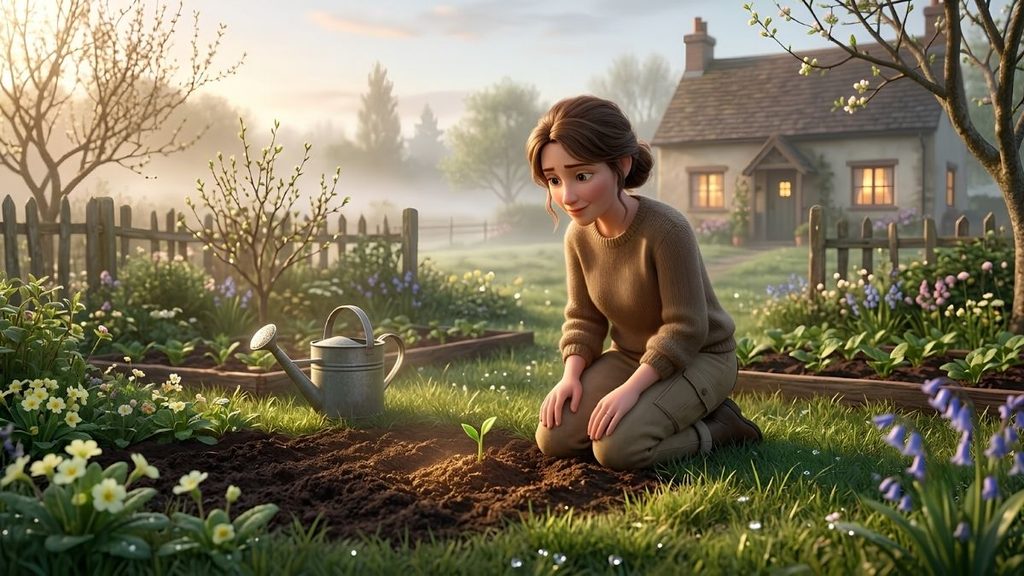
Type: Hope Through Nature | Renewal & Patience
Anna Wilson had become accustomed to quiet houses.
Not peaceful houses.
There was a difference.
A peaceful house felt as though it were resting.
A quiet house could feel as though it were waiting for something that never arrived.
When Anna moved into the little house at the edge of town, she was not looking for anything extraordinary. She had spent the previous year trying to simplify her life, and simplicity seemed easier to find in a house with peeling paint, an old wooden fence, and a neglected garden.
The house had belonged to an elderly couple for many years.
By the time Anna arrived, it had been empty for several months.
The rooms smelled faintly of dust and old wood.
The kitchen needed painting.
One bedroom had a stubborn window that refused to close properly.
The hallway floor creaked in three different places.
But Anna liked it.
She liked the way afternoon light entered the living room.
She liked the small fireplace.
She liked the view from the kitchen window.
Most of all, she liked the garden.
Or rather, she liked the idea of what the garden might eventually become.
At first glance, there was almost nothing there.
The flower beds were dry.
The grass had grown unevenly.
Several branches had fallen from an old tree.
A rusted watering can lay on its side near the fence.
The soil looked hard and tired.
Anna stood in the middle of the garden on her first morning and looked around.
She knew how it felt.
The garden looked as though it had been through a difficult year.
So had she.
A Difficult Year
Anna had not expected to move.
She had lived in the same city for nearly twenty years.
Her work had been there.
Her friends had been there.
The café where she bought coffee had been there.
The apartment she rented had been familiar enough that she could walk through it at night without turning on the lights.
Then, within a short period, several things changed.
Her job ended unexpectedly.
A close friendship faded after years of misunderstandings.
Her mother became ill, and Anna spent months traveling back and forth to help her.
There were hospital corridors.
Long phone calls.
Uncertain conversations.
Quiet drives home.
When that difficult period finally ended, Anna realized she no longer wanted to return to the life she had been living before.
She didn’t know exactly what she wanted instead.
She only knew that she needed somewhere quieter.
So she found the little house.
She moved in with twelve boxes, two suitcases, a collection of books, and a small wooden table she had owned since university.
For the first few weeks, she concentrated on the house.
She unpacked dishes.
Hung curtains.
Cleaned cupboards.
Fixed the loose handle on the back door.
She planted nothing.
She simply watched the garden from the kitchen window.
The Seeds
One Saturday morning, Anna visited a small garden center.
She had not planned to buy anything.
She wandered among shelves of pots, tools, and packets of seeds.
Eventually, she stopped.
The packets were arranged in rows.
Wildflowers.
Marigolds.
Sweet peas.
Lavender.
Sunflowers.
Her fingers moved across them.
She picked up a packet of simple garden flowers.
There was nothing special about them.
They were inexpensive.
The instructions were short.
Plant.
Water.
Wait.
Anna smiled at the last part.
Wait.
She bought the seeds.
Back home, she walked into the garden.
She chose a small patch near the fence where the soil received sunlight in the morning.
She loosened the earth.
The soil was stubborn.
She worked slowly.
Then she made small holes with her finger.
One seed.
Then another.
Then another.
When she finished, the seeds were invisible.
That seemed strange.
She had spent an hour planting something she couldn’t see.
Anna watered the soil.
Then she stood up.
“All right,” she said quietly.
She wasn’t sure whether she was speaking to the garden or herself.
“Let’s see what happens.”
Nothing
The next morning, Anna checked the soil.
Nothing.
The morning after that.
Nothing.
She continued watering.
Still nothing.
A week passed.
Then another.
The garden looked exactly the same.
Anna began to wonder whether she had planted the seeds correctly.
Perhaps the soil was too dry.
Perhaps the seeds were too old.
Perhaps the birds had eaten them.
She considered planting something else.
Instead, she waited.
Every morning before breakfast, she stepped outside with the watering can.
The routine became familiar.
Open the back door.
Feel the morning air.
Walk across the grass.
Water the soil.
Stand quietly for a moment.
Return inside.
Some mornings were sunny.
Others were cloudy.
One morning, rain had already soaked the garden, so Anna simply walked outside and looked around.
She began noticing things she had previously ignored.
A spider had built a web between two branches.
Tiny insects moved through the grass.
A bird landed on the fence.
The old tree had small buds at the tips of several branches.
The garden was not completely lifeless.
It was simply quiet.
The Neighbor
Anna’s nearest neighbor was a man named Peter.
He lived in a small house on the other side of the fence.
They first spoke when Peter was carrying groceries from his car.
“Morning,” he said.
“Morning.”
“You’ve been working in the garden.”
Anna looked at the dry flower beds.
“Trying to.”
Peter smiled.
“It takes time.”
“I know.”
He nodded toward the soil.
“Sometimes the garden knows what it’s doing before we do.”
Anna laughed.
“That’s a generous way to describe an empty flower bed.”
Peter laughed too.
Over the following weeks, they spoke occasionally.
Peter had lived in the neighborhood for more than thirty years.
He knew which trees bloomed first.
He knew when the neighborhood birds usually returned.
He knew which part of his garden stayed wet after rain.
One morning, Anna asked him whether he thought anything would grow in her soil.
“Of course.”
“How do you know?”
Peter shrugged.
“Because things have grown there before.”
That answer stayed with Anna.
The Waiting Season
March passed.
The days became longer.
The mornings became slightly warmer.
Anna planted a few more seeds.
She repaired the broken garden fence.
She removed dead branches.
She cleared weeds from the flower beds.
But the original patch remained mostly bare.
She began wondering whether she should stop expecting anything.
Perhaps the garden needed more time.
Perhaps she had chosen the wrong seeds.
Perhaps some things simply did not grow.
One evening, Anna sat on the back step.
The sun was setting.
The garden looked gray-green in the fading light.
She thought about the previous year.
For months, she had wanted everything in her life to improve immediately.
She wanted answers.
She wanted certainty.
She wanted to wake up one morning and feel completely different.
But life had not worked that way.
Things had changed slowly.
Her mother’s health had improved gradually.
Her friendship had ended quietly rather than dramatically.
Her old career had been replaced by something she had not yet fully defined.
Even her decision to move had happened through a series of small choices.
Maybe she had been expecting visible results too quickly.
Anna looked at the patch of soil.
“You can’t hurry everything,” she whispered.
Then she went inside.
April
The first warm days of April arrived almost unnoticed.
One morning, Anna woke before her alarm.
The house was still.
She made tea and opened the kitchen window.
A cool breeze entered.
Birds were singing somewhere beyond the garden.
Anna stepped outside.
She carried the watering can.
She walked toward the fence.
Then she stopped.
At first, she thought she was imagining it.
She crouched down.
There, among the dark pieces of soil, was a tiny green shoot.
It was almost impossibly small.
Two delicate leaves had pushed their way above the earth.
Anna stared at it.
For several seconds, she did nothing.
Then she smiled.
She sat down beside the flower bed.
The shoot was no larger than her fingernail.
It looked fragile.
Yet it had managed to push through soil that had seemed hard and lifeless only weeks earlier.
Anna stayed there for a long time.
She did not water it immediately.
She simply watched.
The First Green Shoot
That morning changed something inside Anna.
Not dramatically.
There was no sudden transformation.
She did not wake the next day free from every worry.
But she felt different.
The tiny shoot had reminded her of something she had forgotten.
Progress could happen quietly.
It could happen underneath the surface.
It could happen while nothing appeared to be changing.
Anna thought about all the things she had assumed were going nowhere.
The garden.
Her new life.
Her confidence.
Her sense of direction.
Perhaps some of those things were developing in ways she could not yet see.
She watered the plant carefully.
Then she went inside.
That afternoon, she bought a small wooden plant marker.
She wrote:
April 7. First green shoot.
She placed it beside the plant.
More Beginnings
Over the next few weeks, the garden changed.
Another shoot appeared.
Then another.
Small leaves began emerging from the soil.
Anna started keeping a notebook.
She recorded the dates.
April 10. Two more shoots near the fence.
April 14. Small leaves beneath the old tree.
April 20. First wildflower.
The notebook became part of her morning routine.
She no longer went outside only to water.
She went to observe.
She learned the names of plants.
She watched bees move from flower to flower.
She noticed that one section of the garden received sunlight earlier than another.
She discovered that a pair of birds had built a nest in the old tree.
She began taking photographs.
Peter noticed.
“You’ve become serious about this.”
Anna smiled.
“I think the garden is teaching me.”
Peter looked at the flowers.
“What has it taught you?”
“That I don’t have to see everything happening.”
He nodded.
“That’s a useful lesson.”
Summer Arrives
By June, the garden had become almost unrecognizable.
The empty flower beds were filled with green leaves.
Flowers opened along the fence.
The old tree had become thick with foliage.
The grass grew high in places where Anna had once seen only dry soil.
The first green shoot had become part of a larger patch of flowers.
Anna sometimes found herself searching for it.
It was no longer the smallest plant.
There were dozens around it.
She couldn’t always identify which one had been the first.
That made her smile.
The little shoot had disappeared into the garden.
It had become part of something larger.
One warm evening, Anna sat outside with a cup of tea.
The air smelled of soil and flowers.
A breeze moved through the leaves.
Peter was watering his own garden.
“You’ve done well,” he called.
Anna looked around.
“I didn’t do all of it.”
Peter turned off his hose.
“No?”
“I planted seeds.”
“And?”
“I waited.”
He smiled.
“Sometimes that’s the hardest part.”
A Different Kind of Healing
As summer continued, Anna noticed changes in herself.
She slept better.
She spent less time checking the news.
She stopped feeling the need to fill every quiet moment with something.
She began reading in the garden.
Sometimes she sat beneath the tree for an hour without doing anything.
At first, she had felt guilty about this.
She had spent years believing that every day needed to produce something.
Work.
Progress.
Achievement.
Results.
The garden offered a different rhythm.
Some days there was obvious growth.
Some days there was almost nothing to notice.
Both were part of the same process.
Anna began applying that idea to her own life.
She stopped expecting herself to have everything figured out.
She took a short course in something she had always been curious about.
She started writing again.
She called an old friend.
She took walks without a destination.
None of these changes seemed important at first.
But together, they began forming a new life.
The Garden in August
By August, the garden was full.
Flowers leaned toward the sunlight.
Bees moved through the blossoms.
Butterflies appeared in the afternoon.
The wooden fence was partly covered by climbing plants.
Anna repaired the watering can instead of replacing it.
She liked its dents.
They seemed to belong there.
One evening, she found the old plant marker.
April 7. First green shoot.
She smiled.
The plant itself was impossible to identify now.
It had grown among many others.
Anna crouched down.
She touched the soil.
She remembered how empty the garden had looked when she first arrived.
She remembered how long she had waited.
She remembered how many mornings she had stood there wondering whether anything was happening.
And now the garden was alive.
Not because everything had changed at once.
Because something small had begun.
The Meaning of Growth
Anna began to understand that growth rarely announces itself.
A tree does not send a message when its roots extend deeper.
A seed does not explain what it is doing beneath the soil.
A friendship does not always begin with a significant conversation.
A new life does not appear fully formed on the day someone moves into a new house.
Most beginnings are almost invisible.
They look ordinary.
They look insignificant.
They may even look like nothing is happening.
But beneath the surface, things can be changing.
That realization became one of the most comforting ideas Anna had encountered.
She no longer needed every difficult period to reveal its purpose immediately.
She could simply live through it.
Water what needed watering.
Rest when she was tired.
Take the next small step.
Wait when waiting was necessary.
Trust that not everything needed to be visible.
Autumn
By September, some flowers had begun to fade.
Anna noticed that the garden was changing again.
At first, she felt disappointed.
She had become attached to the summer abundance.
But then she remembered the lesson of the first green shoot.
The garden was not failing.
It was moving into another season.
She collected seeds from several flowers.
She placed them in small paper envelopes.
On each one, she wrote the date.
Next spring, she would plant them again.
She realized that the garden had given her something more valuable than flowers.
It had given her a way of seeing time.
Not as something that had to be conquered.
Not as something constantly disappearing.
But as a series of seasons.
Growth.
Rest.
Change.
Renewal.
Winter
By December, the garden was quiet again.
The flowers were gone.
The branches were bare.
The soil looked dark and empty.
Someone unfamiliar with the garden might have thought the year had erased everything.
Anna knew better.
She had seen what happened beneath the surface.
She had learned not to confuse stillness with absence.
On cold mornings, she stood at the kitchen window and looked outside.
Sometimes frost covered the grass.
Sometimes rain fell.
Sometimes the garden disappeared beneath a thin layer of snow.
She continued keeping her notebook.
There were fewer entries now.
But she didn’t mind.
Winter did not require constant observation.
It required patience.
Another Spring
When April returned, Anna went into the garden with the same packet of seeds she had collected the previous autumn.
She opened the envelope.
She smiled at the small seeds in her palm.
They were tiny.
Ordinary.
Almost weightless.
She planted them.
Then she waited.
This time, she wasn’t anxious.
She knew what waiting could mean.
A few weeks later, she noticed the first green shoots.
There were several.
Anna crouched beside them.
She thought about the woman who had stood in this same garden a year earlier.
That woman had been uncertain.
Tired.
Trying to rebuild a life without knowing what the finished version would look like.
Anna realized that she was still that woman in some ways.
Life had not become perfect.
But it had become fuller.
She had learned to accept uncertainty.
She had learned that healing could be gradual.
She had learned that a quiet life could still be meaningful.
And she had learned to notice small beginnings.
The Lesson
Years later, Anna still lived in the little house.
The garden changed every year.
Some plants disappeared.
Others returned.
New ones appeared.
The old tree grew larger.
The fence needed occasional repairs.
The watering can became more battered.
And every spring, Anna planted something new.
She never again worried when nothing appeared immediately.
She had learned to give things time.
One evening, she sat beneath the tree with her notebook.
The garden was full of small movements.
Leaves shifting.
Bees humming.
Birds calling from the branches.
A gentle breeze passing through the flowers.
Anna opened the notebook to the first page.
There it was.
April 7. First green shoot.
She smiled.
That tiny plant had taught her something she would never forget.
Not every season of life is meant to look full.
Some seasons happen beneath the surface.
Some beginnings are too small to notice at first.
Some changes require patience before they become visible.
And sometimes, when life seems quiet and empty, something has already begun.
You simply cannot see it yet.
Anna closed the notebook.
The evening light rested gently across the garden.
She looked at the flowers.
Then at the dark earth beneath them.
And for the first time, she understood that hope did not always have to be loud.
Sometimes hope was only a tiny green shoot.
Small enough to miss.
Strong enough to keep growing.
And patient enough to wait until someone was ready to notice.
Core themes: hope, renewal, patience, nature, healing, new beginnings.
Why Stories of Hope Matter
People naturally respond to stories because stories allow abstract emotions to become experiences.
Instead of simply telling someone to remain hopeful, a story can show a person standing at a difficult crossroads.
Readers can observe their hesitation.
They can understand their disappointment.
They can experience the small moment when they decide to take another step.
That makes hope feel believable.
A character who struggles before finding hope can be much more relatable than someone who remains cheerful throughout every difficulty.
For adult readers, this realism is particularly important.
Life rarely follows a straight line.
A person can be successful professionally and still feel uncertain personally.
Someone can have a loving family and still experience loneliness.
A person can achieve an important goal and discover that they need to rethink what they want next.
Stories of hope create room for these contradictions.
Hope Does Not Mean Ignoring Difficulties
One of the most important characteristics of a strong hopeful story is honesty.
A story becomes less convincing when every problem is solved instantly.
Real hope usually develops gradually.
A character may experience:
- Fear
- Disappointment
- Grief
- Confusion
- Loneliness
- Failure
- Regret
- Uncertainty
The story can acknowledge these emotions without allowing them to become the final message.
This creates a more realistic form of hope.
For example, a character who loses a job may not immediately find a better one.
Instead, they might begin by updating their résumé.
Then they contact an old colleague.
They attend an interview.
They receive a rejection.
Eventually, another opportunity appears.
The hopeful element is not simply getting the new job.
It is the character discovering that disappointment did not prevent them from taking another step.
Common Themes in Stories of Hope
There are many ways to build a hopeful narrative. Some themes work particularly well because they connect with experiences shared by many adults.
1. New Beginnings
Starting over is one of the strongest themes associated with hope.
A character might move to a new town after years in the same place.
Someone may begin a new career.
A person might renovate an old house.
Another character could return to school later in life.
The beginning may feel uncomfortable.
The character might miss what they left behind.
But gradually, unfamiliar surroundings become familiar.
New routines develop.
New relationships appear.
The character discovers that starting over does not mean erasing the past.
It means allowing the future to exist alongside it.
2. Second Chances
Second chances can involve relationships, careers, dreams, or personal goals.
A person may return to a hobby they abandoned years ago.
Two old friends may reconnect.
Someone might finally pursue an ambition they postponed.
A character could return to a place they once avoided because of painful memories.
The key is that a second chance should not simply recreate the past.
People change.
Circumstances change.
A meaningful second chance allows characters to approach something familiar with greater maturity.
3. Small Acts of Kindness
Hope does not always come from major events.
Sometimes it arrives through another person.
A neighbor leaves groceries outside someone’s door.
A stranger helps someone carry a suitcase.
A teacher encourages a discouraged student.
A shopkeeper remembers a customer’s name.
Someone calls an old friend simply to ask how they are doing.
These moments can become powerful because they demonstrate that people are capable of noticing one another.
Stories built around kindness can be particularly gentle and comforting.
They remind readers that hope can be created through ordinary actions.
4. Finding Purpose
A character may reach a point where their old goals no longer feel meaningful.
Perhaps they have spent years building a career and suddenly wonder what they are working toward.
Maybe their children have grown up.
Perhaps retirement has changed their daily routine.
A person may move away from a familiar environment and feel uncertain about their identity.
Stories of hope can explore what happens next.
The character might discover purpose through teaching, volunteering, gardening, creating art, helping others, or simply developing a deeper appreciation for everyday life.
Purpose does not have to be grand.
Sometimes having something meaningful to care about is enough.
5. Overcoming Failure
Failure can become an important turning point in hopeful storytelling.
A character might fail an examination.
Lose a competition.
Miss an opportunity.
Make a mistake at work.
Close a business.
End a relationship.
The important part is what happens afterward.
Failure can initially feel like an ending.
Later, the character may realize it is actually information.
They learn something about themselves.
They discover what needs to change.
They become more patient.
They develop a new skill.
They try again.
A hopeful story can therefore show that failure and hope are not opposites.
Sometimes failure becomes part of the path toward something better.
6. Family and Reconnection
Family stories often provide natural opportunities for hope.
People can become separated by distance, disagreements, careers, or changing circumstances.
A hopeful story might follow a family member returning home after many years.
Another could involve siblings repairing a strained relationship.
A parent and adult child might finally have an honest conversation.
The important element is emotional authenticity.
Reconciliation should not erase serious problems.
Instead, characters can acknowledge what happened and decide whether they are willing to build something healthier.
That makes the hope feel earned.
7. Friendship
Friendship can also become a powerful source of hope.
A lonely character may meet someone unexpectedly.
Two coworkers might gradually become friends.
Neighbors could begin helping one another.
An old friendship might be renewed after years of silence.
Friendship stories are especially effective when they focus on gradual connection.
A friendship does not need to begin with a dramatic moment.
Sometimes it begins with a shared cup of coffee, a conversation during a walk, or a simple offer of help.
Over time, those small moments become meaningful.
8. Hope After Loss
Stories about hope can acknowledge loss without becoming entirely sorrowful.
A character may lose someone they love.
They may leave a home filled with memories.
They may experience the end of an important relationship.
They might lose a career or opportunity they spent years pursuing.
The hopeful element can come from learning how to carry the memory forward.
The goal does not have to be forgetting.
Instead, the character learns that remembering someone or something can coexist with continuing to live.
This creates a gentle message:
Moving forward does not necessarily mean leaving everything behind.
9. Dreams That Take Time
Some dreams happen quickly.
Others require years.
Long-form stories of hope can explore the second kind.
A character might spend years saving for a small home.
Someone could practice an instrument for decades.
Another person might hope to publish a book.
A gardener could spend years transforming an empty piece of land.
The story becomes meaningful because progress is gradual.
Small improvements accumulate.
Eventually, the character looks back and realizes that the dream was being built all along.
10. Hope Through Nature
Nature provides an especially peaceful setting for hopeful stories.
A garden can represent renewal.
Spring can represent new beginnings.
Rain can represent change.
A sunrise can symbolize another opportunity.
A tree can represent patience and endurance.
A changing landscape can remind readers that life moves through cycles.
Nature-based hope stories do not need to use obvious symbolism.
Simply watching a garden return after winter can communicate the idea that difficult seasons eventually change.
Hope in Everyday Life
Some of the strongest stories of hope are deliberately ordinary.
A character wakes up early and prepares breakfast.
Someone opens a small shop after years of uncertainty.
A retired person learns something new.
A family gathers around a dinner table.
A lonely neighbor begins talking to people again.
Someone plants flowers outside their home.
None of these events sound extraordinary.
Yet they can carry emotional significance.
This is because hope is often found in continuation.
Getting up.
Making plans.
Calling someone.
Planting something.
Trying again.
Going outside.
Cooking dinner.
Beginning another morning.
These ordinary actions demonstrate that the future is still being created.
Stories of Hope for Adults
Adult readers often connect with hopeful stories differently from children.
Adults understand that life contains complicated choices.
They know that some problems cannot be solved immediately.
They have experienced plans changing unexpectedly.
They may have responsibilities that make starting over difficult.
For this reason, adult stories of hope can benefit from emotional depth.
Instead of saying:
Everything happens for a reason.
A story might explore uncertainty.
Instead of promising:
Everything will work out.
It might suggest:
There are still possibilities worth exploring.
That difference makes the story feel more mature.
Hope becomes something the character chooses to nurture rather than something magically delivered to them.
Gentle Stories of Hope for Bedtime
Hope can be particularly effective in bedtime storytelling.
At night, unresolved thoughts can feel more noticeable.
A quiet hopeful story can provide a softer transition toward sleep.
The story doesn’t need suspense.
It doesn’t need dramatic twists.
It can move slowly.
A character might walk through a quiet neighborhood.
They might sit beside a window during rainfall.
They may remember an old friend.
They might begin a small project.
They could watch the sunrise after a difficult night.
The atmosphere should allow the reader to relax while still leaving them with a positive emotional impression.
The Importance of Small Moments
A recurring idea in hopeful storytelling is that major change often begins with something small.
A conversation.
A decision.
A letter.
A walk.
A meal.
A phone call.
A planted seed.
A repaired chair.
A reopened shop.
A simple apology.
These moments may appear insignificant at first.
But stories can show how one small action creates another.
One conversation leads to friendship.
One friendship leads to community.
One decision leads to a new career.
One evening walk leads to a new routine.
One attempt leads to another.
Eventually, the character realizes that hope did not arrive all at once.
It grew gradually.
How to Make a Story of Hope Feel Authentic
A believable hopeful story usually contains several important elements.
- Give the character a genuine difficulty: The reader needs to understand why hope is necessary.
- Allow uncertainty: The character should not know exactly what will happen.
- Avoid instant solutions: Meaningful change usually takes time.
- Include setbacks: A setback can make eventual progress more satisfying.
- Show emotional growth: The character should learn something about themselves.
- Use ordinary details: Small details make the story feel lived-in.
- Let hope emerge gradually: The character may begin with only a small reason to continue.
- Avoid forced positivity: Hope is stronger when it acknowledges reality.
Hope and the Passage of Time
Time can be one of the most effective storytelling tools.
A hopeful story might cover a single evening.
Or it could follow a character over several months.
Longer stories can show how small changes accumulate.
A neglected garden becomes healthy.
A lonely person develops friendships.
An old house becomes a home.
A family tradition returns.
A character slowly rebuilds confidence.
The passage of time reminds readers that transformation does not have to happen immediately.
Sometimes the most important changes are the ones we recognize only when we look backward.
Why Hope Can Be Quiet
Not every hopeful ending needs applause.
There may be no celebration.
No dramatic announcement.
No perfect resolution.
A character may simply sit beside a window and realize that they feel differently.
They may wake up and look forward to the day.
They may call someone they have been avoiding.
They may open the door of a new business.
They may plant something in the garden.
They may finally forgive themselves for an old mistake.
These endings can be especially powerful because they feel intimate.
The character has not necessarily solved everything.
But something inside them has shifted.
Stories of Hope and Gratitude
Hope and gratitude often work naturally together.
A character who has experienced difficulty may begin noticing things they previously overlooked.
A warm meal.
A familiar voice.
A safe home.
A morning walk.
A friend who stayed.
A tree outside the window.
A quiet evening.
This doesn’t mean the character becomes grateful for the difficult experience itself.
Instead, they become more aware of what remains meaningful.
That awareness can become another form of hope.
The Difference Between Hope and a Happy Ending
A happy ending usually answers the question:
What happened?
A hopeful ending can answer a different question:
What will the character do next?
That distinction is important.
A story can end before every problem is resolved.
Perhaps the character has just begun rebuilding their life.
Perhaps two people have only started speaking again.
Perhaps someone has planted the first seeds in a garden.
Perhaps a person has decided to return to school.
The future remains unknown.
Yet the reader feels that something positive is possible.
That is often enough.
Why Readers Return to Hopeful Stories
People often reread stories that give them a particular emotional feeling.
Stories of hope can become comforting because their message does not depend on the reader’s circumstances.
Someone going through a difficult period may find encouragement.
Someone feeling tired may find calm.
Someone experiencing change may find reassurance.
Someone who simply wants a peaceful story may enjoy the warmth of an optimistic ending.
The story becomes a temporary place where the reader can slow down and imagine possibilities.
Final Thoughts
Stories of hope remind us that life is rarely defined by a single moment.
A difficult day is not necessarily a difficult life.
A failed plan is not necessarily a failed future.
An ending is not always the end of the story.
Hope can be dramatic, but it can also be extraordinarily quiet.
It can exist in a person making breakfast the morning after a difficult conversation.
It can appear when an old friend finally answers a message.
It can be found in a garden beginning to bloom after winter.
It can live in a small business opening its doors again.
It can be present when someone simply decides to try once more.
The most comforting stories of hope do not promise that life will always be easy.
They offer something more believable.
They remind us that even when the future is uncertain, there can still be another morning, another conversation, another opportunity, another beginning, and another reason to keep moving forward.