

After a long and demanding day, falling asleep is not always as simple as getting into bed and turning off the lights. The body may be tired while the mind continues moving through unfinished tasks, conversations, plans, memories, and worries.
For many adults, bedtime becomes a transition period rather than an immediate path to sleep.
This is where bedtime stories for adults to fall asleep free can offer a simple and enjoyable way to create a calmer nighttime routine. Instead of scrolling through social media, checking emails, or thinking about tomorrow’s responsibilities, reading a gentle story can give the mind something quiet and predictable to focus on.
Free bedtime stories can also make relaxation more accessible. You do not need an expensive subscription, complicated sleep program, or specialized equipment. A comfortable place, a few peaceful minutes, and the right story may be enough to make bedtime feel more inviting.
This guide explores what makes adult bedtime stories effective, the different types available, how to choose one for your mood, and how to build a relaxing nighttime routine around them.
What Are Bedtime Stories for Adults?
Bedtime stories for adults are stories specifically written or selected to provide an enjoyable and calming reading experience before sleep.
Unlike children’s bedtime stories, adult sleep stories often focus on experiences that feel familiar to grown-up readers.
They may feature:
- Quiet neighborhoods
- Cozy homes
- Gentle romance
- Peaceful travel
- Nostalgic memories
- Nature
- Family relationships
- Friendship
- Personal reflection
- Everyday experiences
- Hope and emotional comfort
The goal is not necessarily to create a complicated plot.
A bedtime story can be satisfying precisely because it does not demand intense concentration.
Instead, it can move slowly through a peaceful setting and allow the reader to gradually shift attention away from the day’s responsibilities.
Bedtime Stories for Adults to Fall Asleep Free
1. The Last Bus to Willow Lane
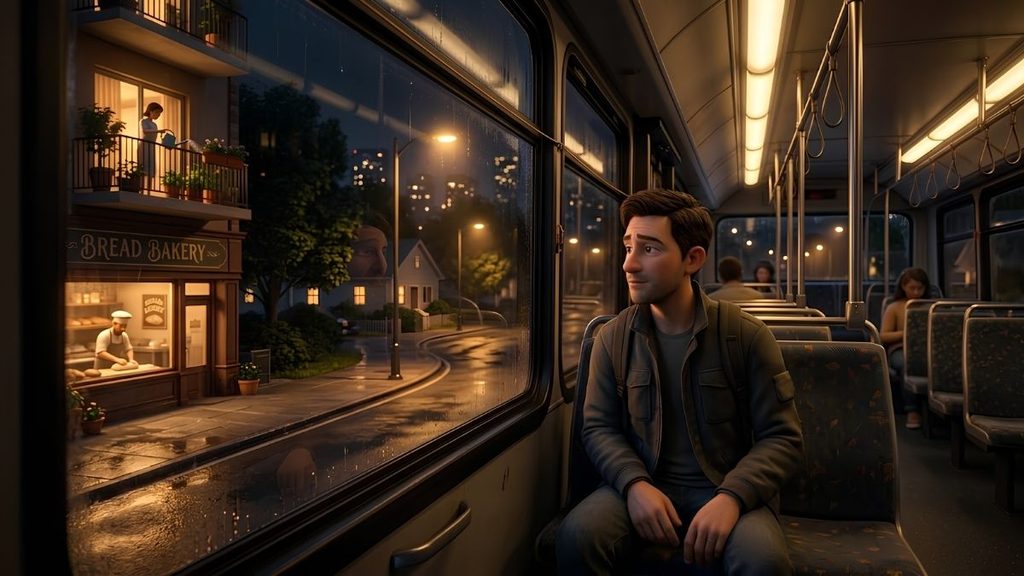
Type: Short Bedtime Story | Quiet Evening & Letting Go
Ethan Brooks had always believed that the day ended when he closed his laptop.
It was a reasonable belief.
For years, he had worked in an office on the twenty-third floor of a glass building in the center of the city. At six o’clock, people began gathering their coats. At six-thirty, elevators filled with tired conversations. By seven, most of the desks were empty.
Ethan usually stayed longer.
There was always something else.
One more email.
One more report.
One more spreadsheet that needed checking.
One more message from someone who had remembered an important question five minutes before everyone else went home.
On Thursday evening, Ethan looked at the clock on his computer.
9:18 p.m.
He leaned back in his chair.
The office around him was almost completely dark.
Only a few lamps remained on.
Outside the windows, the city had changed character. During the day, the streets below were crowded with buses, taxis, bicycles, and people walking quickly between buildings.
Now the roads were quieter.
Traffic lights changed for almost nobody.
Office towers reflected the scattered glow of streetlamps.
Ethan closed the final document.
He had planned to finish everything before leaving.
He had not.
There were still three emails he had not answered.
A presentation for tomorrow was not as polished as he wanted.
And somewhere in his mind was a list of several other things he had promised himself he would do.
He stared at the screen for a moment.
Then he shut the laptop.
“Tomorrow,” he said quietly.
It was the first time that evening he had allowed himself to say the word without immediately adding another task.
He put on his coat and left.
The lobby was nearly empty.
The security guard looked up from his desk.
“Late one tonight, Ethan.”
“Apparently.”
The guard smiled.
“Go home.”
Ethan smiled back.
“That’s the plan.”
Outside, the air was cool.
It had rained earlier, leaving the pavement dark and reflective.
The city smelled faintly of wet concrete and distant food stalls.
Ethan walked toward the bus stop.
Normally, he would take the express bus that stopped a few streets from his apartment.
But when he reached the shelter, he saw the digital display change.
EXPRESS SERVICE ENDED.
He sighed.
“Of course.”
There was another bus listed.
Route 47.
It would take him home, but through a much longer route.
Ethan checked his phone.
9:42 p.m.
He could order a car.
He could walk to another station.
Or he could take the bus.
He was tired enough that the decision suddenly seemed unimportant.
A few minutes later, the bus arrived.
It was nearly empty.
Ethan climbed aboard.
The driver nodded.
Ethan tapped his card and found a seat beside the window.
The bus pulled away.
For the first few minutes, Ethan did what he always did.
He checked his phone.
Three emails.
Two messages.
A news notification.
A reminder about tomorrow’s meeting.
His thumb hovered over the first email.
Then he looked through the window.
The wet streets slid past in long reflections of yellow and white.
For some reason, he put the phone back into his pocket.
He didn’t answer anything.
He simply watched.
The bus moved away from the business district.
The tall buildings gradually disappeared.
They were replaced by apartment blocks, small shops, restaurants, and houses.
Ethan had traveled these streets before, but usually during daylight.
At night, they seemed completely different.
A bakery was still open.
Through its large front window, Ethan could see a man in a white apron arranging trays.
The bakery was almost empty.
The man moved slowly, placing loaves into neat rows.
Tomorrow morning, hundreds of people might walk through that door without ever knowing that someone had spent the previous night preparing their bread.
The bus continued.
At the next intersection, Ethan noticed a woman standing on a balcony.
She was watering plants.
It was nearly ten o’clock.
She wore a thick sweater and slippers.
She moved carefully from one pot to another.
Ethan wondered if she had a particular reason for watering them so late.
Perhaps she worked during the day.
Perhaps evening was simply when she preferred to care for her plants.
Perhaps she enjoyed the quiet.
He smiled at the thought.
The bus stopped again.
Nobody got off.
A man carrying a paper bag climbed aboard.
He sat near the front.
The bag smelled faintly of roasted food.
Ethan suddenly realized he was hungry.
He hadn’t eaten dinner.
For a moment, he considered getting off at the next stop to find something.
Then he decided he would make toast when he got home.
It was enough.
The bus crossed a small bridge.
Below it, the river reflected the lights along the embankment.
Ethan watched the water.
He had passed this bridge hundreds of times.
He had never really looked at it.
The river moved quietly beneath them.
There were no boats.
No crowds.
Only a few lights reflected in the dark water.
The driver slowed slightly as they crossed.
Ethan wondered if he did that every night.
Perhaps he liked the view too.
Perhaps he simply knew the road required it.
Either way, the moment felt strangely peaceful.
At the next stop, an elderly man boarded.
He carried a small cloth shopping bag.
He looked around the nearly empty bus before sitting across the aisle from Ethan.
“Long evening?” the man asked.
Ethan looked up.
“Very.”
The man nodded.
“Mine too.”
Neither said anything else.
The bus started moving.
After a few minutes, the man opened his bag and took out a small container.
He looked inside.
Then he smiled.
Ethan glanced over.
“Everything all right?”
The man laughed softly.
“Yes. I bought peaches.”
“Peaches?”
“Couldn’t resist.”
He held up the container.
“They were on sale.”
Ethan smiled.
“Good reason.”
“Very good reason.”
The man put them away.
They continued in silence.
It was a comfortable silence.
Ethan realized how unusual that felt.
During most conversations, he was already preparing his response before the other person finished speaking.
Here, there was nothing to prepare.
Nothing to solve.
They were simply two people traveling through the same city.
A few stops later, a father and his young daughter boarded.
The girl was asleep.
Her head rested against her father’s shoulder.
He carried a small backpack in one hand and held her coat with the other.
He sat near the back.
Ethan watched as the father carefully adjusted the girl’s head so she would be more comfortable.
Then he looked out the window.
The city passed behind him.
Ethan wondered how many people were doing small acts of care at that exact moment.
Someone washing dishes.
Someone making tea.
Someone checking whether a child was asleep.
Someone locking a shop.
Someone feeding a pet.
Someone turning off the lights in an office.
None of these moments would appear in tomorrow’s news.
Nobody would post about them.
Yet they were happening everywhere.
Life was full of quiet things.
Ethan had somehow forgotten that.
The bus turned onto a narrower road.
The houses became smaller.
Trees appeared along the sidewalks.
Some windows were illuminated.
Others were dark.
A cat sat on a garden wall and watched the bus pass.
Ethan smiled.
He had no idea where the cat lived.
He imagined it had a perfectly ordinary evening.
Perhaps someone had given it dinner.
Perhaps it had spent an hour sleeping.
Perhaps it was waiting for another cat.
The bus continued.
The elderly man with the peaches got off.
Before leaving, he turned toward Ethan.
“Good night.”
“Good night.”
The doors closed.
The bus moved on.
Ethan watched the man walk toward a row of houses.
He wondered what waited inside.
Maybe someone was waiting for him.
Maybe he lived alone.
Maybe the peaches were for breakfast.
There was no way to know.
And strangely, Ethan didn’t need to know.
The bus was almost empty now.
Only Ethan, the father and sleeping child, and two other passengers remained.
The driver turned off the main road.
A sign appeared.
WILLOW LANE — 3 MINUTES
Ethan sat up slightly.
He had never taken this route before.
The road narrowed between rows of old trees.
Streetlights appeared at regular intervals.
Their warm circles of light touched the pavement and disappeared behind the bus.
For the first time that day, Ethan felt his shoulders relax.
He hadn’t realized how tense they were.
He leaned his head against the window.
The glass was cool.
His reflection appeared faintly against the darkness.
He looked tired.
But not unhappy.
Just tired.
There was a difference.
At the next stop, the father and his daughter got off.
The father lifted the sleeping girl carefully.
She wrapped her arms around his neck.
Ethan watched them disappear through a gate.
The bus became completely silent.
Only Ethan and the driver remained.
For several minutes, neither spoke.
Then the driver said, “Willow Lane is next.”
Ethan looked up.
“Thanks.”
The driver smiled.
“You’ve been quiet.”
Ethan laughed softly.
“I’ve had a long day.”
“Those are sometimes the best bus rides.”
Ethan looked at him.
“What do you mean?”
The driver shrugged.
“When nobody is in a hurry to talk.”
Ethan smiled.
“That’s true.”
The bus slowed.
Ahead, a small row of houses appeared.
One window was lit.
Then another.
Then another.
The bus pulled into the stop.
Ethan stood.
“Good night.”
“Good night,” the driver said.
Ethan stepped onto the pavement.
The bus continued down the road until its red lights disappeared around the corner.
He stood there for a moment.
The neighborhood was quiet.
No traffic.
No notifications.
No meetings.
No emails.
Just the faint sound of leaves moving in the evening breeze.
Ethan started walking.
His apartment was only five minutes away.
Normally, he would have walked quickly.
Tonight, he didn’t.
He noticed things.
A small garden behind a low fence.
A bicycle leaning against a wall.
A porch light glowing above a front door.
Somewhere nearby, someone was washing dishes.
He could hear the faint sound of plates touching.
A dog barked once.
Then everything became quiet again.
Ethan reached his building.
He unlocked the door.
Inside his apartment, nothing had changed.
His laptop bag was still on his shoulder.
The kitchen was dark.
There was a message on his phone.
He didn’t check it.
He put the phone on the table.
Then he made toast.
While waiting, he opened the window slightly.
Cool air entered the room.
He stood there and listened.
The city was still awake, but from this distance it sounded gentle.
Ethan ate his toast slowly.
He didn’t turn on the television.
He didn’t open his laptop.
He didn’t answer his emails.
For once, tomorrow was allowed to remain tomorrow.
After dinner, he washed his plate.
Then he made tea.
He carried it to the window.
Across the street, a few apartment windows were still lit.
Some people were awake.
Some were probably reading.
Some were probably talking.
Some were probably preparing for bed.
Everyone had their own small evening.
Ethan took a sip of tea.
He thought about the bus.
The bakery.
The woman watering her plants.
The man with the peaches.
The sleeping child.
The quiet river.
None of these moments had been important.
And perhaps that was exactly why he remembered them.
They had asked nothing from him.
They had not required an answer.
They had simply existed.
Before going to bed, Ethan finally looked at his phone.
There were still three emails.
He read the first one.
It could wait.
He read the second.
It could also wait.
The third was from a colleague asking whether they could discuss something tomorrow.
Ethan typed a short reply.
Of course. Tomorrow works. Good night.
He put the phone down.
Then he turned off the light.
The room became quiet.
For a few moments, his mind returned to the unfinished work.
The presentation.
The report.
The meeting.
The unanswered questions.
He felt the familiar urge to get up and continue.
But then he remembered the bus driver.
Those are sometimes the best bus rides.
Ethan smiled in the darkness.
Some things could wait.
Not everything needed to be solved before the day ended.
He closed his eyes.
Outside, a car passed slowly along the street.
Somewhere far away, a bus moved through the sleeping city.
Perhaps it was the same route.
Perhaps another driver was taking another tired passenger toward home.
Ethan listened until the sound faded.
And for the first time in many weeks, he allowed the day to end without asking it to become anything more.
Tomorrow would arrive soon enough.
Tonight could simply be tonight.
And that was enough.
Core themes: slowing down, ordinary beauty, reflection, quiet evenings, letting go of daily worries.
2. The Houseboat That Stayed Through Winter

Type: Long Bedtime Story | Slow Living & New Beginnings
Margaret Ellis had spent most of her adult life designing places where other people would live.
She had designed apartments with wide windows and narrow balconies, quiet houses tucked into hillsides, office buildings with bright atriums, and once, many years ago, a small library where the afternoon sunlight moved slowly across the reading room.
She knew how to draw rooms before they existed.
She knew where a window should face.
She knew how much space a person needed beside a kitchen table.
She knew that hallways should never feel unnecessarily dark.
What she did not know was where she wanted to live herself.
At sixty-three, Margaret retired from architecture.
On her final afternoon at the firm, her colleagues arranged a small gathering.
There was cake.
There were flowers.
Someone gave her a framed photograph of the building where she had worked for twenty-eight years.
People asked what she planned to do next.
Margaret always gave the same answer.
“Travel.”
She said it confidently.
She would visit places she had never had time to see.
She would spend weeks in small towns.
She would take trains without checking their schedules too carefully.
She would stay near the sea.
Perhaps she would visit the mountains.
She would wake up without an alarm.
She would have no deadlines.
The possibilities seemed endless.
But when she returned to her apartment that evening and placed the flowers on the kitchen table, she realized something unexpected.
She had no idea where to begin.
Three weeks later, Margaret found the houseboat.
It was advertised as a temporary rental.
The listing showed a small wooden vessel moored along a quiet canal outside the city.
It had two rooms, a narrow kitchen, a bathroom, a small sitting area, and a bedroom beneath a sloping roof.
The photographs were not particularly impressive.
The paint was slightly faded.
One window had a scratch across the glass.
The furniture looked old.
But Margaret kept returning to the photograph of the canal.
The water was calm.
Trees stood along both banks.
A narrow footpath followed the canal.
There were small boats tied to wooden posts.
It looked peaceful.
The rental agreement was for one month.
Margaret thought that sounded perfect.
One month.
Then she would move on.
Perhaps she would take a train north.
Perhaps she would fly somewhere warm.
She didn’t need to decide yet.
On a cloudy Tuesday morning, she carried two suitcases down the path toward the water.
The owner, a cheerful woman named Helen, met her at the dock.
“This is it,” Helen said.
Margaret looked at the houseboat.
It was smaller than she expected.
“Cozy,” she said.
Helen laughed.
“That’s the polite word.”
Margaret smiled.
She stepped aboard.
The houseboat moved gently beneath her feet.
For a moment, she stood still.
The water made a soft sound against the hull.
She liked it immediately.
The first morning, Margaret woke at 5:47.
She had forgotten to set an alarm.
For several seconds, she wondered what had woken her.
Then she heard it.
Water.
Not rain.
The quiet movement of the canal against the side of the boat.
Margaret remained in bed.
The room was still dark.
A pale line of morning appeared beneath the curtains.
She listened.
There were no elevators.
No traffic.
No neighbors opening doors.
No distant construction.
Only water.
Eventually, she got up and made coffee.
She stood beside the window while it brewed.
Across the canal, an elderly man was preparing a small fishing boat.
He moved slowly.
He checked a rope.
Adjusted a basket.
Then pushed the boat away from the bank.
Margaret watched him disappear around a bend.
She had no idea who he was.
She would later learn his name was Arthur.
But on that first morning, he was simply a man in a small boat moving quietly through the dawn.
Margaret drank her coffee.
She thought about her plans.
She would stay here for a month.
Then she would travel.
She smiled.
There was plenty of time.
The first week passed easily.
Margaret explored the footpath along the canal.
She found a small grocery store ten minutes away.
There was a bakery another fifteen minutes beyond that.
A café stood near the bridge.
She began walking there each morning.
The owner, a young man named Lucas, quickly learned her order.
“Coffee?” he would ask.
“Please.”
“Same table?”
“Same table.”
Margaret always sat beside the window.
From there she could see the canal.
She began noticing the changing light.
At eight in the morning, the water looked silver.
At noon, it reflected the sky.
In late afternoon, the trees cast long shadows across it.
She found herself thinking about architecture.
For decades, she had studied light intentionally.
Now she was watching it without trying to control it.
That was different.
On the ninth day, something went wrong.
Margaret was washing dishes when she heard a strange dripping sound.
She looked beneath the sink.
Water was collecting on the floor.
She turned off the tap.
The dripping continued.
She called Helen.
Helen arrived an hour later.
“The pipe isn’t serious,” she said.
“But?”
“It needs a part.”
“How long?”
Helen hesitated.
“A few days.”
Margaret laughed.
“That’s inconvenient.”
“Very.”
“And I suppose the part isn’t easy to find.”
“Apparently not.”
Margaret looked around the little kitchen.
She had planned to leave in three weeks.
Now she couldn’t.
It wasn’t a disaster.
It was simply inconvenient.
But somehow the inconvenience amused her.
For most of her professional life, she had solved problems quickly.
Now a small pipe had defeated her travel schedule.
She made tea.
And waited.
The part took five days.
During those five days, Margaret became more familiar with the canal.
She began greeting Arthur when he returned from fishing.
She learned that the young couple on the next boat were named Sophie and Daniel.
They had moved onto the canal the previous spring.
One afternoon, Sophie knocked on Margaret’s door.
“We saw your little pots.”
Margaret looked at the windowsill.
She had planted basil and mint.
“Are they terrible?”
“No,” Sophie said. “They’re actually alive.”
Daniel appeared behind her.
“That’s impressive.”
Margaret laughed.
“I’ve designed buildings. I should be able to keep basil alive.”
Daniel shook his head.
“Basil is more demanding.”
They invited her for dinner that evening.
Margaret almost refused.
She had grown accustomed to eating alone.
But she accepted.
The three of them ate vegetable soup and fresh bread in the tiny sitting room of the young couple’s boat.
They talked about the canal.
They talked about cities.
They talked about work.
Margaret told them about architecture.
Sophie told Margaret about her job as a botanical illustrator.
Daniel repaired bicycles.
Before Margaret left, Sophie handed her a small packet of herb seeds.
“Try these.”
“I already have basil.”
“These are different.”
Margaret took the packet.
“Thank you.”
She placed it in her coat pocket.
The pipe was repaired on the fourteenth day.
Margaret could have left immediately.
Instead, she stayed.
She wasn’t sure why.
Her travel plans were still waiting.
The train routes hadn’t disappeared.
The mountains were still there.
The sea was still there.
But something about leaving now felt premature.
She extended the rental for another month.
Helen seemed pleased.
“People don’t usually stay longer.”
Margaret shrugged.
“I suppose I do.”
Autumn arrived gradually.
The trees along the canal changed color.
Leaves collected in the corners of the water.
Mornings became cooler.
Margaret began wearing a wool sweater when she walked to the café.
She developed routines without realizing it.
Coffee at eight.
A walk afterward.
Reading before lunch.
Sketching in the afternoon.
Tea near the window at four.
A short walk again before sunset.
She had spent years believing retirement would mean freedom from routine.
Instead, she discovered that she liked having one.
The difference was that she had chosen this routine herself.
No one had given it to her.
One afternoon, Arthur knocked on her door.
“Window,” he said.
Margaret looked confused.
“Which window?”
“Your bedroom.”
She followed him.
He examined the frame.
“It’s sticking.”
“I know.”
“Have you tried oil?”
“No.”
Arthur nodded.
“Come.”
They spent nearly an hour working on the window.
Arthur showed her how to loosen the frame without damaging the wood.
Margaret held the tools.
He explained which parts needed cleaning.
When they finished, the window opened smoothly.
Margaret looked at him.
“You’re good at this.”
Arthur smiled.
“I’ve had eighty years of practice.”
She laughed.
“That’s a considerable advantage.”
Before leaving, Arthur said, “If it sticks again, knock.”
“Thank you.”
He walked back to his boat.
Margaret watched him go.
She realized she had begun to think of the people along the canal as neighbors.
That word felt strangely comforting.
Winter was mentioned for the first time in November.
Sophie warned her.
“You know it gets cold here.”
“I’ve noticed.”
“No. Really cold.”
Margaret looked toward the canal.
“I’ve lived through winters before.”
“Not on a boat.”
That was true.
Margaret considered extending her rental again.
The sensible thing would be to leave.
Houseboats were pleasant in autumn.
Winter was different.
The water would become dark and cold.
The wind would be stronger.
The days would be shorter.
She had originally intended to travel.
She was not supposed to spend winter in one place.
Yet when December arrived, Margaret was still there.
The first snow fell on a Monday.
Margaret woke before sunrise.
The canal was silent.
Snow covered the roofs of the boats.
The footpath had become white.
She made coffee and sat beside the window.
The world looked smaller.
Softer.
The usual details had disappeared beneath snow.
She watched as Arthur opened his door.
He stood on the dock for a moment.
Then he looked across the canal and noticed Margaret.
He raised one hand.
She raised hers.
Neither spoke.
There was nothing to say.
Winter changed the rhythm of the canal.
People walked less.
Boats moved less often.
The café closed earlier.
Margaret spent more time indoors.
At first, she worried she would become restless.
Instead, she discovered pleasures she had never allowed herself to have.
She read books without feeling guilty.
She cooked slowly.
She learned to repair a loose drawer.
She painted small watercolors.
She listened to the rain against the roof.
She watched snow fall.
Sometimes Sophie and Daniel visited.
Sometimes Margaret visited them.
Arthur occasionally left freshly caught fish at her door.
Margaret would return the gesture with bread or soup.
The exchanges were never formal.
Nobody kept score.
One evening, Margaret found the packet of herb seeds Sophie had given her.
She had forgotten about them.
She opened the packet.
Inside were several small seeds.
Margaret smiled.
She planted them in a wooden box.
“Let’s see,” she said.
The next morning, nothing had changed.
The morning after that, nothing.
For two weeks, the soil looked exactly the same.
Margaret nearly gave up.
Then one morning, she saw a tiny green shoot.
She leaned closer.
There it was.
Small.
Almost invisible.
But alive.
She smiled.
She had spent years designing buildings that could take years to complete.
Yet somehow she found herself fascinated by something that had taken weeks simply to appear.
By January, Margaret stopped talking about leaving.
She noticed this one morning while drinking coffee.
She had been thinking about buying a warmer coat.
Then she realized she had not thought about trains for several weeks.
She laughed.
The realization was not frightening.
It was peaceful.
She had spent her career planning everything.
Deadlines.
Schedules.
Projects.
Budgets.
Travel plans.
Now she was living without one.
And nothing terrible had happened.
One evening, Margaret sat with Arthur in the café.
Snow had begun falling again.
Arthur stirred his tea.
“How long are you staying?”
Margaret looked out the window.
“I don’t know.”
Arthur nodded.
“Good answer.”
“Why?”
“Means you’re comfortable.”
Margaret smiled.
“I think I am.”
They sat quietly.
Outside, the canal reflected the café lights.
Margaret thought about all the places she had once planned to visit.
She still wanted to see them.
But wanting to see the world did not mean she had to rush toward it.
There would always be another train.
Another summer.
Another journey.
For now, there was this.
A canal.
A little boat.
A cup of tea.
Snow.
Neighbors.
A small herb garden.
A window that opened properly.
It was enough.
Spring eventually returned.
The snow disappeared.
The canal began reflecting green again.
Birds returned to the trees.
Sophie planted flowers on the roof of her boat.
Daniel repaired bicycles on the dock.
Arthur spent longer hours fishing.
Margaret opened her windows each morning.
The little herb garden had grown.
She moved the plants into larger pots.
One morning, she stood outside with her coffee.
Sophie joined her.
“You stayed through winter.”
Margaret smiled.
“I did.”
“Did you ever decide where you’re traveling next?”
Margaret thought for a moment.
“Not yet.”
Sophie laughed.
“Maybe next year.”
“Maybe.”
Months later, Margaret finally left the houseboat.
But she did not leave because she was unhappy.
She left because she wanted to travel again.
She took a train north.
Then another west.
She visited towns she had always wanted to see.
She stayed in small hotels.
She walked beside unfamiliar rivers.
She visited galleries.
She sat in cafés.
She saw mountains.
She went to the sea.
She traveled slowly.
And when she returned several months later, she knew exactly where she wanted to spend part of the year.
The houseboat.
Helen had agreed to rent it to her again.
Margaret stepped aboard with one suitcase.
The boat moved gently beneath her feet.
The canal looked familiar.
But it didn’t feel ordinary.
It felt like returning.
That evening, she sat beside the window.
Across the canal, Arthur was preparing his fishing boat.
Sophie was watering plants.
Daniel was repairing a bicycle.
Margaret made tea.
She opened her sketchbook.
For a long time, she simply sat there.
She had spent years designing places where people could live.
Only after retiring had she learned what made a place feel like home.
It wasn’t the size of the room.
It wasn’t the furniture.
It wasn’t whether everything was new.
Home was a collection of small repetitions.
A familiar window.
A favorite cup.
A neighbor’s greeting.
The sound of water against wood.
A plant growing slowly.
Someone knowing where you liked to sit.
A place that remembered you.
Margaret closed her sketchbook.
Outside, evening settled over the canal.
Lights appeared one by one.
The water carried their reflections gently downstream.
Margaret smiled.
She had once believed retirement would be about going everywhere.
Now she understood that sometimes a new beginning began by staying somewhere long enough to notice it.
The houseboat had never been part of her plans.
Perhaps that was why it had become so important.
For the first time in her life, Margaret had not designed the next chapter.
She had simply allowed it to unfold.
And as the evening grew quiet, she felt no need to hurry toward tomorrow.
Tomorrow would come.
The canal would still be there.
The boats would move gently against their ropes.
The trees would change again.
The seasons would pass.
And Margaret would be there to notice them.
For now, that was enough.
Core themes: retirement, simplicity, belonging, slow living, community, discovering a new rhythm.
3. The Two Cups on the Balcony

Type: Romantic Bedtime Story | Mature Love & Everyday Connection
Laura Bennett first noticed Michael Hayes because of a grocery bag.
It was not a particularly romantic beginning.
There was no music playing in the background, no sudden moment of recognition, and certainly no feeling that something important had just happened.
It was a Tuesday evening.
Laura had arrived home from work carrying her handbag, a library book, and the quiet exhaustion that came from spending too much of the day answering emails.
She lived on the fourth floor of an apartment building that overlooked a narrow residential street.
Her apartment had a small balcony.
It wasn’t large enough for much.
There was a folding chair, three flowerpots, a small table, and a string of lights she had bought but never properly hung.
Laura liked the balcony anyway.
It gave her somewhere to sit when she didn’t want to be inside.
She had ordered groceries that afternoon.
When the delivery arrived, she went downstairs to collect them.
There were several bags waiting in the lobby.
She picked up the ones with her name on them.
Then she noticed one additional bag.
“That’s mine too, isn’t it?” she asked the delivery driver.
The driver checked his phone.
“No. Apartment 4B.”
Laura looked at the label.
4B.
She lived in 4A.
“Oh.”
She carried her own groceries upstairs.
Five minutes later, someone knocked on her door.
When she opened it, she found a man holding the grocery bag.
“Sorry,” he said. “I think this is yours.”
Laura looked at the bag.
Then at him.
“Actually, I think it’s yours.”
He looked down.
“Right.”
They both laughed.
“I’m Michael,” he said.
“Laura.”
They had lived on the same floor for nearly a year.
They had never spoken.
That seemed strange afterward.
But perhaps apartment buildings were like that.
People could live only a few steps apart and remain complete strangers.
The next morning, Laura found a small paper bag outside her door.
There was a note attached.
For the trouble.
Inside was a cinnamon roll.
Laura smiled.
She wasn’t sure whether it had been necessary.
But she ate it with her morning coffee.
Two days later, she saw Michael in the hallway.
“Thank you for the cinnamon roll.”
“Did you like it?”
“Very much.”
“Good.”
They continued walking in opposite directions.
That was the entire conversation.
Still, something had changed.
They were no longer strangers.
Over the following weeks, their friendship developed through small accidents.
One evening, Laura returned from work and discovered that the hallway light outside their apartments had stopped working.
Michael was standing beneath it, looking at the ceiling.
“I’ve reported it,” he said.
“Good.”
“Apparently someone will come tomorrow.”
“They always say tomorrow.”
Michael smiled.
“Then perhaps next week.”
Another time, Laura struggled with a large package.
Michael happened to be coming upstairs.
“Need help?”
“Yes, please.”
He carried it to her apartment.
It was a bookshelf.
“You bought that online?”
“Apparently.”
“Does it come with instructions?”
“It does.”
“Are they useful?”
Laura looked at the box.
“I haven’t checked.”
They laughed.
The favors gradually became ordinary.
Laura watered Michael’s plants when he traveled.
Michael collected Laura’s newspapers when she went away for weekends.
She once left her keys inside her apartment.
He waited downstairs with her until the building manager arrived.
He borrowed sugar from her.
She borrowed a screwdriver from him.
One rainy evening, Michael left an umbrella outside Laura’s door because he had noticed she didn’t have one.
The next day, Laura returned it with a note.
Thank you. I promise I didn’t keep it.
Michael wrote beneath it:
Disappointed. I was beginning to think we were becoming neighbors.
Laura laughed when she read it.
By autumn, they had developed a comfortable familiarity.
They still didn’t spend much time together.
That was part of what made the friendship easy.
There were no expectations.
If they met in the hallway, they talked.
If they didn’t, neither felt offended.
Sometimes they exchanged messages about practical things.
The building’s heating wasn’t working.
The elevator was making a strange noise.
Someone had left a bicycle in the entrance.
A package had been delivered to the wrong apartment again.
Then, one evening, Laura was sitting on her balcony when Michael appeared on his.
Their balconies were separated by a narrow concrete wall.
“Still awake?” he asked.
“Unfortunately.”
“Same.”
“What are you doing?”
“Reading.”
“What?”
Michael held up a book.
Laura leaned forward.
“I’ve read that.”
“Really?”
“Twice.”
“Then don’t tell me the ending.”
“It’s not that kind of book.”
“What kind is it?”
“One where everyone has feelings.”
Michael laughed.
“That’s most books.”
“Exactly.”
They talked for nearly twenty minutes.
Nothing important.
Nothing serious.
But when Laura eventually went inside, she realized she had enjoyed the conversation.
The next evening, Michael appeared again.
This time he was holding a cup of coffee.
Laura had already made hers.
They spoke across the balconies.
That became their habit.
Every evening, sometime between six and seven, one of them would step outside.
Sometimes they talked.
Sometimes they didn’t.
Sometimes Laura read while Michael listened to music.
Sometimes Michael worked on his laptop while Laura watered her plants.
Their conversations changed with the seasons.
In winter, they discussed the cold.
In spring, they discussed flowers.
In summer, they complained about the heat.
In autumn, they talked about books.
They talked about childhood memories.
Laura told him that she had once wanted to become a painter.
Michael admitted that he had wanted to learn the piano.
Neither had followed those dreams.
“Do you regret it?” Laura asked one evening.
Michael thought for a moment.
“Sometimes.”
“Me too.”
“Maybe that’s normal.”
“Maybe.”
They sat quietly afterward.
Neither felt the need to fill the silence.
There were things Laura gradually learned about Michael.
He disliked very sweet desserts.
He loved old detective novels.
He could cook three excellent meals and several terrible ones.
He always forgot to charge his phone.
He called his sister every Sunday.
He had once traveled alone across the country by train.
He wanted to visit the coast again.
Michael learned things about Laura too.
She couldn’t sleep if the kitchen wasn’t clean.
She kept handwritten lists.
She loved old photographs.
She had a habit of buying books faster than she could read them.
She preferred mornings to evenings.
She secretly enjoyed terrible television shows.
And she had a balcony plant that had somehow survived for seven years despite her almost constant neglect.
“It has developed survival instincts,” she told him.
“Or resentment.”
“Probably both.”
Their friendship deepened without either of them noticing exactly when it happened.
One Saturday, Laura was preparing soup.
Michael knocked on her door.
“I made too much bread.”
“How much is too much?”
He held up a basket.
“This much.”
Laura looked at it.
“That’s not bread. That’s an entire bakery.”
“I got carried away.”
She invited him in.
They ate soup and bread at her small kitchen table.
It was the first time they had shared a meal inside either apartment.
The conversation lasted two hours.
They talked about families.
Work.
Travel.
Books.
Mistakes.
Plans.
The future.
At some point, Laura realized she was telling him something she hadn’t told anyone in years.
She stopped.
Michael didn’t interrupt.
He simply listened.
When she finished, he said quietly, “I’m glad you told me.”
That was all.
But it mattered.
After that, their friendship became more deliberate.
They sometimes cooked together.
They went to the neighborhood market on Saturday mornings.
They visited a bookstore.
They watched an old movie one rainy afternoon.
They walked through the park.
Nothing felt hurried.
Neither of them talked about where the friendship was going.
There was no need.
At their age, both had learned that not everything needed to be named immediately.
Some things could simply be allowed to grow.
One evening, Laura arrived home late.
She was tired.
The day had gone badly.
She didn’t feel like cooking.
She stepped onto the balcony.
Michael was already there.
He looked over.
“Long day?”
“Very.”
“Tea?”
“Please.”
A few minutes later, he knocked on her door with two cups.
They sat on opposite balconies.
The sky was turning dark.
Apartment windows began lighting up around them.
Laura held the warm cup between her hands.
“I think,” she said, “this is my favorite part of the day.”
Michael smiled.
“Mine too.”
Neither explained what they meant.
They didn’t have to.
A few weeks later, Laura returned from a short trip.
When she reached her apartment, she noticed something unusual.
There were two chairs on Michael’s balcony.
He had always had one.
Now there were two.
She looked across.
Michael was standing beside them.
“You bought another chair.”
“I did.”
“Why?”
He shrugged.
“I thought we might as well make our arrangement official.”
Laura smiled.
“What arrangement?”
“The coffee.”
“Ah.”
“The conversations.”
“Naturally.”
“The fact that you steal my books.”
“I borrow them.”
“Without asking.”
“That is a technicality.”
Michael laughed.
Laura looked at the second chair.
Then at him.
“Does it have to stay there?”
“I suppose it does.”
“Good.”
That evening, Laura brought her coffee over.
They sat together on his balcony.
Two chairs.
Two cups.
One quiet street below.
Their relationship didn’t suddenly become different.
That was what made it beautiful.
There was no dramatic declaration.
No elaborate proposal.
No moment when the entire world seemed to stop.
Instead, there were mornings.
Michael began leaving coffee outside Laura’s door on days when she had early meetings.
Laura started buying the bread he liked when she went to the market.
He repaired the loose handle on her balcony door.
She reminded him about his dentist appointment.
They continued reading.
Walking.
Cooking.
Talking.
Sometimes disagreeing.
Sometimes laughing.
Sometimes sitting together without speaking.
Love entered their lives almost the same way sunlight entered the apartment each morning.
Gradually.
Quietly.
Without asking permission.
One summer evening, several months later, Laura and Michael sat on the balcony after dinner.
The sky was clear.
A few stars were visible above the rooftops.
Michael looked across at her.
“Do you remember the grocery delivery?”
Laura laughed.
“Unfortunately.”
“I thought you were going to accuse me of stealing your food.”
“You looked guilty.”
“I was holding your groceries.”
“Exactly.”
Michael smiled.
“I suppose it’s a strange way to meet someone.”
“Maybe.”
Laura looked around the balcony.
The two chairs.
The two cups.
The flowerpots.
The little lights she had finally hung.
“I think I like strange beginnings.”
Michael nodded.
“So do I.”
They remained there until the air became cool.
Eventually Laura stood.
“Goodnight.”
“Goodnight.”
She walked into her apartment.
Michael stayed outside for another few minutes.
The street was quiet.
The windows of neighboring apartments glowed softly in the darkness.
He looked at the two chairs.
He smiled.
There was something comforting about them.
They represented nothing dramatic.
Only space.
Space made for another person.
Years later, Laura would sometimes think about how easily the evening could have gone differently.
The grocery delivery could have gone to the correct apartment.
Michael might never have knocked on her door.
She might have simply remained the woman in 4A.
He might have remained the man in 4B.
They might have continued living only a few feet apart without ever knowing each other.
But life was full of small accidents.
A misplaced grocery bag.
A cinnamon roll.
A borrowed umbrella.
A cup of coffee.
A second chair.
And sometimes, those small things quietly changed everything.
On a cool autumn evening, Laura and Michael sat together on the balcony.
They were older now.
The neighborhood had changed.
Some shops had closed.
New ones had opened.
The old bookstore had become a café.
The building had been repainted.
But the balconies were still there.
Two chairs remained side by side.
Laura held her cup.
Michael held his.
Neither was talking.
They didn’t need to.
After years together, silence had become another form of conversation.
Laura looked toward the street.
“Do you ever think about how we started?”
Michael smiled.
“Sometimes.”
“What do you think?”
He considered it.
“I think we were lucky.”
Laura leaned back.
“Because of the grocery delivery?”
“Because we noticed each other afterward.”
She smiled.
That was true.
There were millions of people in the world.
Thousands in the city.
Hundreds in their neighborhood.
Dozens in their building.
And somehow, two people had ended up sitting together on two small balconies with two cups between them.
Nothing about their love had been spectacular.
It had simply been consistent.
It had grown through attention.
Through patience.
Through remembering.
Through making room.
Perhaps that was what love often looked like when people were no longer searching for grand stories.
It looked like knowing how someone took their coffee.
It looked like leaving a light on.
It looked like saving the last piece of bread.
It looked like listening to the same story for the third time.
It looked like asking, “How was your day?” and genuinely wanting to know.
It looked like putting another chair beside your own.
The evening became darker.
Michael switched on the balcony light.
Laura smiled.
“Ready to go inside?”
“In a minute.”
They stayed a little longer.
The city continued around them.
Cars passed in the distance.
A dog barked somewhere below.
Someone laughed on the sidewalk.
A train moved beyond the buildings.
But on the balcony, everything was calm.
Two chairs.
Two cups.
Two people who had once been strangers.
And a quiet love that had grown from the simplest decision of all:
making room for someone else in an ordinary day.
As the night settled over the neighborhood, Laura rested her hand beside Michael’s.
He gently placed his hand over hers.
Neither said anything.
They didn’t need to.
They had spent years learning the language of small things.
And tonight, as on so many evenings before it, that language was enough.
Core themes: mature romance, companionship, everyday affection, friendship, emotional intimacy.
4. The Little Room at the Back of the House
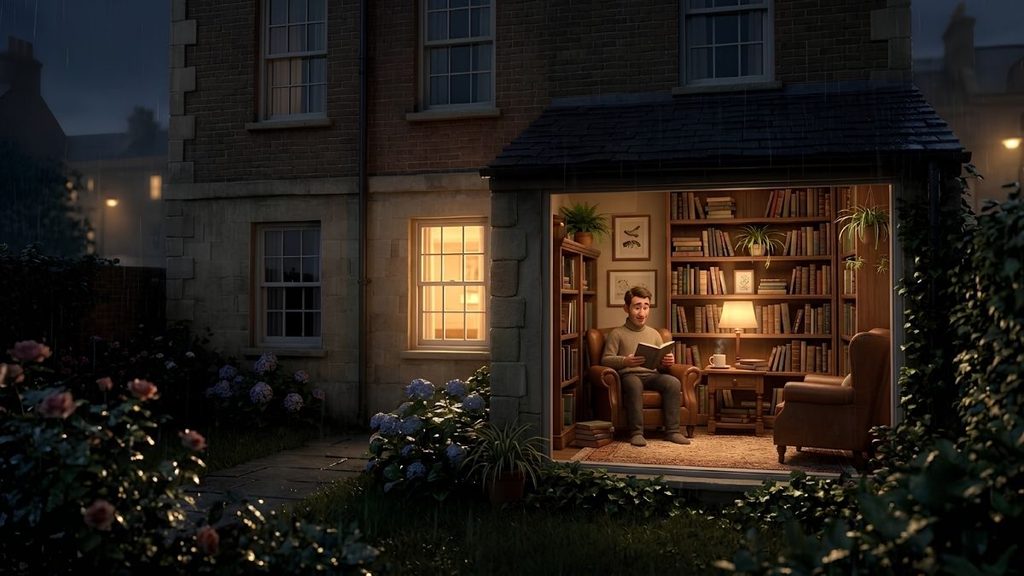
Type: Cozy Bedtime Story | Home, Routine & Personal Space
Oliver Grant had always believed that a home should have a purpose for every room.
A bedroom was for sleeping.
A kitchen was for cooking.
A dining room was for eating.
A living room was for sitting with guests.
A hallway was for getting from one place to another.
It was a practical way of thinking, perhaps influenced by the years he had spent living in small apartments where every square meter needed to justify its existence.
So when Oliver bought the old townhouse on Willow Lane, he immediately began making plans.
The house was narrow and tall, with three floors, creaking wooden stairs, tall windows, and a small garden hidden behind a brick wall.
It needed work.
The paint in the hallway was faded.
Several floorboards complained whenever someone walked across them.
The kitchen cabinets had been painted too many times.
And there was a mysterious little room at the very back of the house.
Oliver discovered it on his second day.
He had been carrying boxes through the ground floor when he noticed a narrow door beside the kitchen.
He opened it.
The room was barely large enough for a chair, a small table, and perhaps a bookcase.
Three walls were covered with old wooden shelves.
There was one small window overlooking the garden.
Dust floated through the beam of afternoon sunlight.
Oliver stood in the doorway.
“What are you for?” he asked the room.
The room, naturally, offered no answer.
For the first few weeks, Oliver used it for storage.
He placed unopened boxes against one wall.
Old paperwork went onto a shelf.
A suitcase sat beneath the window.
There were tools in one corner.
Christmas decorations occupied another.
It was not a room.
It was simply somewhere things could wait.
Oliver was busy settling into the house.
He had recently moved from a noisy apartment across town.
The townhouse was older than anything he had lived in before.
At night, he could hear the wooden stairs settling.
Sometimes the pipes made strange noises.
The garden attracted birds he couldn’t identify.
At first, every unfamiliar sound made him look up.
Eventually, he stopped.
That was the strange thing about living somewhere new.
The house slowly taught you its sounds.
A particular creak belonged to the second stair.
A soft knock near the kitchen meant the heating had started.
The window in the bedroom rattled when the wind came from the west.
The back door clicked twice before closing completely.
After a while, these sounds stopped being noises.
They became familiar.
Oliver’s evenings were usually simple.
He returned from work around six.
He changed clothes.
He prepared dinner.
He washed the dishes.
Then he sat in the living room and watched television.
It was comfortable enough.
But he often felt that the day ended too suddenly.
Work.
Dinner.
Television.
Sleep.
Repeat.
One rainy Thursday evening, the television lost its signal.
Oliver tried restarting it.
Nothing.
He checked the internet.
Still nothing.
He sighed and looked around.
Rain tapped against the windows.
The house felt unusually quiet.
Oliver wandered into the kitchen.
Then he noticed the little room at the back.
The door was open.
For some reason, he stepped inside.
He sat on one of the boxes.
Rain fell against the small window.
Beyond the glass, the garden was dark and wet.
Oliver remained there for several minutes.
He didn’t watch anything.
He didn’t check his phone.
He simply listened.
The room was surprisingly peaceful.
That was when he had an idea.
Perhaps the room didn’t need to become storage.
Perhaps it could become something else.
The next Saturday, Oliver emptied it.
It took most of the morning.
He carried boxes upstairs.
He sorted old paperwork.
He found several things he had forgotten he owned.
A set of photographs.
Two old notebooks.
A collection of postcards.
A broken clock.
An umbrella he had been looking for since winter.
By noon, the room was empty.
Oliver stood in the doorway.
Without the boxes, it looked even smaller.
But it also looked brighter.
He cleaned the shelves.
He washed the window.
He polished the wooden floor.
Then he brought in a chair.
It was an old armchair he had inherited from his aunt.
The fabric was slightly faded.
One arm was worn from years of use.
Oliver placed it beside the window.
He stepped back.
It looked right.
Not perfect.
Just right.
A few days later, he bought a small lamp.
Then a rug.
Then a little table.
He placed a kettle on the table.
A mug beside it.
A jar of tea.
Nothing expensive.
Nothing carefully coordinated.
The room wasn’t large enough to impress anyone.
But Oliver liked it.
He began spending ten minutes there every evening.
At first, he read.
Then he started writing.
Sometimes he simply sat.
The ten minutes became twenty.
Twenty became thirty.
He began turning off the television earlier.
He stopped checking his phone during that time.
He discovered that he liked the quiet.
There was something comforting about having a place where nothing was expected of him.
The living room was for relaxing.
The kitchen was for eating.
The bedroom was for sleeping.
But this little room was simply for being.
One evening, Oliver found an old book on one of the shelves.
He didn’t remember putting it there.
It was a collection of short stories.
Inside the front cover was a handwritten note.
To Margaret, with love. Christmas 1987.
Oliver wondered who Margaret had been.
Perhaps one of the previous owners.
He read the first story that night.
The next evening, he read another.
Soon, the old book became part of his routine.
Tea.
Lamp.
Chair.
Book.
Quiet.
Outside, the neighborhood continued its usual life.
Cars passed.
Dogs barked.
People returned from work.
Children played in the garden next door.
But inside the little room, Oliver felt as though the evening had slowed down.
A few weeks later, his friend Ethan visited.
Oliver showed him the house.
When they reached the little room, Ethan stopped.
“What is this?”
“My reading room.”
Ethan looked around.
“Reading room?”
“Yes.”
“You have a reading room the size of a closet.”
Oliver smiled.
“That makes it efficient.”
Ethan laughed.
Then he noticed the chair.
“Actually, it’s nice.”
Oliver poured tea.
They sat there together.
They talked for nearly an hour.
Work.
Family.
Travel.
Old friends.
Plans.
Nothing particularly important.
Yet Oliver noticed something afterward.
The room felt different with another person inside it.
It was still quiet.
But it had become warmer.
The following week, Ethan returned.
This time he brought a book.
“I thought you might like this.”
Oliver accepted it.
“Thank you.”
Ethan looked at the shelves.
“Your room is becoming a library.”
“Slowly.”
“At this rate, you’ll need a bigger room.”
Oliver shook his head.
“No. That’s the point.”
Soon, the room began collecting small objects.
A neighbor named Mrs. Parker brought a plate of homemade biscuits.
“I made too many,” she said.
Oliver accepted them.
The plate remained on the table for three days.
Another neighbor left a crossword puzzle.
Ethan brought a small wooden chess set.
Someone else gave Oliver a plant.
The plant sat beside the window.
Oliver wasn’t sure he could keep it alive.
But he tried.
Every evening, he watered it.
Not too much.
Just enough.
One Saturday afternoon, Oliver’s neighbor Emily knocked on the door.
“Are you busy?”
“No.”
“Can I borrow a book?”
“Of course.”
She followed him to the little room.
“Which one?”
“Anything.”
Oliver pointed toward a shelf.
Emily looked through the books.
Then she sat in the chair.
“This is lovely.”
“Thank you.”
She looked toward the window.
“You can see the garden from here.”
“That’s my favorite part.”
Emily smiled.
“I can understand why.”
She stayed for half an hour.
She didn’t borrow a book.
Instead, they drank tea.
After that, people occasionally stopped by.
There was never a formal invitation.
Nobody called it a club.
Nobody made a schedule.
Sometimes someone simply knocked.
“Tea?”
“Sure.”
The room became a quiet place for conversation.
A neighbor would bring a newspaper.
Someone would bring a puzzle.
A friend might bring cake.
They talked about ordinary things.
The weather.
Books.
Gardening.
A movie someone had watched.
A recipe that had gone wrong.
A childhood memory.
The latest repairs on the street.
Sometimes they talked about nothing at all.
That was perfectly acceptable.
Oliver began to understand something.
The room was not special because of its furniture.
The chair was old.
The lamp was inexpensive.
The rug had been bought on sale.
The kettle was scratched.
The shelves were uneven.
What made the room special was what happened there.
People slowed down.
They put their phones away.
They sat.
They listened.
They talked.
They stayed a little longer than they intended.
One winter evening, snow began falling.
Oliver had made tea and was sitting alone in the little room.
The garden was covered in white.
The plant beside the window looked almost silver.
He turned off the lamp for a moment.
Moonlight entered through the window.
The room became still.
Oliver thought about his first night in the townhouse.
He had felt unsettled then.
Everything had been unfamiliar.
He had wondered whether he had made a mistake buying an old house.
Now he knew every creak.
Every shadow.
Every window.
He knew that the pipes sometimes knocked at midnight.
He knew that birds arrived in the garden shortly after sunrise.
He knew that rain sounded different on the kitchen window than on the bedroom window.
He knew the floorboard outside the little room creaked when stepped on from one direction but not the other.
The house had become familiar.
And somehow, the little room had been part of that transformation.
Spring arrived.
Oliver repainted the window frame.
He planted flowers in the garden.
He moved the chair slightly closer to the window.
The plant survived.
In fact, it grew.
He was strangely proud of it.
Emily visited one afternoon.
She looked at the plant.
“You kept it alive.”
“Apparently.”
“That’s impressive.”
“I’ve been practicing.”
She smiled.
“Your little room has changed.”
Oliver looked around.
There were more books now.
The shelves were fuller.
The rug had been moved.
There were two chairs instead of one.
He hadn’t even noticed when the second chair had appeared.
“Yes,” he said.
“I think it’s becoming a proper room.”
Oliver shook his head.
“I think it has always been one.”
One evening, several neighbors gathered there.
The room was too small for everyone to sit comfortably.
So they left the door open.
Someone sat on the hallway floor.
Someone else leaned against the kitchen wall.
Oliver made tea.
Mrs. Parker brought biscuits.
Emily brought a puzzle.
Ethan brought a new book.
They laughed about how ridiculous it was that so many people were trying to fit into such a tiny room.
“Maybe we need a bigger one,” Ethan said.
Oliver looked around.
“No.”
Everyone laughed.
The room was crowded.
But nobody seemed eager to leave.
Later that night, after everyone had gone home, Oliver returned to the little room.
He switched on the lamp.
The chairs were slightly crooked.
A few crumbs remained on the table.
Someone had left a book open.
Oliver closed it carefully.
He looked around.
The room had started as a storage closet.
Then it had become a reading room.
Then a quiet place.
Then a place for conversation.
Perhaps it had become something else entirely.
A small part of the house where people felt welcome.
Oliver sat down.
Outside, the neighborhood was quiet.
He could hear the faint sound of rain.
He picked up his book.
For the first time since moving into the townhouse, he realized he no longer thought of it as the house he had bought.
It was simply home.
Not because it was large.
Not because it was beautiful.
Not because every room was perfect.
It was home because ordinary life had slowly filled it.
Books.
Tea.
Rain.
Plants.
Conversations.
Familiar footsteps.
Friendly knocks.
Small routines.
Memories.
That was what made a home.
Oliver opened his book.
He read for a while.
Then he closed it.
The lamp cast a warm circle of light across the room.
The rest of the house was dark.
He listened to the familiar sounds around him.
The old floorboards.
The soft heating pipes.
The rain outside.
Everything was exactly where it belonged.
Oliver smiled.
Tomorrow would bring another ordinary day.
There would be work.
There would be dishes.
There might be an unexpected repair.
Someone might knock on the door.
The plant would need water.
The little room would remain small.
And that was perfectly fine.
Sometimes a person doesn’t need an entire house to find peace.
Sometimes all they need is one quiet corner.
One comfortable chair.
One warm lamp.
A cup of tea.
A good book.
And enough time to sit still.
Oliver leaned back in the chair.
Outside, the rain continued falling softly over the garden.
Inside, the little room held its warm pool of light.
And for a while, Oliver simply sat there, listening to the quiet house around him.
He had finally stopped trying to make the house into something.
He had allowed it to become itself.
And somehow, in doing so, it had become home.
Core themes: coziness, home, routines, friendship, simple pleasures, belonging.
5. The Suitcase in the Hallway
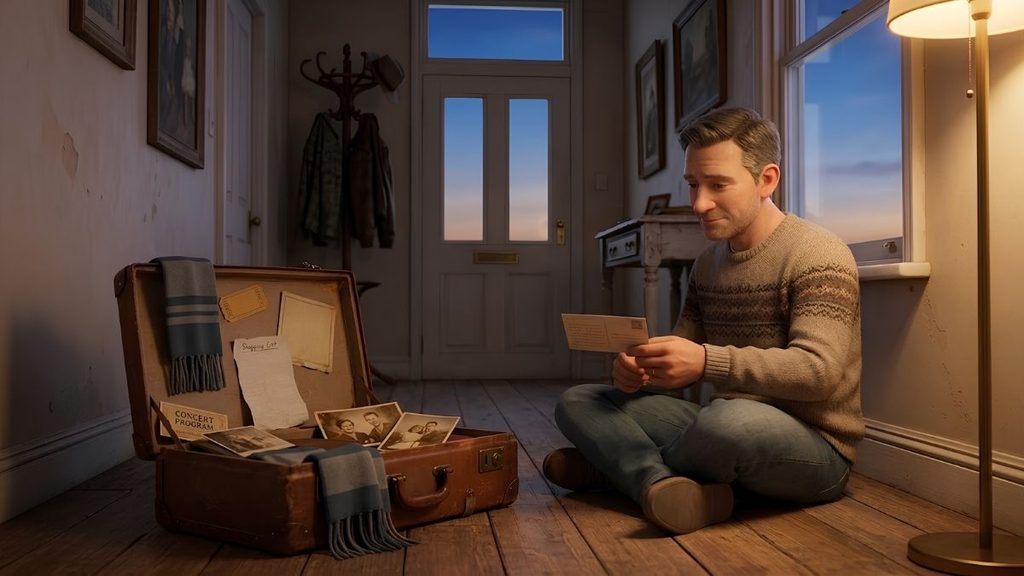
Type: Nostalgic Bedtime Story | Memories & Moving Forward
Daniel Foster had always considered the hallway cupboard a place where things went when nobody knew what else to do with them.
It was narrow and deep, with a stubborn wooden door that never seemed to close properly.
Over the years, it had collected an impressive assortment of forgotten objects.
An umbrella with a broken handle.
Three winter coats nobody wore anymore.
A box of Christmas decorations.
Old batteries.
A pair of shoes that had belonged to Daniel’s father.
A stack of newspapers from years ago.
And, apparently, a suitcase.
Daniel discovered it on a quiet Saturday afternoon while clearing the house.
The house had belonged to his parents.
His mother had moved into a smaller apartment the previous year, and Daniel had finally decided that the remaining rooms needed to be sorted.
He had been working for several hours.
Most of the process had been straightforward.
Keep.
Donate.
Recycle.
Throw away.
He was halfway through moving a pile of coats when something scraped against the floor.
Daniel looked down.
The suitcase was wedged behind them.
It was brown.
Old.
Covered in dust.
One corner had been rubbed almost white from years of use.
Daniel pulled it free.
He placed it in the hallway.
For a moment, he simply stared at it.
He didn’t remember seeing it before.
That wasn’t unusual.
His childhood home was full of objects he had stopped noticing years ago.
He wiped the dust from the top.
There were two brass-colored clasps.
One opened easily.
The other required a little persuasion.
When the suitcase finally opened, Daniel expected to find clothes.
Instead, he found his past.
The first thing he saw was a school scarf.
Blue and gray.
Faded now.
Daniel picked it up.
He remembered wearing it on winter mornings when he was twelve.
He remembered the cold.
The school bus.
The smell of wet coats.
A boy named Martin who always sat in the seat behind him.
He remembered one particular morning when snow had fallen overnight.
The school had opened late.
Daniel and his friends had spent twenty minutes throwing snowballs before the bus arrived.
He smiled.
He had completely forgotten that.
He placed the scarf on the floor beside him.
Then he reached deeper into the suitcase.
There was a cinema ticket.
The paper had turned yellow.
The date was nearly twenty years old.
Daniel recognized the theater.
He and his younger sister had gone there with their mother.
He couldn’t remember the movie.
But he remembered the popcorn.
His mother had bought one large box.
Daniel and his sister had argued about who had eaten more.
He laughed quietly.
The memory was so ordinary.
Yet holding the ticket made it feel strangely close.
Beneath the ticket was a handwritten shopping list.
Daniel unfolded it carefully.
The handwriting was his mother’s.
Milk.
Bread.
Apples.
Tea.
Soap.
Pasta.
Then, at the bottom:
Don’t forget Daniel’s favorite biscuits.
Daniel stopped.
He read the sentence again.
It was such a small thing.
His mother had probably written it without thinking.
She had gone shopping.
She had bought biscuits.
She had come home.
A normal day.
Perhaps that was what surprised him most.
He had spent years remembering major events.
Birthdays.
Holidays.
Graduations.
Family celebrations.
But this tiny list brought back something different.
A Tuesday afternoon.
The kitchen window open.
His mother putting groceries away.
The smell of tea.
The sound of the radio.
Daniel sitting at the table doing homework.
Nothing important had happened.
And yet, suddenly, he could remember almost everything.
The next object was a faded concert program.
Daniel recognized the band immediately.
He had been seventeen.
It had been his first concert.
He remembered telling his parents that he was going with friends.
He remembered his father asking what time he would be home.
He remembered saying, “Not too late.”
He had returned at nearly midnight.
His father had been waiting in the kitchen.
Daniel smiled.
“Not too late,” he whispered.
He could almost hear his father’s voice.
“You have an interesting definition of time.”
Daniel sat on the hallway floor.
The suitcase remained open in front of him.
He had planned to finish clearing the cupboard before dinner.
Now he wasn’t sure he wanted to.
At the bottom of the suitcase was a postcard.
Daniel picked it up.
The picture showed a seaside town.
On the back was a short message.
Daniel,
The weather is terrible, but we’re having a great time anyway. Wish you were here.
Don’t forget our plan when we get back.
Alex
Daniel stared at the name.
Alex.
He hadn’t heard that name in years.
Alex Morgan had been his closest friend during university.
They had shared an apartment for two years.
They had spent long evenings talking about careers, relationships, travel, and all the things they believed they would accomplish.
They had made plans.
Then life had changed.
Daniel moved to another city for work.
Alex went abroad.
They spoke less often.
Then not at all.
There had never been a fight.
No dramatic ending.
They had simply stopped calling.
Daniel turned the postcard over.
The date was from twenty-two years earlier.
He wondered why he had kept it.
He wondered why Alex had sent it.
He wondered where he was now.
Daniel spent the next hour looking through the rest of the suitcase.
There were more objects.
A train ticket.
A small wooden toy.
An old photograph.
A restaurant receipt.
A birthday card.
A folded map.
A key that he no longer recognized.
None of the objects were valuable.
Together, however, they formed a strange map of his life.
The suitcase wasn’t an archive.
It wasn’t organized.
There were no dates.
No labels.
No explanations.
It was simply a collection of things Daniel had once considered important enough to keep.
Then he had forgotten them.
That realization made him uncomfortable.
How many other memories had disappeared simply because life had become busy?
How many people had once been central to his world and now existed only as names?
How many ordinary afternoons had mattered without him realizing it?
Daniel closed the suitcase.
Then opened it again.
He wasn’t ready to put it away.
That evening, Daniel made tea.
He carried the suitcase into the living room.
He placed the objects on the coffee table.
The house was quiet.
His mother had taken most of her belongings with her.
The rooms felt larger than he remembered.
He sat on the sofa.
The school scarf lay beside the cinema ticket.
The shopping list rested next to the concert program.
The postcard sat at the center.
Alex’s name seemed to pull everything toward it.
Daniel picked up his phone.
He searched for Alex.
There were several people with the same name.
He tried adding the university.
Then the city.
Eventually, he found a profile that seemed likely.
The photograph showed a man with gray beginning at his temples.
Daniel stared at the screen.
It was strange seeing someone familiar and unfamiliar at the same time.
He wasn’t sure whether to send a message.
What would he say?
Hello.
I found your postcard from twenty-two years ago.
That sounded absurd.
He put the phone down.
Then picked it up again.
He typed.
Deleted it.
Typed again.
Finally, he wrote:
Hi Alex. This is Daniel Foster. I found an old postcard you sent me years ago. It made me wonder how you’re doing.
He stared at the message.
Then pressed send.
The response came the next morning.
Daniel?
A second message arrived.
Is this really you?
Daniel smiled.
He replied.
They exchanged a few messages.
Then Alex suggested a phone call.
Daniel hesitated.
For some reason, speaking seemed more frightening than writing.
Still, he agreed.
At seven that evening, the phone rang.
Daniel answered.
“Hello?”
There was a pause.
Then:
“You’re alive.”
Daniel laughed.
“Last I checked.”
“I wasn’t sure.”
“Neither was I.”
They laughed again.
And somehow, the awkwardness disappeared.
They talked for nearly two hours.
At first, they discussed practical things.
Where they lived.
What work they did.
Whether they had families.
Where life had taken them.
Then they began remembering.
The university apartment.
The terrible kitchen.
The broken washing machine.
The cheap restaurant they used to visit.
The seaside trip.
“The postcard,” Daniel said.
“Which one?”
“The one you sent me.”
Alex laughed.
“You kept that?”
“Apparently.”
“I thought you threw it away.”
“No.”
“Why?”
Daniel looked toward the table.
“I don’t know.”
Alex was quiet for a moment.
“Neither do I.”
They talked about the trip.
Alex remembered the weather.
Daniel remembered the restaurant.
They discovered something surprising.
They had been remembering the same afternoon completely differently.
Alex remembered spending most of the day walking along the beach.
Daniel remembered sitting in a café.
They argued gently.
“No, we definitely walked.”
“We walked in the evening.”
“No, afternoon.”
Daniel laughed.
“Maybe both.”
“Probably.”
It didn’t matter.
The memory had survived even though the details had changed.
After the call ended, Daniel sat quietly.
He looked at the objects on the table.
For years, he had thought memories were like photographs.
Fixed.
Precise.
Something that could be preserved exactly if you kept the right object.
But now he wasn’t so sure.
Memory was more like a story.
Every time you remembered it, something shifted.
A detail disappeared.
Another became clearer.
Two people could share the same afternoon and carry away different versions of it.
That didn’t make either memory false.
It simply made memory human.
The next morning, Daniel returned to the hallway cupboard.
He placed the suitcase on the floor.
He began sorting.
The school scarf could go.
He didn’t need it.
But he decided to keep the cinema ticket.
He kept the shopping list.
He kept the concert program.
He kept the postcard.
He found the old wooden toy and decided to give it to his nephew.
The broken key went into the recycling.
The restaurant receipt went into the bin.
The photograph stayed.
He didn’t need everything.
That was the important part.
For years, Daniel had believed that letting something go meant losing the memory connected to it.
Now he understood differently.
He could throw away a ticket without throwing away the evening.
He could donate a scarf without forgetting the boy who had worn it.
He could stop carrying every object and still carry what mattered.
A week later, Daniel met Alex for coffee.
They chose a quiet café halfway between their homes.
When Alex walked in, Daniel recognized him immediately.
Older.
Of course.
Different.
Also familiar.
They shook hands.
Then laughed at how formal that seemed.
“Do we hug?” Alex asked.
“I don’t know.”
They hugged.
Then sat down.
Their conversation was easy.
They talked about university.
Their parents.
Their careers.
Mistakes.
Things they had once wanted.
Things they no longer wanted.
They didn’t try to recreate their old friendship.
They didn’t need to.
They were meeting as two adults who had once been young together.
That was enough.
Before leaving, Alex said, “I’m glad you found the postcard.”
Daniel smiled.
“So am I.”
That evening, Daniel returned home.
The suitcase was still in the hallway.
But it was almost empty.
He considered putting it back into the cupboard.
Instead, he placed it near the front door.
He wasn’t sure what he would do with it.
Perhaps he would donate it.
Perhaps he would use it.
Perhaps it would remain there for another few days.
He didn’t need to decide immediately.
He walked through the house.
The rooms were quiet.
But they didn’t feel empty anymore.
He remembered his mother in the kitchen.
His father waiting late at night.
His sister arguing about popcorn.
Friends sitting on the living-room floor.
The sound of music coming from upstairs.
The smell of rain on the front steps.
Ordinary moments.
None of them had seemed important at the time.
Yet together, they had become a life.
Later that night, Daniel took the postcard from the suitcase.
He placed it inside a small box on his bookshelf.
Not because he was afraid of losing it.
But because he had finally learned what it meant to keep something.
Keeping a memory did not mean refusing to move forward.
It meant being grateful that the moment had happened.
He looked at the empty suitcase.
There was something satisfying about it.
It had carried many things for many years.
Now it was almost weightless.
Daniel turned off the hallway light.
Before going upstairs, he looked back once.
The old suitcase sat quietly beneath the coat rack.
For a moment, he imagined all the versions of himself who had passed through that hallway.
The boy in the school scarf.
The teenager carrying a concert program.
The university student receiving a postcard.
The young man leaving home.
The adult returning years later.
They were all different.
Yet they were all him.
He didn’t need to choose one version.
He could carry all of them lightly.
The next morning, Daniel opened the front door.
Sunlight entered the hallway.
He picked up the suitcase.
This time, he wasn’t putting it back into storage.
He carried it outside.
He placed it beside the car.
Then he went back inside and returned with the few objects he had decided to keep.
The rest could go.
Not because they were meaningless.
But because they had already done their work.
They had reminded him.
They had brought people back into his thoughts.
They had given forgotten afternoons another moment of life.
That was enough.
Daniel closed the car door.
Before driving away, he looked at the house.
It was still his childhood home.
But it no longer felt like a place he needed to preserve exactly as it had been.
Some things could change.
Some things could disappear.
Some things could be remembered.
Some could be released.
And perhaps growing older meant learning the difference.
Daniel smiled.
Then he drove toward home.
Not away from the past.
Just forward, carrying less.
Core themes: nostalgia, memory, friendship, growing older, acceptance, gratitude.
6. The Ferry That Crossed at Midnight

Type: Peaceful Travel Story | Night Journey & Solitude
Claire Morgan had spent most of the year feeling as though she was always late.
Late answering messages.
Late finishing work.
Late returning calls.
Late making decisions.
Even when she wasn’t actually late for anything, she carried the sensation with her.
Her phone was always within reach. Her calendar was always full. There was always another appointment, another email, another small responsibility waiting just beyond the one she had supposedly finished.
So when Friday evening arrived and Claire found herself sitting alone in her apartment, she made an unusual decision.
She would leave.
Not permanently.
Not dramatically.
She simply wanted to go somewhere for a few days where nobody expected anything from her.
She opened a map.
Her eyes moved across the coastline.
Eventually, she noticed a small island several hours away.
There was a ferry.
The last crossing left shortly before midnight.
Claire booked a ticket.
Then she closed her laptop.
For the first time in weeks, she had no idea what she would do next.
And strangely, that felt wonderful.
The coastal ferry terminal was almost empty when Claire arrived.
It was 11:32 p.m.
The ticket office was closed.
A vending machine hummed beside a row of plastic chairs.
Beyond the glass doors, the harbor stretched into darkness.
Small lights trembled on the surface of the water.
Claire pulled her coat closer.
She had expected the terminal to feel lonely.
Instead, it felt peaceful.
There was no traffic.
No announcements competing with one another.
No crowd moving impatiently toward a departure gate.
Only the distant sound of water touching the pier.
A few minutes later, the ferry appeared.
Its lights emerged from the darkness.
Slowly.
Quietly.
The vessel approached the dock with almost no drama.
Claire picked up her small bag.
There was something comforting about traveling at night.
The world seemed to have become less demanding.
Only a handful of passengers boarded.
Claire noticed an older fisherman carrying a canvas bag.
A woman in a long coat held a newspaper under her arm.
A young crew member checked tickets at the entrance.
There were perhaps ten passengers in total.
Claire found a seat beside a large window.
She placed her bag beside her.
The ferry pulled away at midnight.
There was no sudden movement.
Just a gentle vibration beneath the floor.
The harbor began to move backward.
Claire watched the terminal become smaller.
The lights along the shore stretched into thin golden lines across the dark water.
Then the ferry turned.
The coastline shifted.
And gradually, the city disappeared.
Claire looked at her phone.
She had no messages.
She was tempted to check her email.
Instead, she turned the phone off.
The simple act felt strangely rebellious.
She put it inside her bag.
Then she looked through the window again.
The sea was almost black.
Occasionally, a wave caught the light from the ferry and appeared silver before disappearing again.
Claire rested her forehead against the cool glass.
She realized she couldn’t remember the last time she had watched something without simultaneously thinking about what she needed to do afterward.
There was no afterward here.
Not yet.
There was only water.
Darkness.
Movement.
And time.
About half an hour into the journey, the crew member walked through the cabin carrying a tray.
“Tea?” he asked.
Claire looked up.
“Yes, please.”
He handed her a paper cup.
The warmth immediately traveled into her hands.
“Long night,” he said.
Claire smiled.
“That’s what I was hoping for.”
He seemed to understand.
“Then you’ve chosen the right crossing.”
He continued down the aisle.
Claire took a sip.
The tea was simple.
Not particularly special.
But she thought it might have been the best cup she had tasted all week.
Perhaps because she wasn’t drinking it while answering an email.
She wasn’t walking between meetings.
She wasn’t thinking about tomorrow.
She was simply drinking tea on a ferry in the middle of the night.
The fisherman sat several rows ahead.
He eventually leaned against the window and fell asleep.
The woman with the newspaper unfolded it carefully.
She read for a while.
Then folded it again.
Neither seemed interested in conversation.
Claire was grateful.
She had spent so much of her life believing that every empty space needed to be filled.
Silence needed music.
Waiting needed a phone.
Long journeys needed conversation.
Now she discovered that silence could be its own kind of company.
Around one in the morning, the ferry reached open water.
The last lights of the mainland disappeared.
Claire looked behind her.
There was almost nothing to see.
Just darkness.
For a moment, she felt a small flicker of uncertainty.
She was accustomed to knowing where she was.
Knowing what came next.
Knowing how long something would take.
Now she was surrounded by darkness with no visible landmarks.
But the feeling passed.
The ferry continued steadily forward.
Its engines made a low, reassuring sound.
Claire began listening to it.
She noticed that the sound was almost rhythmic.
A deep mechanical pulse.
Steady.
Unhurried.
It reminded her that she didn’t have to control the journey.
Someone else was steering.
All she needed to do was sit.
She closed her eyes.
For the first time in a long while, her thoughts became quieter.
Not completely quiet.
That would have been impossible.
Memories still appeared.
Work.
Family.
Old conversations.
Unfinished plans.
But instead of following every thought, Claire let them pass.
Like lights disappearing behind the ferry.
She remembered something her father had once told her.
“You don’t always have to solve a problem the moment you notice it.”
She had forgotten that sentence.
Or perhaps she had simply stopped believing it.
Claire smiled.
Maybe tomorrow she would think about some of the things troubling her.
But tonight, they could wait.
At two in the morning, Claire walked to the rear deck.
The wind was colder there.
She held the railing and looked out across the sea.
The ferry left a long trail of pale foam behind it.
The wake stretched backward until it disappeared into darkness.
Above her, clouds covered most of the sky.
Then the clouds opened.
The moon appeared.
For several seconds, the water became silver.
Claire stood completely still.
A small boat passed in the distance.
Its lights moved slowly across the horizon.
Then it disappeared behind another curtain of cloud.
She wondered about the people inside it.
Perhaps they were working.
Perhaps they were returning home.
Perhaps they were also traveling without knowing exactly why.
The thought made her feel less alone.
Claire stayed on the deck until the cold forced her inside.
The cabin was warmer now.
Most passengers were asleep.
The fisherman still rested by the window.
The woman with the newspaper had also fallen asleep, her folded paper resting on her lap.
Claire returned to her seat.
She pulled a small notebook from her bag.
She had brought it because she thought she might need to make plans.
Instead, she wrote one sentence.
I don’t have to fill every hour.
She looked at it.
Then wrote another.
Some time can simply be lived.
She closed the notebook.
That was enough.
Around three in the morning, Claire slept.
It wasn’t deep sleep.
The ferry moved occasionally.
Someone walked down the aisle.
A door opened somewhere.
The engines changed their rhythm.
But every time she stirred, she remembered where she was.
On the water.
Between one shore and another.
And somehow, the knowledge comforted her.
She wasn’t supposed to be doing anything.
She didn’t need to arrive yet.
She didn’t need to make a decision.
She didn’t need to be productive.
She could simply sleep.
When Claire woke, the sky outside had begun to change.
It was 5:18 a.m.
The darkness had softened into deep blue.
She sat upright.
The fisherman was awake now.
He looked through the window.
The woman with the newspaper was drinking coffee.
Nobody spoke.
Outside, distant hills had appeared.
They were almost invisible at first.
Then the rising light slowly revealed their shapes.
Claire watched them emerge.
The harbor ahead was narrow and peaceful.
A few houses sat along the shore.
Their windows were beginning to glow.
A church tower rose above the rooftops.
There were no tall buildings.
No traffic.
No crowds.
Just hills, water, houses, and morning.
The ferry slowed.
The engines became quieter.
Claire felt a strange disappointment.
She hadn’t realized how much she had enjoyed being between places.
For several hours, she had belonged nowhere.
And that had been strangely freeing.
The ferry entered the harbor.
A flock of birds lifted from the water.
The fisherman gathered his bag.
The woman folded her newspaper.
The crew member opened the doors.
Passengers began moving toward the exit.
Claire picked up her bag.
She looked through the window one last time.
The sun had not yet fully risen.
The harbor was covered in soft morning light.
Claire took a deep breath.
She felt different.
Not transformed.
Not magically free of every problem.
But quieter.
That was enough.
The ferry reached the pier at 6:03 a.m.
Claire stepped onto solid ground.
For a few seconds, she simply stood there.
The pier was almost empty.
A small café near the harbor was preparing to open.
Someone was unloading crates from a van.
A fisherman called to another man across the water.
Ordinary morning sounds.
Claire walked toward the café.
She ordered coffee and sat beside the window.
She watched the ferry prepare for its return journey.
The same vessel that had carried her through the night would soon carry other passengers back across the water.
People with appointments.
People with work.
People with places they needed to be.
Claire smiled.
She realized the journey had not given her an answer.
It had given her something more useful.
Space.
She took out her phone.
There were several messages.
A few emails.
Two missed calls.
Normally, she would have felt a sudden urgency.
Instead, she finished her coffee first.
Then she checked the messages.
Nothing was as urgent as it had seemed from a distance.
One problem could wait until Monday.
Another could be solved with a short reply.
A third wasn’t actually her responsibility.
Claire laughed softly.
Perhaps she had been carrying too many things simply because she had become accustomed to carrying them.
She turned the phone over.
Outside, sunlight touched the hills.
Claire spent the next three days in the small coastal town.
She walked.
She read.
She ate slowly.
She sat beside the harbor.
She bought bread from a local bakery.
She visited a small garden overlooking the sea.
She slept without an alarm.
Nothing remarkable happened.
That was precisely why she enjoyed it.
On the second evening, she watched the sunset from a bench.
On the third morning, she walked along the shoreline before breakfast.
She noticed things she normally would have missed.
A fisherman repairing a net.
A dog sleeping beneath a table.
An old woman sweeping her doorstep.
Two children carrying buckets toward the beach.
A boat rocking gently against its rope.
None of these moments would have appeared in a photograph worth posting.
But Claire remembered them.
On her final evening, she returned to the harbor.
The ferry terminal was quiet.
The same lights reflected on the water.
She remembered sitting there before midnight.
She remembered wondering whether she had made a foolish decision.
Now she understood that she hadn’t been running away.
She had simply stepped out of the noise long enough to hear herself think.
Claire watched the ferry leave.
Its lights moved farther across the water.
She remained on the pier until they became tiny points in the darkness.
Then she turned toward the town.
She had nowhere important to be.
And for once, that felt like a gift.
When Claire returned home, nothing had magically changed.
Her apartment was the same.
Her work was waiting.
Her emails had multiplied.
The calendar was still crowded.
But something inside her had shifted.
She began leaving small spaces in her evenings.
Sometimes she walked without headphones.
Sometimes she drank tea beside the window.
Sometimes she turned her phone off for an hour.
She stopped treating every quiet moment as wasted time.
And whenever life became too loud, she remembered the ferry.
The dark water.
The sleeping passengers.
The moon between clouds.
The low rhythm of the engines.
The distant shoreline disappearing behind her.
Most of all, she remembered the feeling of being somewhere between places.
Not lost.
Not late.
Not responsible for anything except being there.
Months later, someone asked Claire why she had taken that midnight ferry.
She thought about the question.
“I needed to get away,” she said.
“From what?”
Claire smiled.
“Everything.”
Then she considered it again.
“Actually,” she corrected, “I think I needed to get away from the feeling that everything needed me.”
Her friend nodded.
Claire looked out the window.
She remembered the dark sea.
She remembered the first light of morning.
And she understood something she hadn’t understood when she boarded.
Sometimes rest doesn’t come from finding the perfect destination.
Sometimes it comes from allowing yourself to travel for a while without asking where you are going.
And sometimes, the quietest journeys are the ones that carry us closest to ourselves.
Core themes: peaceful travel, solitude, nighttime journeys, reflection, escape from routine, inner calm.
7. The Garden Behind the Stone Wall
Type: Nature-Based Bedtime Story | Seasons & Quiet Discovery
Elena Wright had always believed that interesting things happened somewhere else.
They happened in cities she had never visited, in houses larger than hers, in lives filled with journeys and celebrations and unexpected changes.
Her own life had been quieter.
She worked from home.
She cooked simple meals.
She answered emails.
She occasionally met friends for coffee.
On weekends, she walked through the village near her cottage, bought groceries, and returned before the afternoon became too busy.
There was nothing wrong with her life.
But sometimes Elena wondered whether she was waiting for something important to happen.
She wasn’t sure what that something was.
Perhaps a journey.
Perhaps a new friendship.
Perhaps some unexpected opportunity.
She only knew that she had become very good at waiting.
Then she rented the cottage beside the old stone wall.
And slowly, without planning to, she learned to stop waiting.
The cottage stood at the edge of a small village surrounded by fields.
It wasn’t particularly large.
There was a kitchen with a narrow window above the sink, a comfortable sitting room, two bedrooms, and a small upstairs study.
Behind the house was a garden.
The previous tenant had planted a few roses and lavender bushes, but most of the garden had been left to itself.
At the far end stood an old stone wall.
It was perhaps a meter and a half high and ran for several dozen meters before disappearing behind a cluster of trees.
Beyond it was an abandoned field.
Nobody seemed to use it.
The grass grew tall.
Bramble bushes covered parts of the ground.
Wild plants appeared wherever they found space.
Elena assumed the wall had once marked a property boundary.
She didn’t think much about it.
On her first weekend at the cottage, she spent hours unpacking boxes.
Books went onto shelves.
Clothes went into cupboards.
Kitchen equipment found its place.
By Sunday evening, the cottage looked almost settled.
Elena made tea and sat beside the back window.
The garden was quiet.
Beyond it, the stone wall stood in the fading light.
She watched it for a few moments.
Then she returned to her book.
There was nothing remarkable about the wall.
At least, that was what she thought.
The fox appeared on a Tuesday morning.
Elena had gone outside with a mug of coffee.
The grass was wet with dew.
A cool breeze moved through the lavender.
She stood beside the kitchen door, enjoying the quiet.
Then something moved beyond the wall.
Elena looked up.
A small red fox was walking slowly along the stones.
It stopped.
Its ears turned toward the cottage.
For several seconds, the fox and Elena looked at one another.
Neither moved.
Then the fox continued along the wall and disappeared behind a group of bushes.
Elena smiled.
She had lived in cities most of her adult life.
She had seen foxes before, usually late at night or in photographs.
But this felt different.
She had been standing there when the animal appeared.
She had actually noticed it.
Elena went inside and opened her laptop.
Before beginning work, she found an old notebook in one of her boxes.
On the first page she wrote:
Tuesday. Small fox near the stone wall.
She closed the notebook.
She didn’t know why she had written it down.
It simply seemed worth remembering.
A few days later, she noticed flowers.
They were growing between the stones.
Tiny white flowers.
Some were no larger than the fingernail on her smallest finger.
Elena crouched beside the wall.
She examined them carefully.
She didn’t know their name.
Instead of pulling them out, she took a photograph.
Then she wrote in her notebook.
Friday. Tiny white flowers between the stones. I don’t know what they are.
That became the beginning of a habit.
Not an ambitious habit.
Not one of those routines that required special equipment or complicated schedules.
Every morning, Elena began spending five or ten minutes in the garden.
She looked.
That was all.
She looked at the wall.
She looked at the plants.
She looked at the field.
Sometimes she noticed nothing.
Other mornings, something caught her attention.
A spiderweb.
A bird.
A new flower.
A strange pattern in the soil.
A feather.
A beetle.
A patch of moss.
She began recording these things.
Spring arrived quietly.
Elena hadn’t noticed the exact day.
There was no announcement.
One morning, she simply realized that the mornings were brighter.
The air smelled different.
The bare branches beyond the wall had tiny green buds.
Then came the butterflies.
At first, she noticed only one.
It landed on a purple flower near the wall.
The next day there were two.
Then several.
Elena began recognizing some of them.
She wasn’t an expert.
She simply remembered their patterns.
She discovered that if she stood still, birds came closer.
If she moved suddenly, they disappeared.
She learned that bees preferred certain flowers.
She learned that the fox usually appeared early in the morning.
She discovered that after rain, mushrooms appeared beneath the trees.
Her notebook slowly filled.
April 7. Three yellow butterflies.
April 14. New green leaves on the tree beside the wall.
April 22. Fox tracks in damp soil.
May 2. First large blue butterfly.
She never intended to create anything important.
She was simply paying attention.
One Saturday, Elena’s friend Sophie visited.
They sat in the garden with tea.
Sophie looked toward the stone wall.
“You’ve really become interested in that place.”
Elena laughed.
“I suppose I have.”
“Do you know what any of those plants are?”
“Some of them.”
“Which ones?”
Elena pointed.
“Those are lavender. Those are roses. That one might be wild mint. And that one…”
She paused.
“I have no idea.”
Sophie smiled.
“Then why write everything down?”
Elena considered the question.
“I don’t know.”
She looked toward the wall.
“Maybe because I would otherwise forget.”
Sophie nodded.
“That’s a good reason.”
They continued drinking tea.
Neither felt the need to say anything else.
Summer changed the garden completely.
The quiet field beyond the wall became green and full.
Tall grasses moved like waves whenever the wind passed through them.
Wildflowers appeared in patches.
Bees moved constantly between them.
Birds nested in the trees.
The fox became more difficult to see.
Elena suspected it had moved deeper into the field.
Still, she occasionally found evidence of its presence.
A footprint.
A disturbed patch of soil.
A few feathers.
One morning, she found the remains of an apple beneath the wall.
She wrote about that too.
June 19. Someone has been eating apples near the wall. Probably the fox.
She smiled when she wrote it.
She realized she had begun thinking of the garden as a story.
Not a story with a beginning and ending.
A story that changed every day.
Elena’s work remained busy.
There were difficult weeks.
There were deadlines.
There were evenings when she felt tired and impatient.
But the garden had become something she could return to.
After closing her laptop, she often walked outside.
Sometimes she sat on the old wooden bench near the wall.
She didn’t read.
She didn’t check her phone.
She simply watched.
One evening, she noticed a cloud moving across the moon.
Another evening, she heard an owl.
Once, during a warm night, hundreds of tiny insects moved above the grass.
Elena sat outside for almost an hour.
She thought about how many nights she had spent indoors believing that nothing was happening.
Perhaps something had always been happening.
She simply hadn’t been looking.
Autumn arrived.
The change was gradual.
The green leaves became yellow.
Then orange.
Then brown.
The mornings grew cooler.
The grass remained wet long after sunrise.
The butterflies disappeared.
The flowers became fewer.
Elena expected to lose interest.
Instead, she became even more attentive.
The garden had changed.
It hadn’t disappeared.
One morning, she found a carpet of leaves beneath the trees.
She walked along the wall slowly.
The stones looked different now.
Without the summer vegetation covering them, their shapes were easier to see.
She noticed cracks.
Lichen.
Tiny plants growing from narrow gaps.
She wondered how long they had been there.
Perhaps years.
Perhaps decades.
She had simply never seen them.
One evening, Elena opened her notebook and read through the earlier pages.
She was surprised.
There were so many observations.
She had forgotten some of them completely.
The first fox.
The tiny flowers.
The first butterfly.
The spring rains.
The summer evenings.
The changing trees.
It felt like reading about another person.
Yet every entry had been written by her.
She realized something.
She had spent years remembering major events.
First jobs.
Important birthdays.
Trips.
Moves.
Relationships.
Achievements.
She had thought those were the moments that defined a life.
But now she wondered about everything between them.
The morning coffee.
The sound of rain.
A bird landing on a wall.
The first warm evening of spring.
The smell of wet soil.
Perhaps a life was not made only from important events.
Perhaps it was also made from everything we noticed while waiting for the important events to arrive.
Winter came suddenly.
One morning, Elena woke to silence.
She opened the curtains.
Snow covered the garden.
The stone wall was white along its upper surface.
The field beyond it appeared completely empty.
The plants had disappeared beneath the snow.
The trees were bare.
Elena looked at the garden.
For the first time, she thought:
There will be nothing to see now.
She made coffee and began work.
But later that morning, curiosity brought her outside.
She put on boots and walked toward the wall.
There were tracks in the snow.
Small tracks.
They crossed the garden and disappeared beneath the wall.
Elena followed them with her eyes.
She didn’t know what animal had made them.
She took out her notebook.
December 14. Snow. Animal tracks near the wall.
She smiled.
There was still something to see.
Winter taught her to look differently.
Without leaves, she could see the structure of the trees.
Branches formed patterns against the sky.
She noticed nests that had been hidden during summer.
She saw how moss remained green beneath the snow.
On cold mornings, frost covered the stones in delicate patterns.
The garden wasn’t empty.
It was simply quieter.
Elena began appreciating quietness itself.
She stopped expecting the garden to entertain her.
She no longer needed something unusual to happen.
Sometimes she sat on the bench for ten minutes and watched snow fall.
Sometimes she stood beside the wall and listened to the wind.
Sometimes she saw nothing at all.
And that was perfectly fine.
One winter afternoon, the elderly man who lived in the neighboring cottage came over.
His name was Arthur.
He had lived in the village for more than fifty years.
“I’ve seen you writing,” he said.
Elena smiled.
“I’ve been keeping notes about the garden.”
Arthur looked toward the wall.
“You’ve noticed a lot.”
“I think so.”
Arthur laughed softly.
“That wall has been there longer than either of us.”
“Do you know who built it?”
“Not exactly.”
He paused.
“My grandfather used to tell me that farmers worked this whole area before the field was abandoned.”
Elena looked at the stones.
Arthur continued.
“People always think a place becomes interesting when something new happens. But most places are interesting because of everything that has already happened there.”
Elena wrote that down.
Arthur noticed.
“You don’t have to write that.”
“I want to remember it.”
He smiled.
“Then write it.”
Spring returned.
This time, Elena noticed it much earlier.
A tiny green shoot appeared beside the wall.
Then another.
The days became longer.
Birdsong returned.
The first butterfly appeared.
Elena wrote everything down.
But something had changed.
She no longer felt that she was collecting observations.
She was participating in a rhythm.
The same wall.
The same garden.
Different weather.
Different creatures.
Different light.
Different Elena.
She realized she had lived through an entire year without traveling very far.
Yet she had seen hundreds of changes.
She had learned to recognize birdsong.
She had learned when certain flowers appeared.
She had learned where the fox walked.
She had learned how the garden looked beneath snow.
She had learned how much could happen in a place that initially seemed ordinary.
On the first warm evening of spring, Elena carried her notebook outside.
She sat beside the wall.
The air was soft.
The last sunlight rested on the tops of the trees.
A fox appeared in the distance.
Elena watched it walk slowly along the edge of the field.
She didn’t reach for her camera.
She didn’t move.
She simply watched.
The fox disappeared behind the bushes.
Elena opened her notebook.
For a moment, she considered writing another entry.
Then she stopped.
She had enough.
More than enough.
A whole year of observations filled the pages.
She closed the notebook and rested it beside her.
Elena thought about the person who had arrived at the cottage twelve months earlier.
That woman had been waiting.
Waiting for something meaningful.
Waiting for an event.
Waiting for a reason to feel that her life was moving.
She no longer felt that way.
Nothing spectacular had happened.
There had been no dramatic transformation.
She had simply begun noticing.
And noticing had changed everything.
She understood now that a meaningful life did not necessarily require constant excitement.
It could be built from repeated moments.
A morning walk.
A cup of tea.
A conversation.
A bird.
A flower.
A familiar path.
A changing sky.
A quiet evening beside an old stone wall.
The things that seemed insignificant when experienced individually could become deeply meaningful when gathered together.
That night, Elena went inside.
She made tea.
She opened her bedroom window slightly.
Outside, the garden was dark.
Somewhere beyond the wall, an owl called.
Elena smiled.
She switched off the lamp.
Before getting into bed, she looked once more toward the window.
She couldn’t see the garden clearly.
But she knew it was there.
The wall.
The trees.
The flowers beginning to return.
The field.
The paths made by animals.
The small world she had learned to notice.
Tomorrow would bring something different.
Perhaps rain.
Perhaps sunshine.
Perhaps another fox.
Perhaps nothing unusual at all.
And Elena was finally comfortable with that.
She no longer needed every day to bring something important.
She only needed to be present enough to notice what was already there.
Outside, the night grew quieter.
The garden rested beneath the stars.
And behind the old stone wall, the seasons continued their slow and patient journey.
Core themes: nature, seasons, patience, observation, mindfulness, finding beauty in ordinary life.
Why Read a Story Before Bed?
Reading before sleep can become a useful transition between daytime activity and nighttime rest.
During the day, adults often move between multiple responsibilities.
Work requires attention.
Household tasks require planning.
Messages demand responses.
News and entertainment compete for attention.
By bedtime, the mind may still be operating at the same pace.
A quiet story provides a different kind of mental experience.
Instead of asking yourself what needs to happen next in your own life, you can temporarily follow another character through a fictional world.
The shift can make bedtime feel less like a sudden interruption and more like a gradual winding down.
Free Bedtime Stories Make Relaxation Accessible
One of the biggest advantages of free bedtime stories is simplicity.
You can read them without purchasing a physical book or committing to a paid service.
This can be particularly useful if you are experimenting with bedtime reading for the first time.
You can try different genres and storytelling styles and discover what works best for you.
Some readers may prefer short stories that take only a few minutes.
Others may enjoy longer stories that provide a more immersive experience.
Some may want romance.
Others may prefer travel, nostalgia, nature, mystery, or stories about ordinary life.
There is no single type of bedtime story that works for every adult.
Different Types of Free Bedtime Stories for Adults
A varied collection can make bedtime reading more enjoyable because your preferred story may depend on your mood.
1. Short Bedtime Stories
Short stories can work well when you are already tired.
They may take only a few minutes to read and can provide a gentle ending to the day without requiring a large time commitment.
A short story might follow someone taking an evening walk, preparing tea, visiting a quiet bookstore, or watching rain from a window.
The plot can remain simple.
The atmosphere becomes more important.
2. Long Bedtime Stories
Long bedtime stories give readers more time to become immersed in a fictional world.
A character might move into a new neighborhood and gradually become familiar with it.
Someone might take a slow train through the countryside.
A person could spend an entire season caring for a garden.
A couple might reconnect after many years.
Longer stories can be especially appealing when you want reading to become a significant part of your nighttime routine.
3. Romantic Bedtime Stories
Romantic bedtime stories for adults can create a warm and emotionally comforting atmosphere.
They don’t need dramatic conflicts or intense scenes.
Instead, romance can develop through small gestures.
A partner remembers how the other person takes their tea.
Two people share an umbrella during an evening rainstorm.
A couple cooks dinner together.
Old friends reconnect after many years.
These stories can emphasize affection, companionship, trust, and emotional closeness.
4. Cozy Bedtime Stories
Cozy stories focus on comfort and familiar surroundings.
A character might live above a bookstore.
Someone may run a small café.
A person could spend an evening organizing an old home.
A rainy afternoon might involve cooking, reading, and listening to music.
The appeal comes from ordinary details.
Warm lighting.
Quiet rooms.
Soft rain.
Freshly prepared food.
Familiar routines.
These elements can create a peaceful storytelling environment.
5. Nostalgic Bedtime Stories
Nostalgia can be particularly effective for adult readers.
A character might discover an old photograph, recipe book, letter, record player, postcard, or childhood object.
The discovery brings back memories.
The story can explore the past without becoming overwhelmingly sad.
Instead, nostalgia can encourage appreciation for experiences that helped shape a person’s life.
6. Peaceful Travel Stories
Travel stories don’t have to involve adventure.
A peaceful travel story might follow someone on a night train.
They watch lights passing outside the window.
They stop at quiet stations.
They meet another passenger.
They drink coffee while waiting for sunrise.
Eventually, they reach a small town.
The destination may not matter as much as the journey.
This slower style of storytelling can be especially suitable for nighttime reading.
7. Nature-Based Stories
Nature provides an endless source of peaceful settings.
A story might take place beside a lake, in a forest, near the sea, in a garden, or among quiet countryside fields.
Seasonal changes can also provide a natural structure.
A character might watch autumn leaves fall.
They could observe the first snowfall.
They might care for a garden through spring.
Or they may spend summer evenings listening to insects outside an open window.
Nature stories often work well because their settings naturally encourage slower pacing.
What Makes a Good Sleep Story for Adults?
Not every relaxing story is necessarily suitable for bedtime.
A story designed for nighttime reading generally benefits from a few characteristics.
Gentle Pacing
A bedtime story does not need to rush from one event to another.
Slow transitions allow readers to settle into the narrative.
Descriptions of places, routines, weather, meals, conversations, and small observations can create a more relaxed rhythm.
Limited Conflict
Conflict can make a story interesting, but too much suspense may have the opposite effect at bedtime.
Stories intended for sleep can keep problems relatively manageable.
Instead of dramatic danger, the central challenge might involve finding a forgotten photograph, reconnecting with someone, adjusting to a new home, or learning to appreciate an ordinary moment.
Predictable Emotional Direction
A calming story usually benefits from emotional reassurance.
The characters may experience uncertainty or sadness, but the overall journey should move toward understanding, connection, acceptance, hope, or peace.
Comfortable Settings
Setting has a major role in bedtime storytelling.
Consider:
- A quiet apartment
- A small cottage
- A peaceful village
- A neighborhood café
- A countryside train
- A garden
- A coastal town
- A warm kitchen
- A softly lit library
These settings can provide an emotional sense of safety.
Familiar Human Experiences
Adult bedtime stories can become more meaningful when their characters experience situations readers recognize.
Perhaps someone is adjusting to a new city.
Maybe a person is remembering childhood.
Someone could be rebuilding a friendship.
A couple might rediscover an old tradition.
Another character might simply learn to slow down.
The situations don’t have to be extraordinary to be meaningful.
How to Choose the Right Bedtime Story
The best story often depends on how you feel that evening.
- If Your Mind Feels Busy: Choose a simple story with a predictable structure. A cozy domestic story or peaceful travel story may work better than a complicated mystery.
- If You Feel Lonely: A story about friendship, family, companionship, or gentle romance may provide emotional warmth.
- If You Feel Nostalgic: Try a story involving photographs, music, old homes, family recipes, letters, or childhood memories.
- If You Had a Difficult Day: Choose something reassuring. Look for stories centered around kindness, community, nature, comfort, or hope.
- If You Are Already Sleepy: Choose something short. There is no need to finish a long story simply because you started it.
- If You Want to Escape Routine: A peaceful travel story can provide a sense of movement without requiring the tension of an adventure story.
Creating a Free Bedtime Reading Routine
You don’t need a complicated routine.
A simple sequence can be enough.
Step 1: Finish Your Main Tasks
Give yourself a clear stopping point for work and household responsibilities.
Step 2: Reduce Digital Distractions
Put away unnecessary notifications and avoid jumping between apps.
Constantly changing content can keep your attention active when you want it to slow down.
Step 3: Make the Environment Comfortable
Dim the lights.
Get comfortable.
Adjust the room temperature if necessary.
Keep the surroundings reasonably quiet.
Step 4: Choose One Story
Pick a story before you become too tired.
This avoids spending twenty minutes deciding what to read.
Step 5: Read Slowly
There is no need to rush.
Let yourself notice the descriptions and conversations.
Step 6: Stop When You Feel Sleepy
You don’t have to reach the end.
If your eyes become heavy, that’s a perfectly good place to stop.
Reading on a Phone vs. Reading a Physical Book
Both options can work, although they create different experiences.
A physical book can make bedtime feel more separate from daytime technology.
However, a phone or tablet may be more convenient when reading free stories online.
If you read on a device, consider reducing distractions.
Avoid switching between the story and other apps.
Turn off unnecessary notifications.
Keep the screen comfortable for nighttime use.
The objective is to make the reading experience feel calm rather than stimulating.
Bedtime Stories Don’t Have to Be About Sleep
One interesting thing about adult bedtime stories is that they don’t necessarily need to mention sleep.
In fact, stories about ordinary life can sometimes work better.
A character walking home through a quiet neighborhood can be relaxing.
A couple preparing dinner can be comforting.
Someone traveling by train can create a sense of peaceful movement.
A gardener observing the changing seasons can encourage reflection.
The story creates a calm mental environment without repeatedly telling the reader to sleep.
Why Ordinary Stories Can Be So Comforting
Many adults spend their days dealing with extraordinary amounts of information.
News.
Emails.
Deadlines.
Messages.
Notifications.
Appointments.
Financial decisions.
Work responsibilities.
Family obligations.
A bedtime story doesn’t necessarily need to compete with all of that by becoming more exciting.
It can do the opposite.
It can become deliberately ordinary.
A character makes tea.
A shop closes for the evening.
Rain begins.
Someone walks home.
A window glows across the street.
A couple talks about their day.
A train moves slowly through the countryside.
These small moments can feel refreshing precisely because they don’t demand much from the reader.
Building a Personal Collection of Free Sleep Stories
Over time, you may discover certain types of stories that consistently suit your nighttime routine.
You can create your own informal categories.
For example:
For stressful evenings:
Cozy home and nature stories.
For lonely evenings:
Friendship and gentle romance.
For nostalgic evenings:
Family memories and old photographs.
For restless evenings:
Peaceful travel and slow journeys.
For very tired evenings:
Short stories with simple plots.
This makes choosing a story easier.
You don’t have to decide what genre you want every night.
You simply choose the type that matches your mood.
Are Bedtime Stories a Replacement for Sleep Treatment?
Bedtime stories should be viewed primarily as a relaxation and reading habit rather than a medical treatment.
They may help create a calmer bedtime environment, but persistent or severe sleep difficulties can have many possible causes.
If sleep problems are frequent, long-lasting, or significantly affecting daily life, it can be worth discussing them with a qualified healthcare professional.
For ordinary evenings, however, reading a gentle story can simply be a pleasant way to end the day.
Making Bedtime Stories Part of Your Evening
The most important thing is consistency.
You don’t need to create a perfect nighttime routine.
Even ten or fifteen quiet minutes can become a meaningful ritual.
Perhaps you read after making tea.
Maybe you read while sitting beside a window.
Perhaps you read in bed with the lights dimmed.
Over time, the repeated routine itself can become familiar.
The story becomes a signal that the active part of the day is ending.
And instead of moving directly from work, news, messages, and responsibilities into sleep, you create a small space between daytime and nighttime.
Final Thoughts
Bedtime stories for adults to fall asleep free can be much more than simple entertainment.
They can provide a quiet transition at the end of a busy day.
The best stories don’t necessarily need complicated plots, dramatic twists, or extraordinary characters.
Sometimes a peaceful home, a familiar conversation, a rainy evening, a slow train ride, an old photograph, or a walk through a quiet garden is enough.
Free access also makes it easy to explore different styles and discover what feels most comfortable for you.
Whether you prefer short bedtime stories, long relaxing stories, romantic tales, cozy narratives, nostalgic memories, peaceful travel, or stories about nature, the right story can give your mind a gentle place to rest at the end of the day.
The goal isn’t to force yourself to fall asleep.
It is simply to slow down.
To put the day aside for a little while.
To follow a quiet story.
And perhaps, somewhere between the final paragraphs and the silence that follows, sleep arrives naturally.